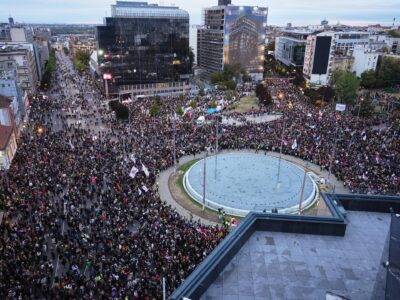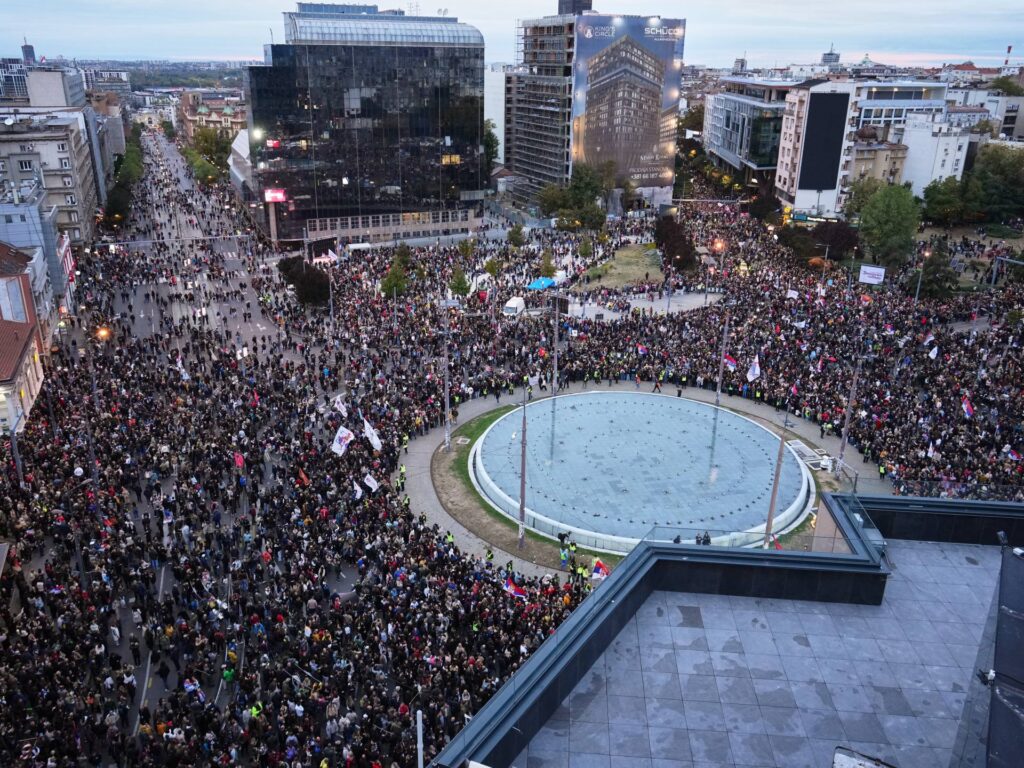
As the Serbian general election approaches this Sunday, thousands of supporters of the student movement gathered in a vibrant final rally to express their collective demand for political change and the end of President Aleksandar Vucic’s 14-year rule. The event, marked by passionate speeches, chants, and the display of numerous banners, underscored the growing momentum of the youth-driven movement seeking to challenge the longstanding incumbent leadership.
The student-led coalition, composed primarily of young activists frustrated with the status quo, democratic backsliding, and economic concerns such as unemployment and corruption, is rallying behind candidates and parties who pledge reforms and greater transparency. The movement combines calls for a more open society, stronger democratic institutions, and increased participation of younger generations in governance.
Despite the energy and enthusiasm at the student rally, President Vucic is simultaneously holding a rival rally across town, emphasizing the divided political landscape in Serbia. Vucic, a dominant figure in Serbian politics since 2012, claims extensive support through his promises of stability, economic growth, and national pride. His leadership has been characterized by significant investments in infrastructure and state influence over media and institutions.
The final student rally serves as both a symbolic and practical platform for mobilizing voters, particularly the youth vote which many believe will be decisive in this election. Organizers have highlighted the importance of participating in the democratic process to secure a future that better reflects the aspirations of younger Serbians. They aim to break what they describe as a political monopoly that has limited pluralism and suppressed dissent over the last decade and a half.
Observers note the heightened tensions and polarization as both camps prepare for the outcome. The student movement’s ability to sustain widespread engagement may challenge traditional electoral dynamics in Serbia by energizing demographics previously less involved in elections.
Internationally, the election is closely watched for its implications on Serbia’s relations with the European Union, regional stability in the Balkans, and the trajectory of democratic governance in the country. Critics of Vucic warn that his continuation in office may entrench authoritarian tendencies, while his supporters argue for continuity amid regional uncertainties.
As election day arrives, the atmosphere in Belgrade is charged with anticipation and activism from competing sides. The student-led rally is a culmination of weeks of demonstrations, grassroots organizing, and a call for systemic change. How Serbian voters respond will determine the future direction of the nation in a pivotal moment of its political history.