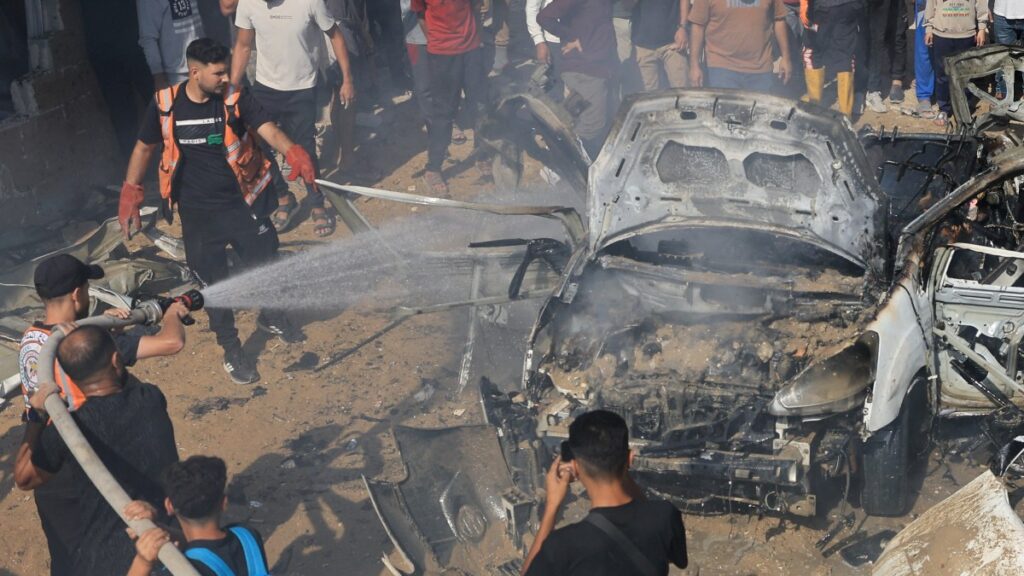
Four Palestinians have lost their lives amid ongoing Israeli military operations in Gaza, signaling a surge in violence that is exacerbating the region’s already dire humanitarian situation. The Israeli attacks, part of an expanded military campaign, have widened control across Gaza, displacing millions of residents and resulting in widespread destruction of homes and infrastructure.
This escalation occurs against the backdrop of a mounting risk of famine in the area, as access to essential supplies becomes increasingly restricted. Humanitarian agencies warn that the combination of military operations and blockade measures is severely limiting the flow of food, water, and medical aid into Gaza, pushing the population towards a critical shortage that threatens lives and stability.
The recent strikes have not only caused immediate casualties but have also devastated community infrastructures, including hospitals, schools, and residential neighborhoods, leaving countless people homeless and in urgent need of assistance. The displacement caused by the expanding Israeli control is creating overcrowded conditions in the few remaining safe areas, complicating relief efforts and escalating the public health crisis.
International response to the situation has been marked by calls for ceasefire and urgent humanitarian access. Various governments and international organizations have expressed grave concern over the civilian casualties and the potential for a widespread famine, urging all parties to prioritize the protection of civilians and allow humanitarian corridors for aid delivery.
As the conflict intensifies, Gaza’s healthcare system, already strained, is struggling to cope with the influx of injuries and the shortage of medical supplies. Clinics and hospitals face shortages of essential medicines and equipment, compounded by power outages and damage to critical infrastructure.
Analysts warn that without immediate intervention and a de-escalation of military activities, the humanitarian crisis is likely to deepen, with catastrophic consequences for the Gaza population. The international community faces mounting pressure to facilitate dialogue, support humanitarian relief, and find sustainable solutions to prevent further loss of life and suffering in the region.
The situation remains fluid, with the potential for further escalations on the ground. Continued monitoring and reporting are essential to understanding the full scope of the conflict’s impact and mobilizing effective responses to mitigate the unfolding tragedy in Gaza.