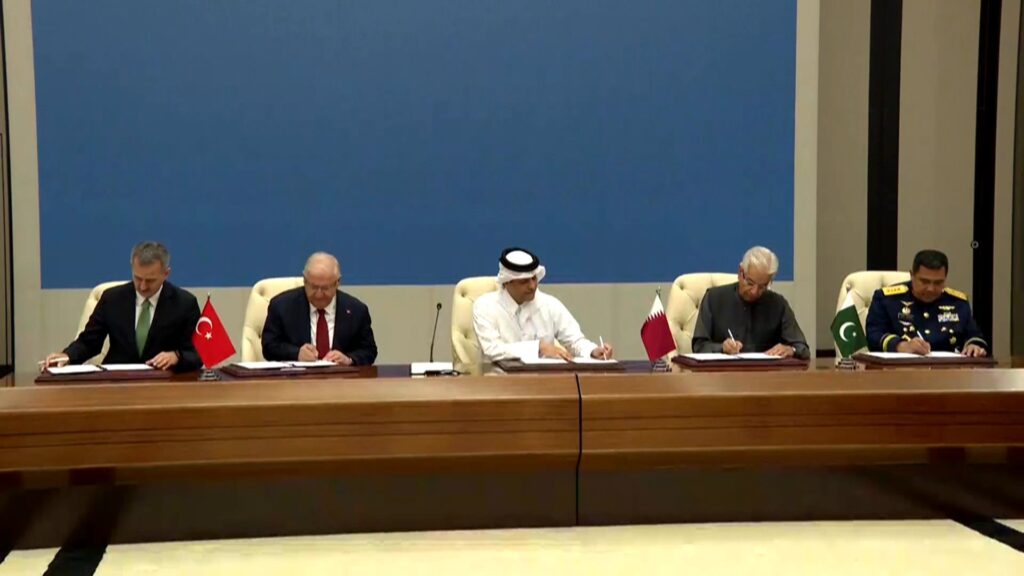
In a significant development in regional and international defense cooperation, Qatar, Turkiye, Pakistan, and Indonesia have come together to sign a new defense agreement known as the ‘Badr’ Memorandum of Understanding (MoU). This pact signals a strengthened commitment among the four nations to collaborate on military and strategic issues, enhancing their collective capabilities and fostering a united front in addressing shared security challenges.
The ‘Badr’ defence pact was officially signed in a ceremony attended by top defense officials from each country, showcasing a joint resolve to deepen military ties and interoperability. This agreement covers various dimensions of defense cooperation, including intelligence sharing, joint training exercises, strategic consultations, and coordinated development of defense technologies.
Al Jazeera’s Osama Bin Javaid reports that the pact symbolizes an important step towards forging a multi-dimensional defense alliance in a geopolitically vital region. Each member country brings unique strengths and strategic significance, making this coalition a formidable player in ensuring regional peace and stability.
Qatar, known for its substantial investment in modernizing its military capabilities, stands to benefit from enhanced strategic partnerships and joint defense ventures under the ‘Badr’ pact. Turkiye, a key NATO member with a robust defense industry, offers advanced technological expertise and strategic depth. Pakistan, which has a long history of military cooperation and a strategic position in South Asia, adds depth to the alliance’s operational scope. Indonesia, as the largest archipelagic state, contributes significant maritime and territorial defense experience.
The ‘Badr’ MoU reflects a shared objective among these nations to counter emerging security threats effectively, including terrorism, cyber-attacks, and regional conflicts. It also aims to promote peace and stability by improving coordination in defense and security policies.
This alliance is expected to facilitate the exchange of knowledge and resources, enabling the members to respond swiftly to crises, conduct joint operations, and enhance military readiness. Participation in joint drills will help standardize procedures and improve tactical efficiency.
Experts note that the ‘Badr’ defense pact also carries diplomatic significance, signaling these countries’ intention to assert greater autonomy in their defense policies and reduce reliance on external powers. It embodies a collective aspiration to influence regional security architectures positively and uphold sovereignty.
The pact is considered a milestone in diplomatic and military relations, setting a precedent for future collaborative frameworks among Islamic and regional countries with aligned security interests.
As global security dynamics evolve, such cooperative agreements are increasingly vital. The ‘Badr’ defense pact thus not only strengthens immediate defense ties but also contributes to broader geopolitical stability.
In conclusion, the signing of the ‘Badr’ defense pact by Qatar, Turkiye, Pakistan, and Indonesia marks a pivotal moment in collaborative defense efforts. It promises enhanced security cooperation and signifies a strategic alliance committed to peace, stability, and mutual growth in a complex global landscape.