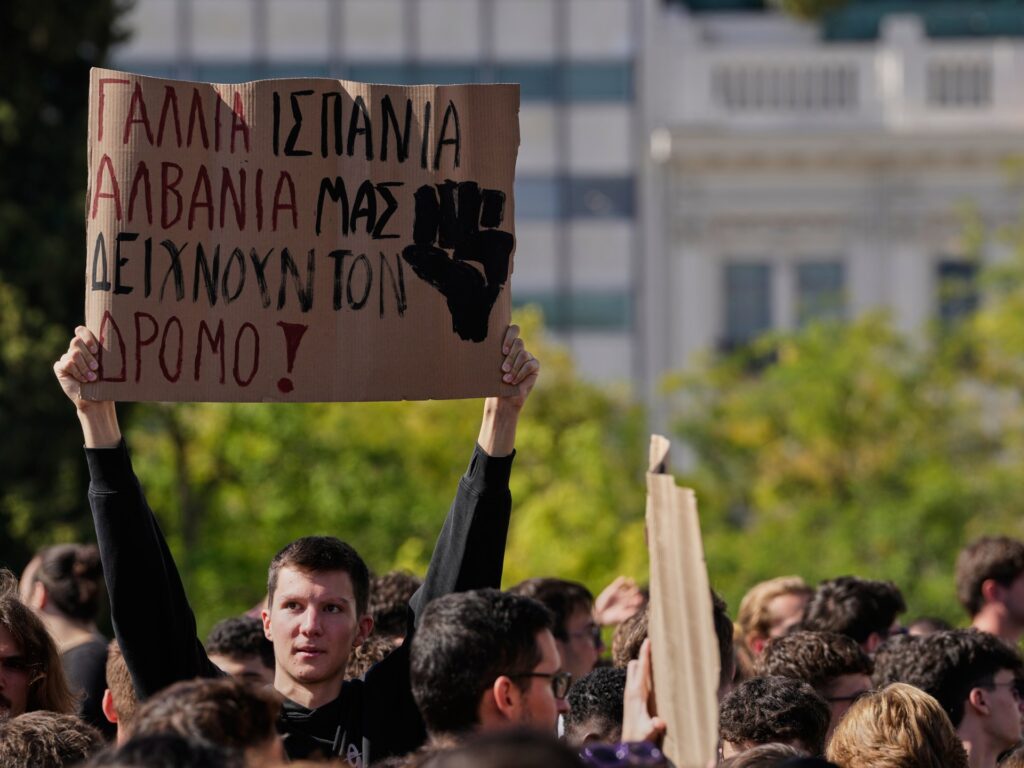
Thousands of teachers and students have taken to the streets across Greece to demand increased funding for schools. This nationwide demonstration represents a significant moment in the country’s education sector, highlighting growing concerns over inadequate resources and support for public education.
The protests saw a large turnout as teachers joined forces with students, showcasing a united front pressing the government to act on chronic underfunding issues. Schools across Greece have faced budget cuts for years, resulting in overcrowded classrooms, a shortage of teaching materials, and outdated facilities that hinder learning progress.
This wave of activism is part of a broader trend sweeping across Europe, where youth-led demonstrations are becoming increasingly common. Young people are advocating for better educational conditions, climate action, and social justice, signaling a new era of civic engagement and political awareness among the youth.
In Greece, these mass protests have not only drawn attention to funding deficits but also emphasized the importance of education as a fundamental right. Teachers voiced that receiving adequate financial support is crucial to maintaining quality education and ensuring that students receive the preparation they need to thrive in an increasingly competitive world.
Student participants expressed frustration over a lack of investment that affects their daily educational experiences and future prospects. Many pointed out that while public spending in other sectors has increased, education budgets have lagged behind, worsening inequalities in opportunities for young people.
Government officials have acknowledged the protests and indicated plans to review the current funding allocation to schools. However, precise commitments and timelines remain unclear, which has kept protest momentum strong.
The protests included peaceful marches, sit-ins at educational institutions, and public speeches calling for immediate government intervention. Social media also played a critical role in mobilizing participants and raising awareness, with hashtags related to education reform trending nationwide.
International observers have noted that this movement reflects a larger wave of youth activism focused on securing a better future and holding authorities accountable. The demonstrations in Greece serve as a reminder of the powerful role education plays in societal development and the urgent need for policymakers to prioritize it.
As the protests continue, the education community remains hopeful that the government will respond constructively, recognizing that investing in schools is investing in the country’s future prosperity and stability. The collaborative effort between students and teachers exemplifies the strength of grassroots movements and the impact they can have when unified behind a common cause.
The unfolding events in Greece add to the growing narrative of youth asserting their voices in public discourse, advocating for schools that provide equitable, high-quality education. This march for school funding is more than a demand for money; it is a call to action for systematic change and renewed commitment to nurturing the potential of the next generation.