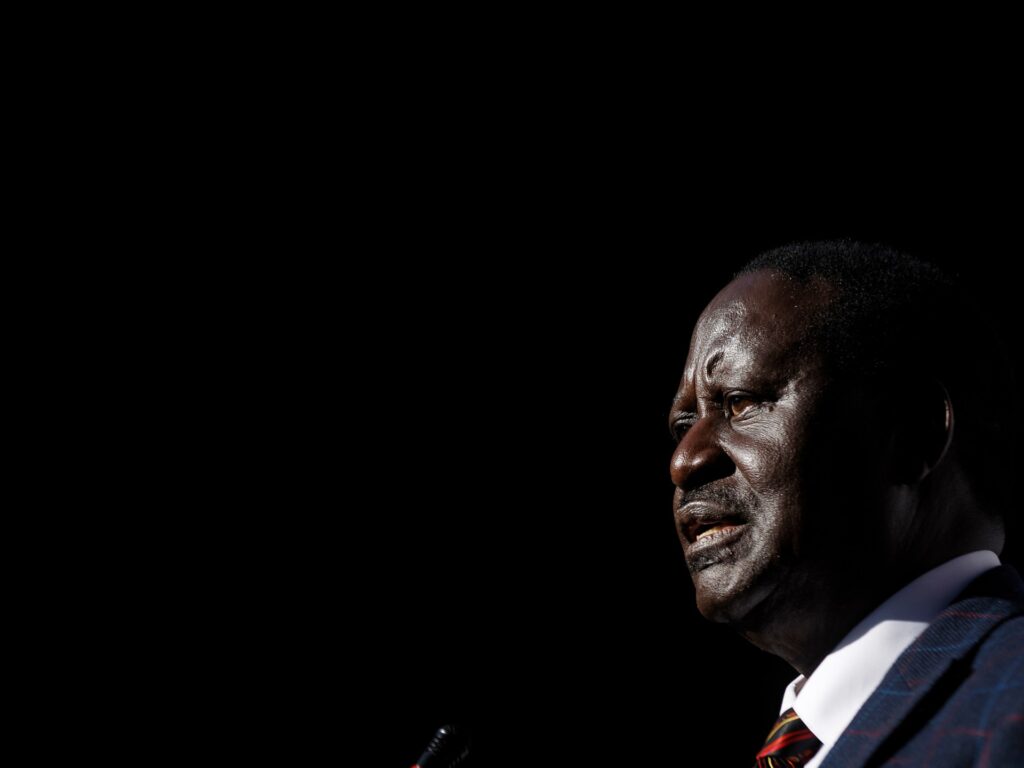
One year after Raila Odinga stepped back from frontline politics, Kenya’s opposition landscape faces unprecedented challenges, raising questions about its future direction and effectiveness. Odinga, a towering figure in Kenyan politics and a long-time opposition leader, has left behind a complex legacy that now faces a critical test as his party, the Orange Democratic Movement (ODM), grapples with internal divisions and its stance toward the incumbent government under President William Ruto.
Raila Odinga has been a symbol of opposition resilience and a proponent of reform in Kenya. His leadership helped shape opposition politics for over two decades, rallying various factions into a significant political force. However, following his recent departure from active politics, ODM has encountered deep fissures, particularly concerning whether to continue opposing President Ruto or to explore a political alliance with his administration.
The split within ODM signifies more than just a party disagreement; it reflects broader challenges facing Kenya’s opposition. President Ruto’s rise and his government’s consolidating power have pressured opposition groups to reconsider their strategies. Some ODM members argue for pragmatic engagement with Ruto’s government, aiming to influence policy from within, while others insist on maintaining a firm opposition position to safeguard democratic accountability and promote alternative governance.
This division has led to questions about the coherence and unity of Kenya’s opposition. Without Odinga’s unifying presence, ODM risks fragmenting further, potentially weakening opposition platforms nationally. Political analysts warn that a divided opposition may struggle to mount an effective challenge in future elections, potentially allowing the ruling party to entrench itself further.
The implications extend beyond ODM itself. Opposition disunity can affect the broader democratic process in Kenya, reducing checks and balances that are crucial for governance and citizen representation. The ODM’s current predicament is emblematic of a transitional phase in Kenyan politics where parties must redefine their identities and strategies in a rapidly changing political environment.
Odinga’s legacy includes not only his role as an opposition leader but also his efforts to promote national unity and democratic reforms. As ODM navigates its future course, there is a palpable sense of uncertainty among supporters and political observers alike. The party’s decisions in the coming months will be pivotal in determining whether the opposition can remain a potent counterweight in Kenya’s political arena or fade into fragmentation.
Ultimately, the question of whether Kenya’s opposition has lost its way without Raila Odinga touches on deeper issues of political leadership, party cohesion, and democratic resilience. The coming year will likely reveal from ODM’s internal struggle whether Kenya’s opposition can reinvent itself and continue to shape the country’s political trajectory.