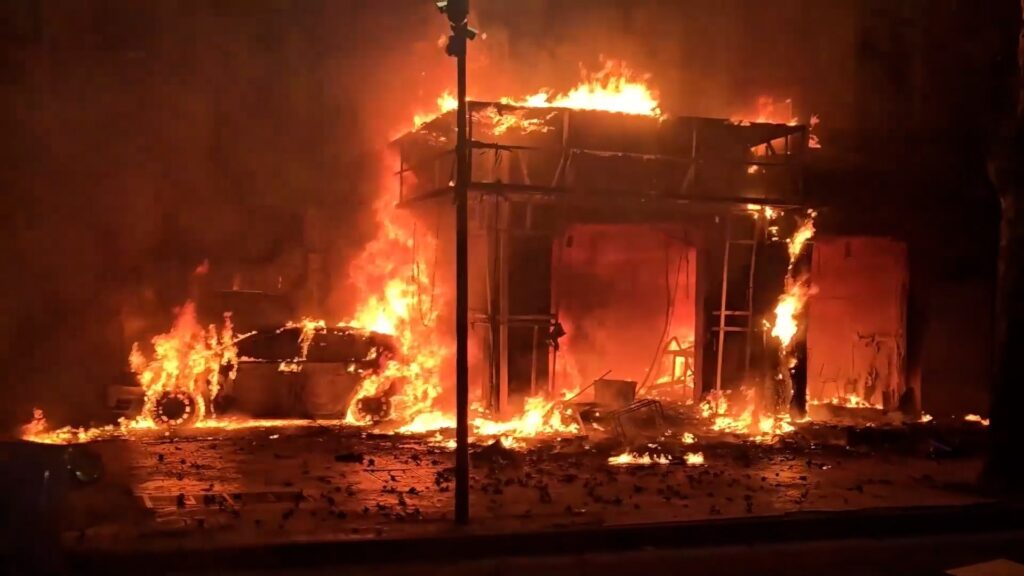
In a dramatic escalation of civil unrest, the Supreme Court building in Tirana, Albania, was engulfed in flames as protests entered their fifth consecutive day. Demonstrators, rallying against the current government, set fire to the offices within the judicial complex, marking a significant moment of tension between the government and its citizens.
The protests, which initially began as peaceful demonstrations, have grown increasingly volatile with the Supreme Court fire symbolizing deep-seated frustrations within Albania’s political landscape. Citizens accuse the government of corruption, mismanagement, and undermining democratic institutions, fueling a wave of dissent.
Authorities reported that the fire started late in the evening and quickly spread throughout parts of the building, leading to an emergency evacuation and a heavy response from riot police deployed to contain the situation. Firefighters battled the blaze for hours while maintaining a perimeter to prevent further violence.
This violent act at the heart of Albania’s judiciary underscores the challenges facing the country’s political stability and the fragile state of its democratic institutions. The Supreme Court, being the highest judicial authority, plays a critical role in upholding the rule of law, and its targeting sends a strong message of public dissatisfaction and unrest.
Prime Minister and government officials condemned the act of arson, emphasizing that such violence undermines the nation’s progress and calling for calm and dialogue. Meanwhile, opposition leaders have rallied their stance, advocating for political reforms and greater accountability.
The international community has expressed concern over the developments, urging all parties in Albania to exercise restraint and seek peaceful resolution through dialogue. The incident at the Supreme Court is being closely monitored as a potential turning point in Albania’s domestic affairs.
Residents of Tirana and citizens across Albania have shown mixed reactions; some view the fire as a desperate cry for justice, while others worry about the deepening crisis and its implications for national security and governance.
As investigations into the arson continue, questions arise about the security measures in place at key government buildings and the ability of law enforcement to manage escalating protests without resorting to excessive force.
The ongoing unrest reflects broader socio-economic frustrations amid issues like unemployment, poverty, and political corruption, which have long plagued Albania. Experts suggest that without meaningful reforms and a commitment to addressing public grievances, the cycle of protests and violence may persist.
Efforts to mediate the conflict through bipartisan dialogue have so far seen limited success, with distrust and polarization remaining significant barriers. Civil society organizations call for inclusive political solutions and increased transparency to restore public trust.
As the situation evolves, the government faces growing pressure to respond effectively to both security concerns and the underlying causes of discontent. The world watches closely, recognizing that Albania’s stability is crucial for broader regional security and European integration aspirations.
In the coming days, focus will remain on the Supreme Court building’s recovery, the authorities’ response to the unrest, and the potential for inclusive political negotiations to chart a path forward for Albania’s democracy. The events surrounding the Supreme Court fire stand as a stark reminder of the challenges facing nations grappling with governance, justice, and public accountability in difficult times.