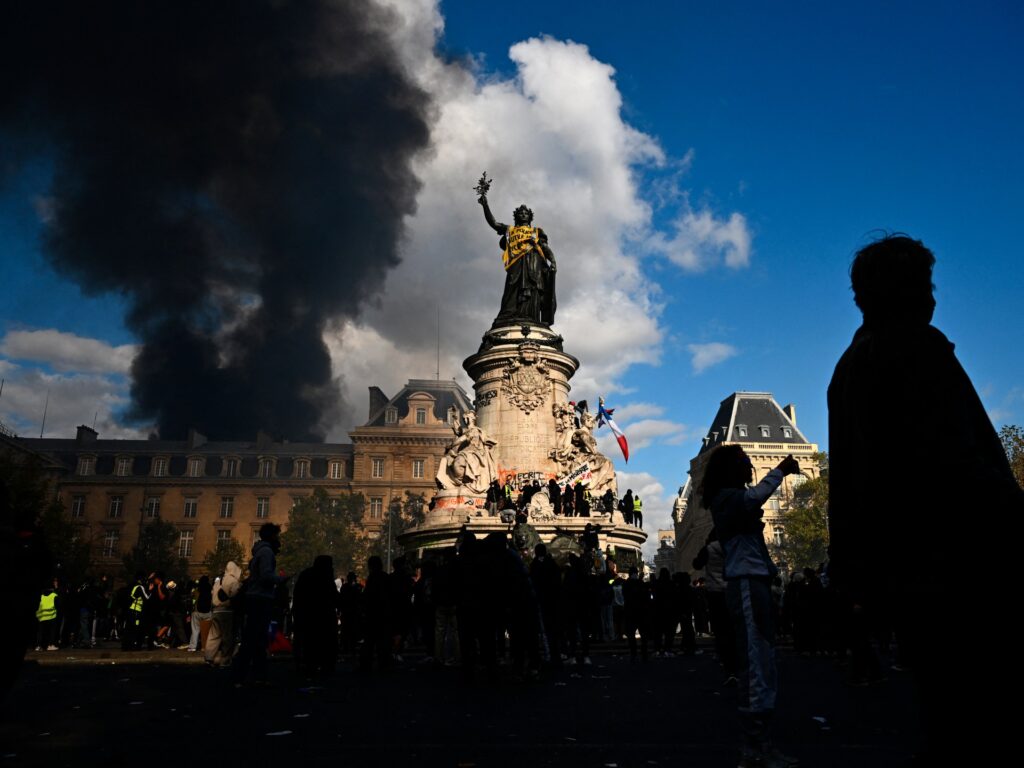
France is witnessing a resurgence of demonstrations inspired by the legacy of the ‘yellow vest’ movement, with tens of thousands rallying in Paris and other cities demanding significant reforms. This latest wave of protests represents a broad coalition uniting students, teachers, unions, and former ‘yellow vest’ activists, all expressing frustration over economic and social issues.
The protests are marked by their diverse participants, reflecting widespread discontent that spans several sectors of French society. From educational institutions to labor unions, there is a shared demand for government action to address inequalities and improve living conditions.
The ‘yellow vest’ movement initially erupted in 2018 as a reaction to fuel tax increases but evolved into a broader campaign against economic hardship and political disenfranchisement. Although the original protests have subsided, their spirit persists and continues to inspire activism.
In recent rallies, demonstrators have emphasized calls for comprehensive reforms including enhanced social welfare, better wages, and policies aimed at reducing the cost of living. Many also criticize the government’s handling of the economy and its perceived disconnect from the everyday struggles of ordinary citizens.
The government’s response to these protests remains measured, with efforts to engage in dialogue but also maintain public order. Police presence in protest areas is robust, reflecting the authorities’ intent to prevent escalation.
Observers suggest that the enduring impact of the ‘yellow vest’ movement lies in its ability to mobilize a wide spectrum of society and bring longstanding grievances into the spotlight. The current protests underscore ongoing tensions and the demand for a more inclusive and equitable policy framework.
As France navigates this period of social unrest, the calls for reform highlight the challenges faced by the government in addressing diverse and deep-rooted issues. The outcomes of these demonstrations may influence future political strategies and shape the country’s path toward social justice and economic fairness.
In sum, the ‘yellow vest’ legacy continues to ignite protest movements that challenge France’s political and economic status quo. The united front of students, educators, labor, and activists signals a pivotal moment for change, demanding that voices previously marginalized be heard and acted upon.
This renewed activism not only honors the memory of past protests but also signals a persistent desire for transformation in French society.