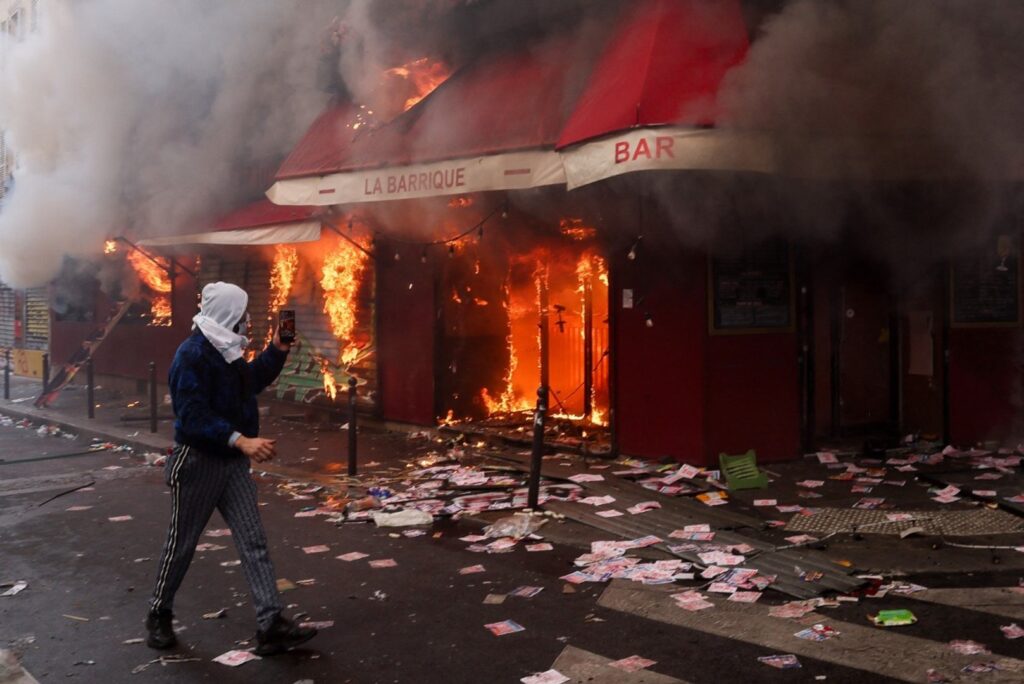
France is currently witnessing a surge in civil unrest as demonstrations against the rising cost of living intensify across the country. Protesters have resorted to drastic measures, setting ablaze several cars and buildings as a form of expressing their frustration and anger over economic hardships.
The protests, which began as peaceful gatherings calling for governmental intervention on inflation and wage increases, have rapidly escalated into violent confrontations between demonstrators and law enforcement officials. Public anger has been fueled by increasing energy prices, stagnant wages, and the overall rising costs associated with basic necessities.
In many urban centers, including the capital Paris, scenes of chaos have unfolded with protesters blocking roads, engaging in clashes with police, and targeting symbols of wealth and authority. The burning of vehicles and buildings has raised concerns about public safety and the broader economic impact of such unrest.
Authorities have responded with heightened security measures, deploying additional police forces in affected areas and attempting to negotiate with protest leaders. However, the underlying socioeconomic issues remain unresolved, indicating potential for continued unrest if governmental policies do not address the core grievances.
Economic analysts warn that prolonged protests could disrupt commerce and tourism, further exacerbating France’s economic challenges. Meanwhile, citizens caught in the crossfire of the protests express both sympathy for the demonstrators’ cause and concern over the destruction caused.
This wave of protests underscores the growing global tension surrounding cost of living increases and the demand for equitable economic reforms. As the situation develops, international observers are closely monitoring France’s ability to manage civil disorder while addressing the pressing economic needs of its population.
The government has announced plans to review social welfare programs and consider subsidies to mitigate the impact of rising expenses on vulnerable communities. Yet, the timing and sufficiency of these measures remain to be seen.
For now, France remains a stark example of the volatility that can accompany economic hardship and the powerful expressions of dissent that economic stress can provoke in modern societies.