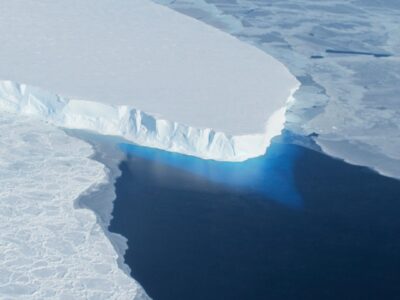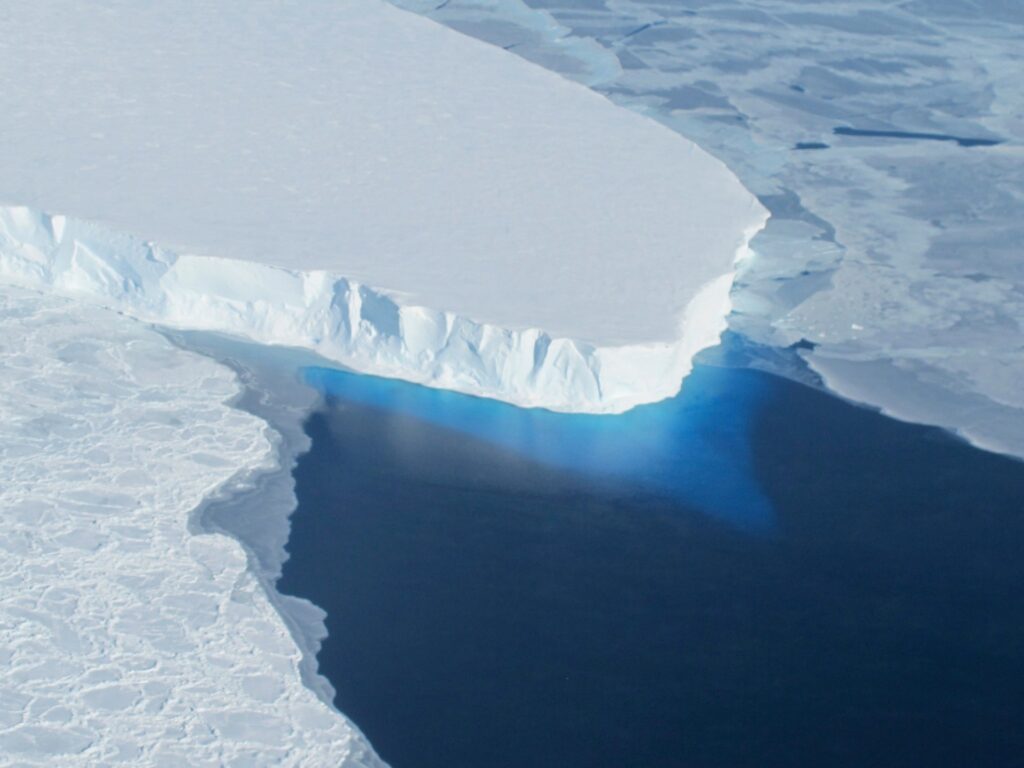
The Thwaites Glacier, one of the largest in Antarctica, comparable in size to the entire country of Senegal, is melting at an unexpectedly rapid pace, causing widespread concern among scientists and environmentalists. For decades, this colossal glacier has been losing ice, but recent studies indicate the rate of melting could be accelerating faster than previously anticipated, with significant implications for global sea levels and climate stability.
Located in West Antarctica, the Thwaites Glacier spans roughly 192,000 square kilometers, making it a critical component of the Antarctic ice sheet. Its melting contributes directly to rising global sea levels, which threaten coastal communities, ecosystems, and economies worldwide. Scientists have long monitored the glacier due to its potential to contribute significantly to sea level rise if it were to collapse.
The acceleration of Thwaites Glacier’s ice loss is largely attributed to warmer ocean waters melting the glacier from beneath, combined with atmospheric warming. This process destabilizes the glacier’s structure, making it more vulnerable to rapid disintegration. The glacier’s retreat could contribute up to 65 centimeters to global sea level rise by 2100 if current trends continue unchecked.
Researchers employ satellite imagery, underwater robots, and climate models to track the glacier’s health and predict future changes. These tools have recently revealed new hotspots of melting and areas where the glacier is thinning more rapidly than expected. The presence of warm water beneath the glacier is a particularly alarming discovery, as it accelerates basal melting, destabilizing the ice sheet’s grounding line—the point where the glacier meets the ocean floor.
Thwaites Glacier’s potential collapse would have far-reaching consequences. It could destabilize neighboring glaciers, leading to even greater sea level rise. Additionally, as freshwater from melting glaciers enters the oceans, it can disrupt ocean currents and weather patterns, intensifying extreme weather events and impacting global climate systems.
This rapid melting underscores the urgent need for global cooperation on climate change mitigation. Reducing greenhouse gas emissions and investing in sustainable practices are critical steps to slow down the warming of our planet and protect vulnerable ice masses like Thwaites Glacier.
Scientists stress that while some melting is inevitable due to historical emissions, immediate action could limit the extent and speed of further ice loss. Continued research and monitoring are essential to improve predictions and develop adaptive strategies to protect coastal regions and manage the risks posed by rising seas.
In summary, the Senegal-sized Thwaites Glacier’s accelerated melting signals a critical point in Earth’s climate crisis. Its rapid ice loss, driven by warming oceans and atmosphere, threatens to raise sea levels, disrupt global weather, and destabilize Antarctic ice masses. The international community faces a pressing challenge: to curb climate change impacts and safeguard our planet’s future by protecting vital glaciers such as Thwaites.