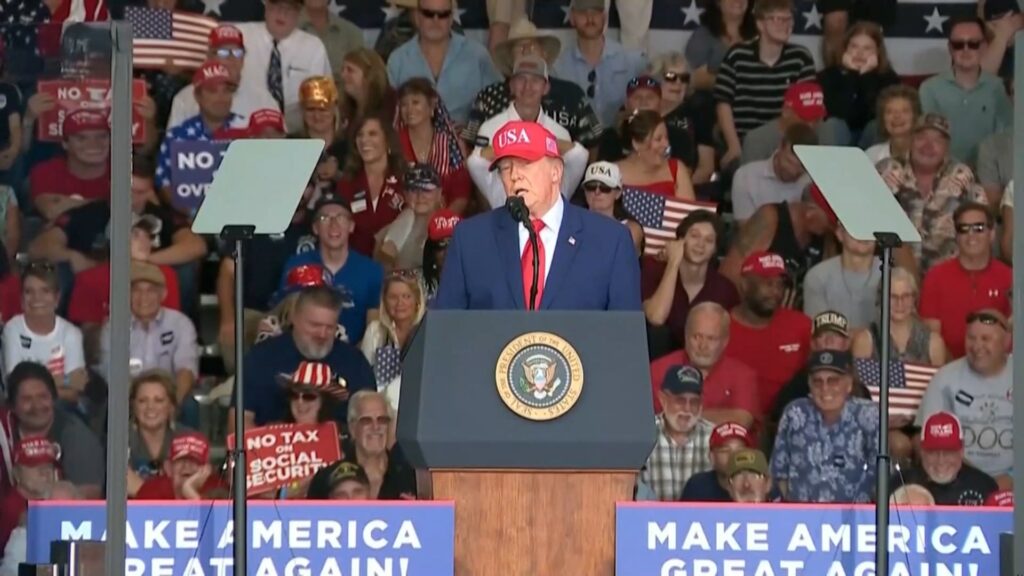
In a recent public appearance, US President Donald Trump made headlines by mocking Middle Eastern names, specifically using a joke involving the name “Mohammed.” The president was quoted as saying, “If you’re in doubt about somebody’s name from the Middle East, just say ‘Mohammed.’” This remark quickly sparked controversy and drew criticism from various quarters for being culturally insensitive.
The joke was made in a lighthearted context, according to reports, but it touched a nerve given the sensitivity around cultural and religious identities associated with names in the Middle East. “Mohammed” is a highly common and revered name in Islamic communities, being associated with the Prophet Muhammad, an important figure in Islam.
Political analysts and cultural commentators have noted that such statements from a public figure, especially the president of the United States, carry significant weight and can contribute to perpetuating stereotypes. The backlash against Trump’s comment reflects broader concerns about the portrayal and understanding of Middle Eastern cultures in Western discourse.
Several advocacy groups representing Middle Eastern communities expressed disappointment and called for greater cultural awareness and respect from public officials. They emphasized the importance of recognizing the diversity and richness of Middle Eastern names rather than resorting to monolithic and simplistic portrayals.
The incident also sparked discussions on social media, with many users debating the implications of the joke. Some defended it as a harmless quip, while others viewed it as an example of casual racism and insensitivity that undermines the dignity of people from the region.
This is not the first time President Trump’s remarks have incited controversy related to cultural and ethnic issues. His administration’s policies and statements have frequently been scrutinized for their approach to diversity and inclusion.
In response to the criticism, White House representatives have not issued a formal apology or clarification as of yet. Observers are keenly watching to see if further statements will address the fallout from the joke.
This episode highlights the ongoing challenges in fostering mutual respect and understanding across cultures, especially in politically charged environments. It underscores the need for leaders to be mindful of their words and the impact they have on international communities.
The discussion around this joke also brings attention to the broader context of how names and identities are respected globally, and the importance of combating stereotypes that can fuel division and misunderstanding.
As the debate continues, it remains to be seen how this incident will influence public discourse and diplomatic relations with Middle Eastern nations moving forward.