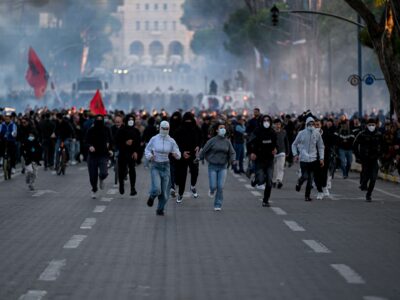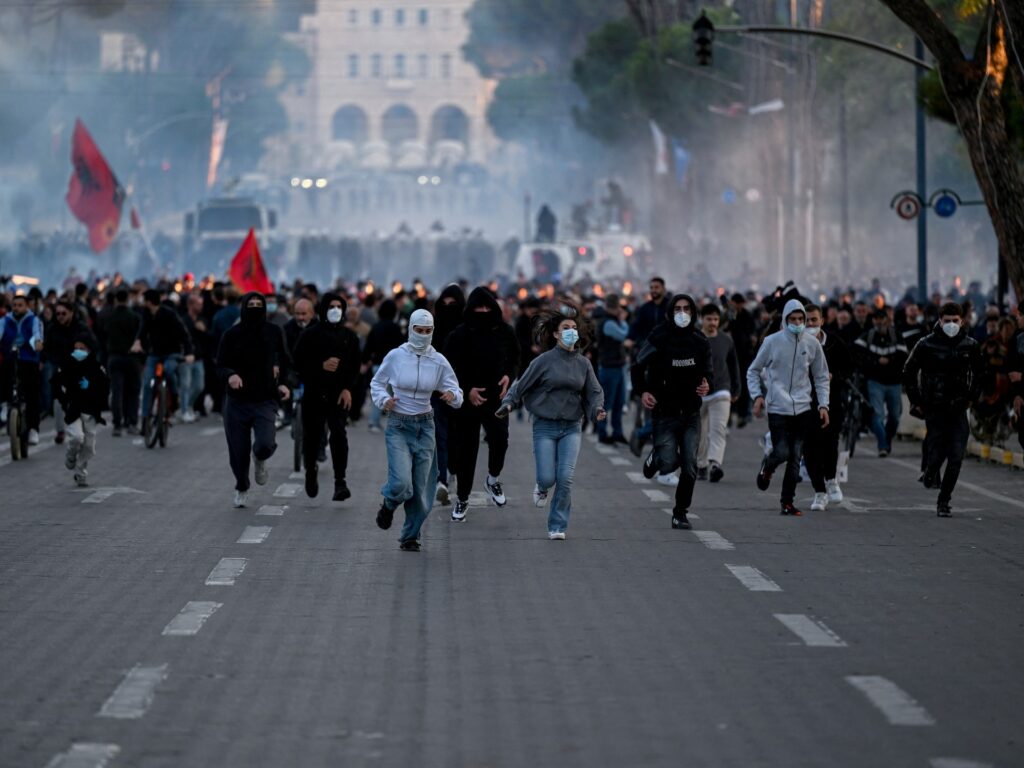
In Albania, student protests have entered their fourth consecutive day, with young Albanians rallying against widespread corruption and substandard conditions in universities. The demonstrations, which have seen frequent clashes with riot police, reflect deep dissatisfaction among the youth about the state of higher education and governance in the country.
Protesters are demanding comprehensive reforms to address corruption that many believe has eroded trust in public institutions and negatively impacted educational standards. The students also call for improvements in university infrastructure, academic programs, and transparency in administration.
The intensity of the protests has caught the attention of Prime Minister Edi Rama, who has attributed the unrest to ‘foreign hands’ seeking to destabilize Albania. Rama’s comments suggest a narrative that external forces are influencing or exacerbating internal dissent, a claim that critics say deflects from the government’s responsibility to address legitimate grievances.
Despite the government’s warnings and increased police presence, protesters remain resolute. Demonstrations have spread beyond the university campuses to central urban areas, attracting a diverse group of supporters advocating against corruption and for systemic change.
The clashes between riot police and demonstrators have led to injuries but no reports of fatalities. Authorities have been criticized for their heavy-handed response, which some international observers argue risks escalating tensions further.
The student movement is organized through a mix of social media campaigns and on-the-ground coordination, utilizing modern communication methods to galvanize widespread support. Their demands include fair funding allocations, elimination of corrupt practices in university admissions and management, and enhanced academic freedom.
Albania’s government faces increasing pressure both domestically and internationally to engage in dialogue with the protesters and to implement reforms addressing the root causes of unrest. Analysts suggest that failure to do so could have broader implications for political stability and Albania’s ambitions for European integration.
As the situation unfolds, the country stands at a crossroads, balancing government authority with the aspirations of a younger generation determined to challenge the status quo.
The protests underscore a growing trend in the region where youth are increasingly vocal and active in demanding accountability, transparency, and better governance. Albania’s response may serve as a benchmark for how similar movements are managed in neighboring countries.