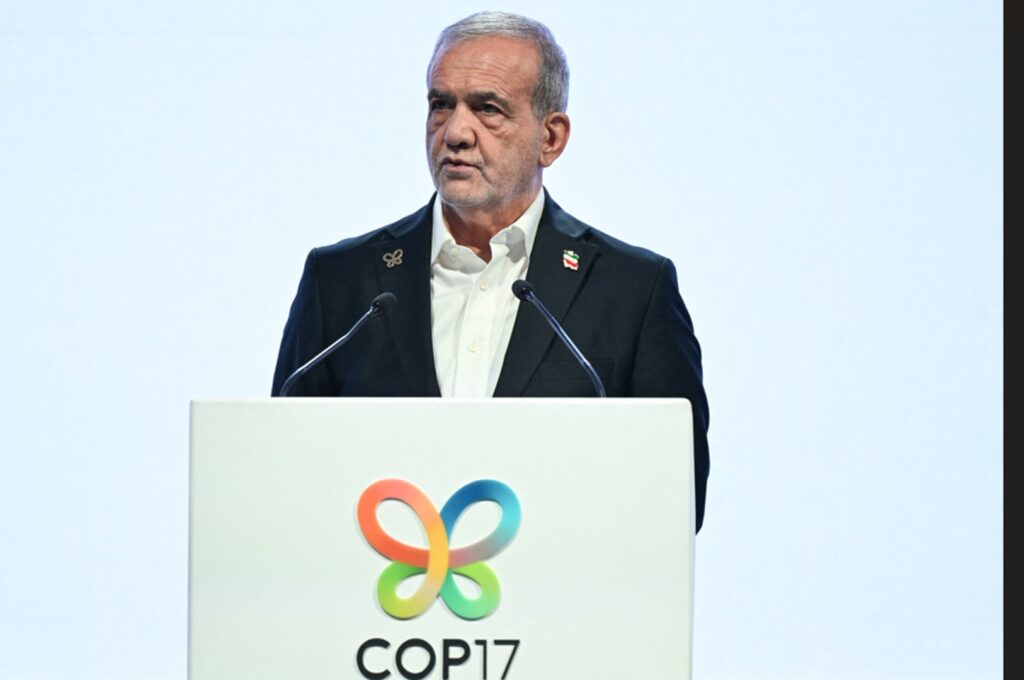
Iranian President Masoud Pezeshkian has publicly condemned the severe environmental degradation resulting from ongoing conflicts in the Middle East. Highlighting the ecological consequences of warfare, Pezeshkian emphasized that the destruction extends beyond human and infrastructural loss, leading to long-term damage to natural ecosystems and wildlife habitats.
During a recent address, Pezeshkian warned that the environmental impact of the war is a critical issue often overshadowed by immediate humanitarian concerns. He pointed out that burning oil resources, destruction of water infrastructure, and widespread deforestation caused by military operations have led to soil degradation, air pollution, and water scarcity, destabilizing the regional environment.
The president stressed that these ecological wounds jeopardize the health, agriculture, and livelihood of millions of people and proposed that peace and environmental restoration efforts should go hand in hand. He called on regional governments, international organizations, and the global community to prioritize ecological rehabilitation in post-conflict rebuilding processes.
Experts agree that conflicts in the Middle East have repeatedly caused environmental harm through toxic contamination from weaponry, destruction of natural reserves, and increased carbon emissions. Pezeshkian’s statements mark a significant call for awareness and action on the intertwined issues of war and environmental protection.
This condemnation comes amid growing concerns over climate change and environmental degradation worldwide, and the Middle East is recognized as one of the most vulnerable areas to ecological damage due to its arid climate and geopolitical instability.
Iran’s emphasis on environmental damage from war signals a broader push for integrating ecological considerations into peacebuilding and international policy discussions. Pezeshkian’s appeal is expected to spark dialogue on sustainable recovery strategies, including reforestation projects, pollution cleanup, and the safeguarding of water resources.
The president’s address also highlighted the need for cooperation between Middle Eastern nations to address transboundary environmental issues that worsen due to conflict, such as desertification and cross-border water pollution. Renewable energy and sustainable development were put forth as vital components for regional stability and environmental resilience.
In conclusion, Pezeshkian’s condemnation underscores the often overlooked but critical environmental consequences of war. His call to action is a reminder that peace is not only the absence of conflict but also the protection and restoration of the natural world that sustains human life and well-being in the region and beyond.