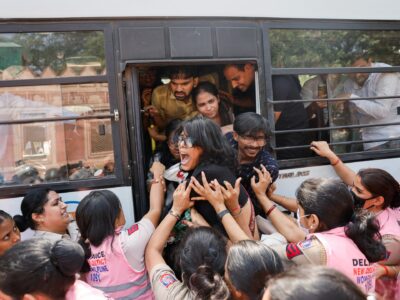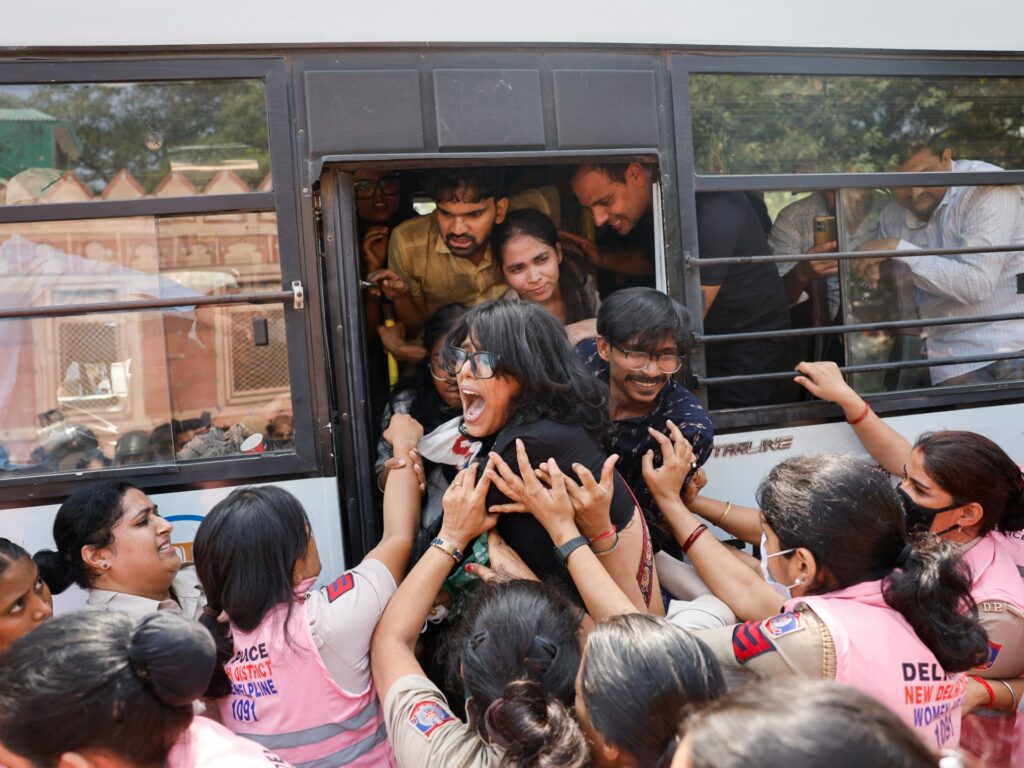
In a dramatic move that has captured global attention, Indian authorities have detained several prominent opposition leaders, referred to as ‘Cockroach’ leaders, in what appears to be a preemptive police crackdown ahead of planned mass protests in New Delhi. The operation coincides with an unprecedented lockdown of the capital, marking one of the most intense security maneuvers seen in recent times.
The protests were slated to be directed against the country’s election chief, whose recent actions and decisions have sparked widespread public outrage and criticism. Organizers of the protests had been mobilizing thousands of supporters in an effort to challenge what they describe as unfair practices and to demand greater transparency and accountability in the electoral process.
However, law enforcement agencies moved swiftly, detaining key figures believed to be leading the dissent. Authorities cited the need to maintain public order and prevent violence, claiming the lockdown and detainment measures were necessary to safeguard citizens and uphold democratic institutions.
The term ‘Cockroach’ leaders has emerged from political rhetoric used by some factions to describe opposition figures seen as destabilizing elements. This characterization has drawn mixed reactions from the public and political analysts alike, highlighting the deep polarization within the country’s political landscape.
The lockdown has effectively shut down major thoroughfares and public spaces in New Delhi, with heavy police presence and security checkpoints becoming a familiar sight. Public transport services have been curtailed, and many government buildings have been closed.
Civil rights groups and international observers have expressed concern over the detainments and the suppression of peaceful assembly, urging the Indian government to respect constitutional rights and to engage in dialogue with dissenting voices. The situation has also sparked debate about the balance between security measures and democratic freedoms in India.
In the days leading up to the lockdown, social media was abuzz with plans for large-scale demonstrations, but platform monitoring and restrictions appear to have stymied the coordination efforts of protest groups.
Economic activity in the capital has been disrupted, with many businesses closing temporarily due to the heightened security situation and mobility restrictions. The impact on daily commuters and the general populace has led to calls for a swift resolution to the unrest.
The Indian government has reiterated its commitment to democratic principles but stressed the importance of law and order. Officials have indicated that the lockdown and detainment are temporary measures and that normalcy will be restored once the threat of unrest subsides.
This series of events has drawn attention to India’s ongoing political tensions and the challenges the nation faces in maintaining democratic processes amidst competing interests and social divisions. As New Delhi remains under lockdown, the world watches closely to see how the situation will unfold and what implications it holds for the future of India’s democracy.