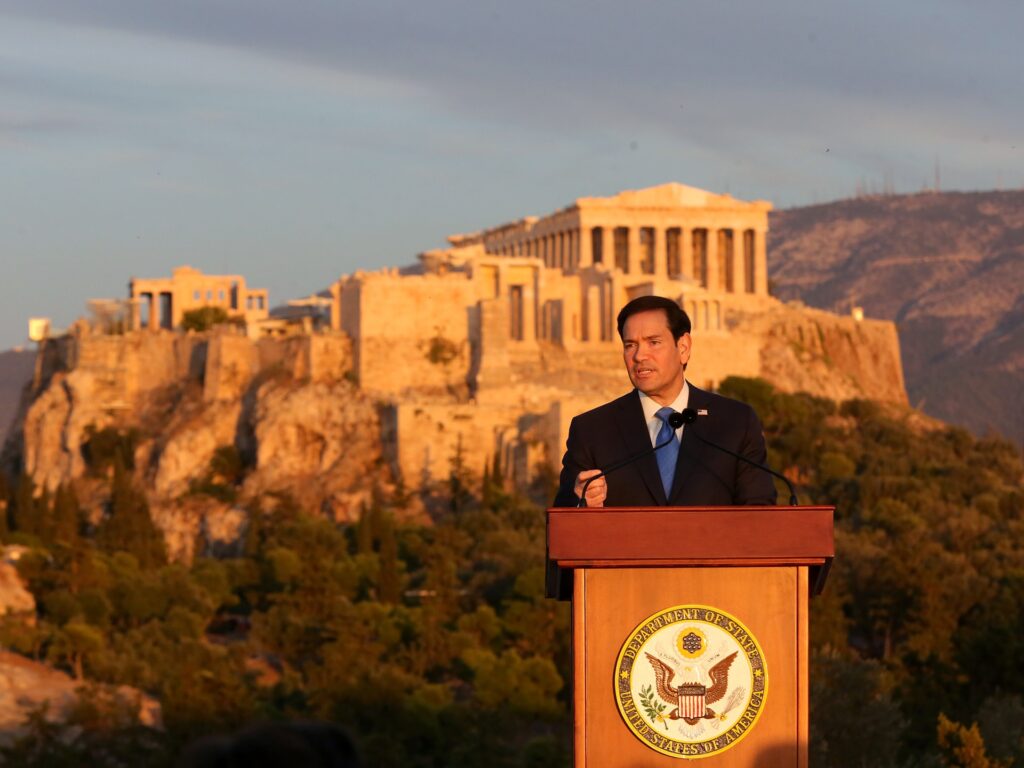
In a recent statement, U.S. Senator Marco Rubio sparked controversy with his remarks on threats to Western civilisation. Rubio claimed that these threats are “every bit as real as they were on the dramatic stage of antiquity,” linking contemporary challenges to historical conflicts and struggles faced by Western societies. His comments have prompted significant pushback from Iranian officials and analysts, who view his rhetoric as anachronistic and reflective of a Cold War-era mindset ill-suited to the complexities of modern international relations.
Rubio’s civilisational rhetoric frames current geopolitical tensions as a continuation of an ancient struggle against forces perceived as hostile to Western values. He likened modern threats—such as authoritarian regimes, extremist groups, and ideological adversaries—to the existential challenges faced by Western civilisation in antiquity. This analogy aims to rally support for policies aimed at countering these perceived dangers, reinforcing a narrative of cultural defence and renewal.
However, Iranian representatives have strongly criticized Rubio’s framing. They argue that equating contemporary political and ideological struggles with historical civilisational conflicts misrepresents the nuanced realities of today’s geopolitical landscape. Iranian analysts contend that Rubio’s language fuels divisive narratives and impedes dialogue by portraying the West as perpetually under siege by an antagonistic East.
Experts note that Rubio’s rhetoric reflects a broader trend among some Western politicians who invoke civilisation-based arguments to justify foreign policies perceived as aggressive or interventionist. Such language often polarizes international discourse, complicating efforts to foster cooperation and mutual understanding.
The backlash from Iran underscores the sensitivity surrounding civilisational narratives in global politics. Many observers warn that framing geopolitical issues in terms of ancient civilisational conflicts can reinforce stereotypes and exacerbate tensions rather than promote peaceful resolutions.
Rubio’s comments have also sparked debate within the United States about the role of historical analogies in shaping policy. Supporters argue that recognizing enduring cultural threats is crucial for national security, while critics see the rhetoric as anachronistic and potentially damaging to diplomatic relations.
This exchange highlights the ongoing struggle over how history and culture are interpreted and mobilised in international politics. As global challenges evolve, the question remains whether such civilisational rhetoric helps or hinders constructive engagement on the world stage.