In a recent development that has stirred significant political controversy in Israel, Rabbi Dov Lando, a prominent Ultra-Orthodox leader, made remarks critical of Zionism, sparking a debate that touches on the sensitive interrelations between religion, politics, and national identity.
Rabbi Lando’s comments have emerged at a particularly volatile moment in Israeli politics, coinciding with the ongoing election season. His anti-Zionist views openly challenge the mainstream Israeli consensus that largely embraces Zionism as the ideological foundation of the state.
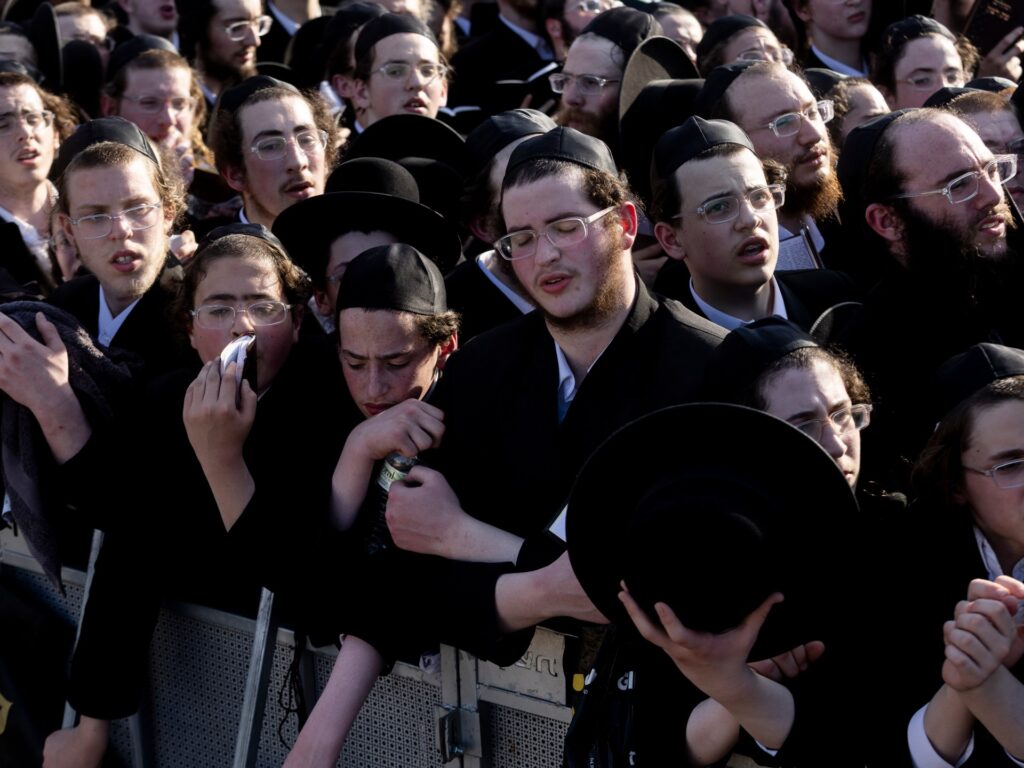
These remarks highlight deep-seated tensions within Israeli society, particularly concerning the relationship between the Ultra-Orthodox community and the state. The Ultra-Orthodox, or Haredi community, often holds ambivalent or oppositional stances toward Zionism, partly due to theological objections and partly stemming from historical experiences.
One of the key flashpoints illustrated by Rabbi Lando’s statements is the contentious issue of military conscription. Unlike other sectors of Israeli society, many Ultra-Orthodox individuals traditionally avoid compulsory military service, leading to ongoing disputes about equality and national duty.
Prime Minister Benjamin Netanyahu’s political alliance with Ultra-Orthodox parties adds another layer of complexity. Netanyahu’s coalition depends significantly on the voting bloc represented by Ultra-Orthodox parties, making their stance on Zionism and related policies a critical factor in political negotiations.
The controversy around Rabbi Lando’s statements has reignited discussions about the role of religion in Israeli politics and the challenges posed by divergent views within the Jewish population. Critics argue that anti-Zionist rhetoric from influential religious figures could undermine national unity and the legitimacy of the state.
Supporters of Rabbi Lando contend that his perspective reflects a legitimate religious viewpoint with deep historical roots. They emphasize the need for respect and accommodation within Israel’s diverse society, arguing that pluralism must include space for dissenting voices.
The election campaign has seen increased scrutiny of Ultra-Orthodox parties, with other political groups calling for reforms, including the integration of Ultra-Orthodox men into the military and workforce, aiming to create a more balanced social framework.
The debate exposed by Rabbi Lando’s remarks is emblematic of wider societal challenges that Israel continues to face. Balancing the secular and religious, the modern and traditional, remains an intricate and sensitive task for the country’s leaders and citizens alike.
As Israel moves forward in its electoral process, the reverberations of the ultra-Orthodox rabbi’s anti-Zionist comments will likely influence political alignments and public discourse, underlining the enduring complexity of identity and ideology in Israeli society.