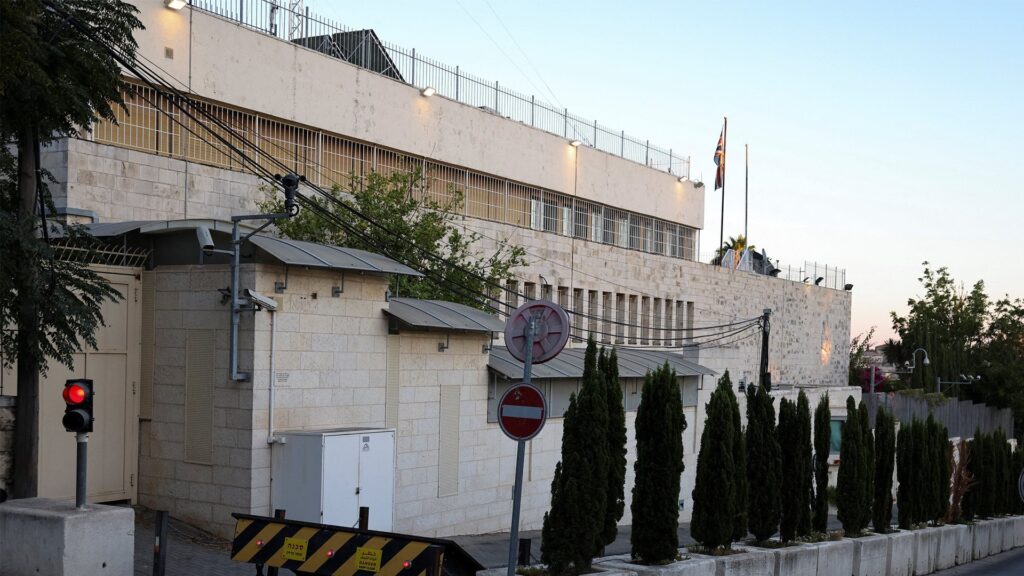
As the deadline looms for the closure of the United Kingdom’s consulate in East Jerusalem, tensions between Israel and the UK continue to rise. The Israeli government has demanded the UK shut down its consulate, a move that has ignited significant diplomatic controversy.
Vincent Fean, a former British consul with extensive experience in the region, has publicly criticized Israel’s demand. He stated that Israel is acting unlawfully by insisting on the closure of the consulate, underscoring the consulate’s importance in maintaining direct diplomatic relations with Palestinians in East Jerusalem.
The British consulate, which operates independently from the British embassy in Tel Aviv, has long served as a crucial diplomatic link between the UK and the Palestinian territories. It facilitates not only political dialogue but also supports various cultural and humanitarian initiatives.
Israel’s insistence on shutting down the consulate stems from its claim that multiple foreign diplomatic missions in East Jerusalem violate Israeli sovereignty over the city. The move is part of a broader trend by Israel to consolidate its control over East Jerusalem, a territory Palestinians seek as the capital of their future state.
The UK government has not yet indicated whether it will comply with the Israeli demand, but the situation has already sparked international concern. Many view the closure as a potential blow to ongoing peace efforts and a setback to diplomatic engagement in the region.
Vincent Fean emphasized the legal irregularities of Israel’s demand, asserting that international law does not recognize Israeli sovereignty over East Jerusalem. Consequently, any unilateral Israeli moves to alter diplomatic missions in the city could violate international agreements.
The consulate’s closure could have far-reaching implications. It would limit the UK’s ability to engage directly with Palestinians and could diminish the international community’s presence in a highly contested area.
Furthermore, the closure may impact humanitarian and development projects funded or facilitated by the UK. Many Palestinians rely on these projects for essential services and support amid ongoing political instability.
Diplomatic sources suggest that the UK is carefully weighing its options, evaluating both the legal and political consequences of either closing the consulate or defying Israeli demands.
Should the UK decide to resist Israel’s demand, it risks further straining bilateral relations. Conversely, compliance may be viewed as tacit acceptance of Israeli sovereignty claims, complicating the UK’s standing as a neutral mediator in the peace process.
The international community, including the United Nations and the European Union, has yet to issue a definitive stance on the issue, although there are growing calls for dialogue to resolve the dispute peacefully.
Observers note that this episode highlights the ongoing complexities and sensitivities surrounding East Jerusalem’s status, which remains one of the most contentious aspects of the Israeli-Palestinian conflict.
In conclusion, as the deadline approaches, the fate of the UK consulate in East Jerusalem remains uncertain. The outcome will significantly impact diplomatic dynamics, legal interpretations surrounding sovereignty in East Jerusalem, and the broader peace efforts in the region.