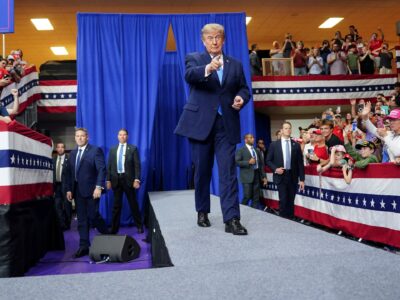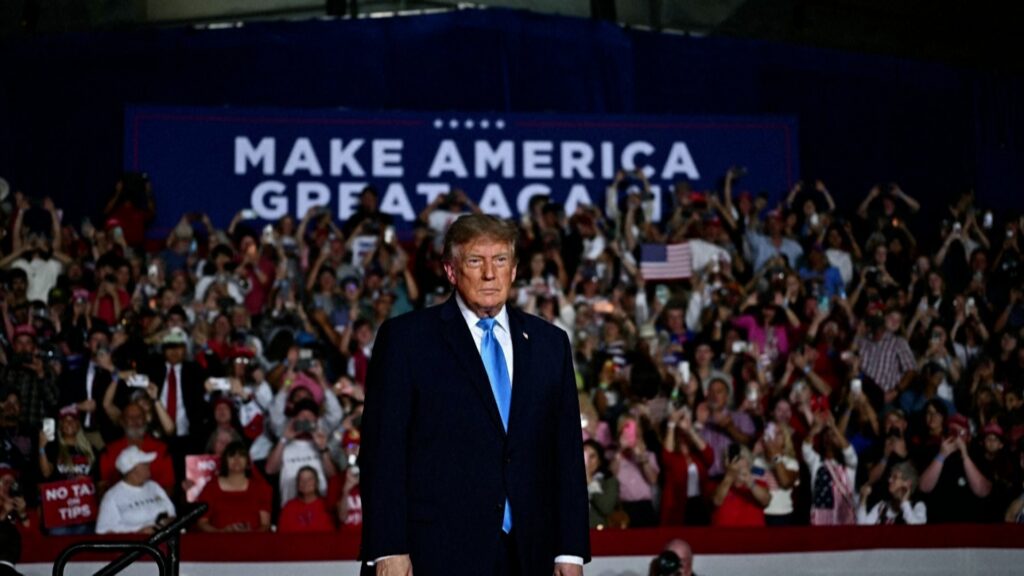
During a recent campaign rally held in Nebraska, US President Donald Trump made headlines with a controversial joke suggesting that Iran could bomb Los Angeles and San Diego. The remark was delivered in a light-hearted manner, typical of his rally rhetoric, but it sparked significant attention and debate among political observers and the public alike.
At the heart of the joke was Trump’s commentary on the tense relations between the United States and Iran, a topic that has been a focal point in his administration’s foreign policy. By joking about such a serious and sensitive issue, Trump appeared to be using humor to address ongoing geopolitical tensions.
The use of humor in political rallies is a common strategy to engage supporters and lighten the mood. However, jokes about international conflict and potential attacks on American cities can be seen as provocative and insensitive, particularly considering the real risks involved in such scenarios.
Critics argued that the joke trivialized the severity of threats posed by hostile nations and could be interpreted as a lack of seriousness regarding national security. Supporters, on the other hand, saw it as a typical Trump-style quip designed to rally his base and underscore his tough stance on foreign adversaries.
The locations mentioned in the joke, Los Angeles and San Diego, are major Californian cities with significant populations and strategic importance. Any suggestion of them being targets in international conflict, even in jest, naturally draws strong reactions from residents and officials.
This incident adds to the list of moments where Trump’s public statements have caused controversy or debate. It highlights the challenges leaders face in balancing humor, political messaging, and the gravity of international relations.
Following the rally, there was no official statement from the White House clarifying or retracting the joke, leaving it open to interpretation by the public and media. The event underscores how political rhetoric can impact public discourse and the perception of national security issues.
Overall, the joke serves as a reminder of the complex interplay between politics, communication, and international diplomacy, especially in a highly charged election year. It also reflects the unique style of President Trump’s public engagements, which frequently blend humor with serious political commentary.