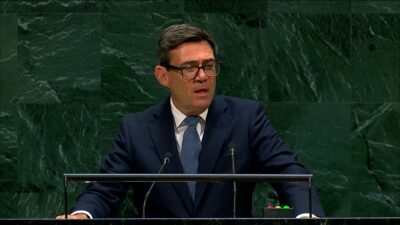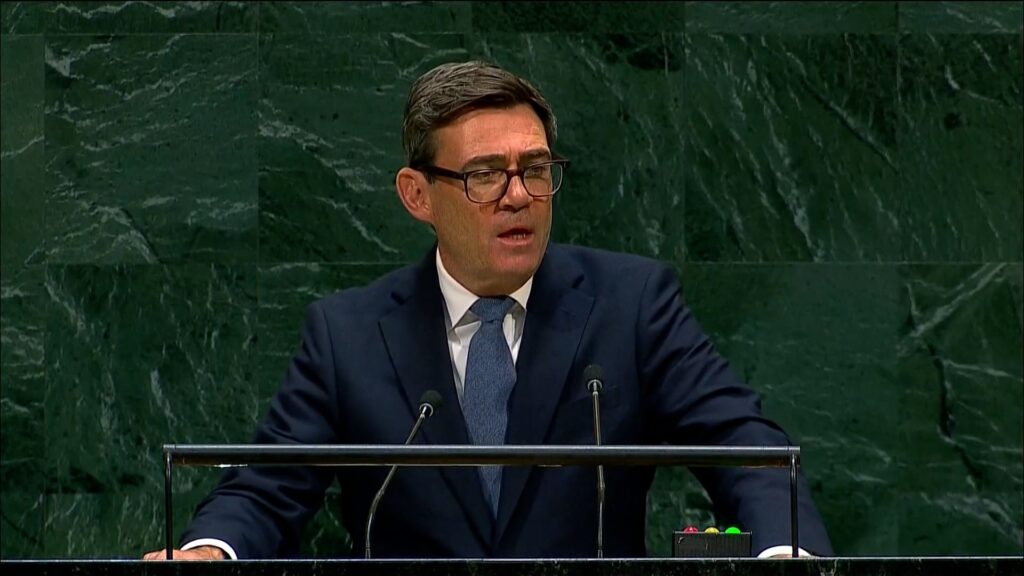
In a fervent speech delivered at the United Nations General Assembly, UK Prime Minister Andy Burnham issued a strong condemnation of Russia’s alleged interference in electoral processes around the world. Burnham described the operations as ‘repulsive’ and a direct threat to democratic institutions and global stability.
During his address, Burnham accused Russia of engaging in strategic information warfare aimed at disrupting elections and undermining confidence in democratic systems. He emphasized that such tactics not only distort the will of the people but also destabilize international relations and peace.
Highlighting the increasing complexity and sophistication of these interference campaigns, Burnham called on the international community to unite and respond decisively. He advocated for enhanced cybersecurity measures, greater transparency in election monitoring, and stronger international legal frameworks to deter and punish malicious state-sponsored actions.
The UK Prime Minister underscored the importance of protecting electoral integrity as fundamental to preserving democracy. He asserted that allowing such interference to continue unchecked could lead to widespread distrust in political processes and governance.
Burnham’s remarks come amid growing global anxiety regarding cyber-attacks and disinformation campaigns attributed to state actors, with Russia frequently implicated. The accusation adds to ongoing tensions between Russia and Western nations, where concerns over election meddling have fueled diplomatic strains.
By taking the issue to the UN General Assembly, Burnham signaled the urgency and seriousness with which the UK views these threats. His address aims to galvanize international concerted efforts to safeguard elections and uphold democratic values worldwide.
The Prime Minister’s statement received widespread attention, fueling debate on how democratic nations can effectively counter modern hybrid warfare tactics. Experts agree that coordinated international responses, including intelligence sharing, public awareness campaigns, and economic sanctions, will be paramount.
In closing, Burnham called on all member states to reaffirm their commitment to democracy and work collaboratively to combat information warfare. His denunciation of Russia’s actions serves as a clarion call to defend the integrity and sovereignty of democracies globally in the face of evolving security challenges.