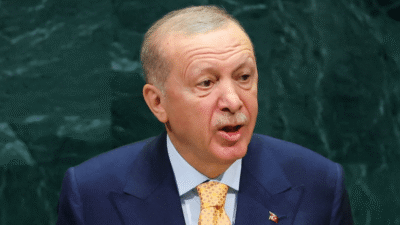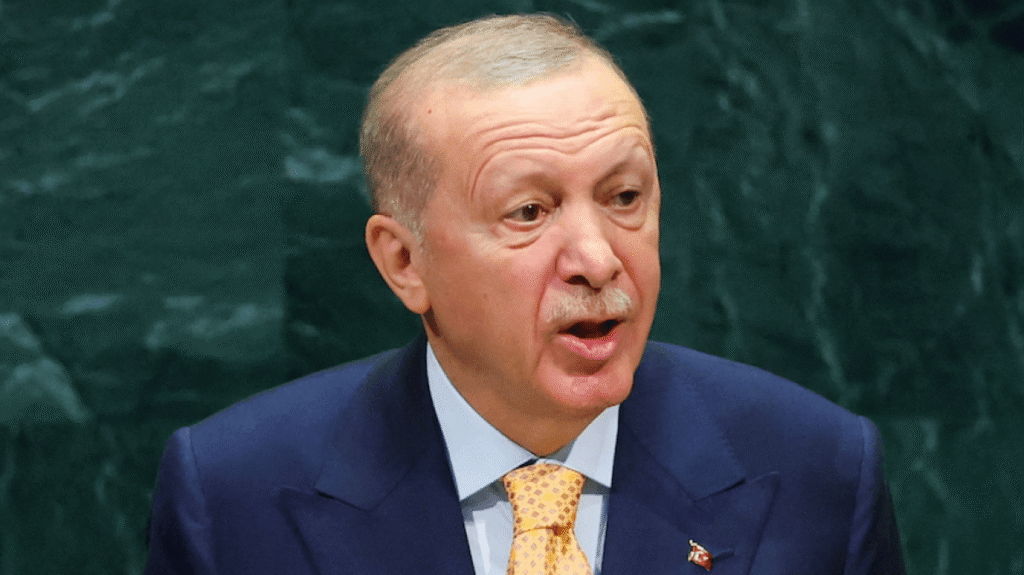
During a session at the United Nations General Assembly, Turkish President Recep Tayyip Erdogan strongly accused Israel of harboring a ‘genocidal mindset.’ Erdogan’s remarks came amid ongoing tensions and conflicts in the Middle East, particularly concerning the Israeli-Palestinian situation. He condemned the actions of the Israeli government, suggesting that their policies and military strategies reflect an intent to systematically undermine and eliminate Palestinian communities.
Erdogan’s speech highlighted his country’s firm stance on the issue and called for international attention and intervention to address the humanitarian crisis. He urged the global community to take decisive action against what he described as grave violations of human rights committed by Israel. This accusation has further escalated diplomatic tensions between Turkey and Israel, nations that have had fluctuating relations over recent years.
The Turkish president’s comments at the UNGA have sparked widespread reactions from various countries and international organizations. Supporters of Erdogan have praised his boldness in confronting what they view as injustices in the region. Conversely, critics argue that his statements might exacerbate divisions and hinder peaceful negotiations.
Israel has not officially responded to Erdogan’s latest remarks, but in the past, it has consistently rejected accusations of genocide, maintaining its right to defend itself against security threats. The Israeli government emphasizes its commitment to protecting its citizens and adhering to international law.
Erdogan’s use of the term ‘genocidal mindset’ is seen as highly provocative given the historical sensitivities surrounding the word, which invokes the memory of the Holocaust and other horrific atrocities. This choice of language underscores the severity with which Erdogan views the situation in the Palestinian territories.
The UN General Assembly meeting continues to serve as a critical platform for world leaders to express their perspectives on global conflicts and humanitarian issues. Erdogan’s speech marks another chapter in the ongoing debate over the Israeli-Palestinian conflict, a conflict that remains one of the most complex and enduring in international relations.
Observers suggest that Turkey’s position, articulated by Erdogan, reflects its broader strategy in Middle Eastern geopolitics, where it seeks to assert influence and champion the rights of Muslim populations, particularly Palestinians. This development could influence diplomatic alignments and affect peace efforts in the region.
As the international community watches closely, calls for renewed dialogue and peaceful resolution continue to grow. The UN, alongside various countries and non-governmental organizations, remains engaged in mediation efforts to de-escalate tensions and promote stability.
Erdogan’s accusation at the UNGA highlights the deep-rooted challenges in resolving the Israeli-Palestinian conflict and the critical role of global diplomacy in striving for lasting peace and justice in the Middle East.