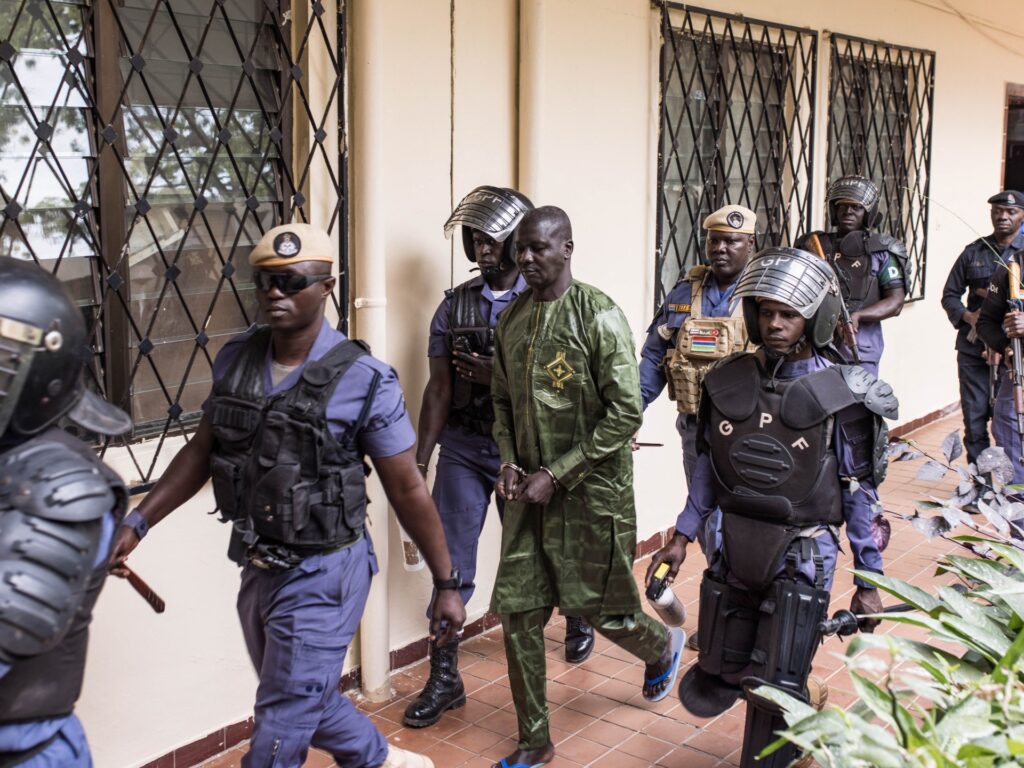
In a significant legal development in The Gambia, Sanna Manjang, a former leader accused of heading a notorious ‘death squad,’ has appeared in a military court. Manjang faces charges of desertion from the Gambian army in 2017, an act that coincided with the tumultuous period following the end of Yahya Jammeh’s 20-year authoritarian rule.
Yahya Jammeh, who ruled The Gambia for two decades, was known for a regime marked by human rights abuses, including extrajudicial killings and the operation of so-called ‘death squads.’ These squads were implicated in numerous instances of violence and intimidation against those opposing the government.
Sanna Manjang’s role during Jammeh’s presidency has been under scrutiny as part of broader efforts to address past violations and foster national reconciliation. His trial is significant as it marks an attempt by the current Gambian administration to hold individuals accountable for actions during the previous regime.
The charges against Manjang specifically relate to desertion, a military offense, which he is alleged to have committed in 2017. This period was critical as Jammeh’s rule was coming to an end amidst growing internal and external pressure. The circumstances surrounding his desertion may shed light on the internal dynamics within the army during this time of political transition.
The appearance of Manjang in military court signals The Gambia’s ongoing struggle with its past and the challenges faced in instituting justice and rule of law. Many Gambians and international observers have called for thorough investigations and accountability for crimes committed during Jammeh’s regime.
The military trial also raises broader questions about the reconciliation process in The Gambia. The government has undertaken several measures aimed at healing divisions and establishing truth about the abuses committed. Trials like that of Sanna Manjang form a crucial part of these efforts.
Legal experts suggest that the proceedings could set important precedents for how former military officials accused of serious violations are dealt with under Gambia’s new democratic framework. It highlights the tension between maintaining military discipline and addressing human rights violations.
Human rights organizations have expressed cautious optimism about the trial but stress the importance of fairness and transparency. They argue that trials must not only punish wrongdoing but also help in building lasting peace and confidence in justice institutions.
Sanna Manjang’s case will be closely watched both domestically and internationally, as it reflects the broader quest for accountability and the rule of law in post-Jammeh Gambia. The outcome could influence how future cases related to the former regime are handled.
As The Gambia continues to navigate its post-authoritarian path, the trial serves as a reminder of the complexities involved in reconciling a deeply divided society. It underscores the need for comprehensive transitional justice mechanisms that balance retribution, reconciliation, and reform.
The transition from a regime characterized by fear and repression to one aspiring for democracy is fraught with challenges. Cases like Manjang’s highlight the pivotal role of the judiciary in shaping the country’s future and ensuring that the mistakes of the past do not repeat.
In conclusion, the military trial of former ‘death squad’ leader Sanna Manjang marks a critical moment in The Gambia’s journey toward justice and democracy. It illustrates the ongoing efforts to confront a painful history and build a society founded on respect for human rights and the rule of law.