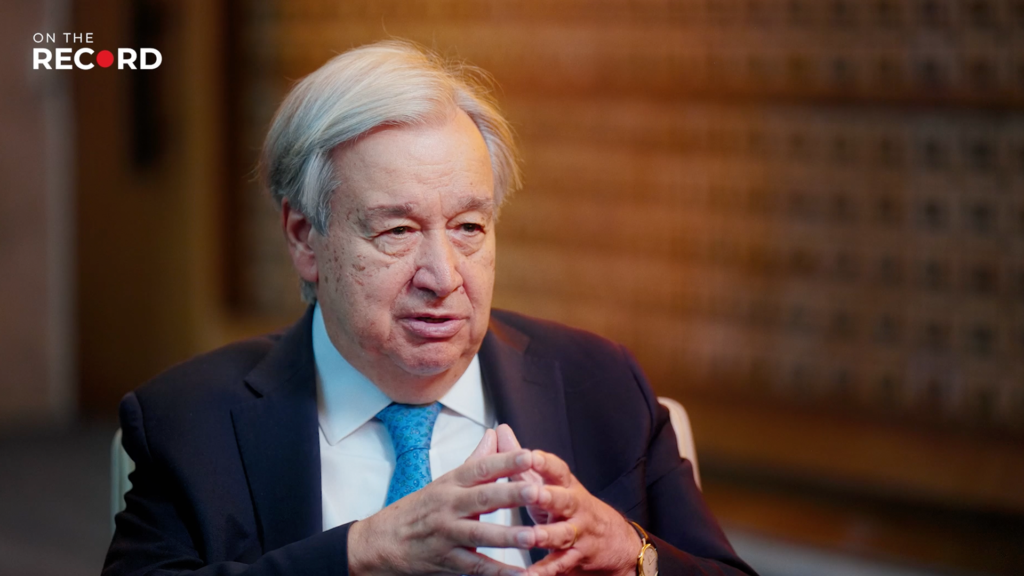
In a recent and urgent appeal, UN Secretary-General António Guterres has called for an international ban on autonomous weapons systems, commonly referred to as ‘killer robots.’ These are weaponized machines that can independently make decisions to target and engage people without human intervention. Guterres highlighted the grave dangers these autonomous systems pose to global peace, security, and humanitarian principles.
During an episode of ‘On the Record,’ the Secretary-General emphasized that ‘killer robots’ could revolutionize warfare in a dangerously destabilizing way. He warned that these machines could make warfare faster, more unpredictable, and less controllable, with catastrophic consequences.
Guterres underlined the ethical concerns surrounding the deployment of machines capable of lethal action without human judgment. He stressed that delegating life-and-death decisions to machines undermines fundamental human rights and accountability.
The UN chief also called upon member states to move swiftly toward adopting an international framework to prohibit fully autonomous weapons. According to him, such a treaty is essential to preventing an arms race in artificial intelligence-driven weapons technology that could threaten humanity.
The call for a ban reflects growing global unease about the rapid advancement of artificial intelligence and robotics in military applications. Many experts, human rights organizations, and peace advocates have echoed this concern, urging world governments to regulate or outlaw lethal autonomous weapons systems.
International discussions on this issue have been ongoing at the United Nations and other diplomatic forums. Nevertheless, progress remains slow as countries debate the implications for national security, technological innovation, and military strategy.
Guterres’ statement reinvigorates the push for a global consensus on the matter, emphasizing that the future of warfare should not be left in the hands of machines. It is a call to action for safety, ethics, and humanity in the face of rapidly evolving technology.
This development marks a critical moment in the global discourse on warfare and artificial intelligence, putting pressure on political leaders to act responsibly to protect civilians and maintain international peace.
As the world watches, the outcome of this call for banning ‘killer robots’ may shape the nature of conflict and international security for decades to come.