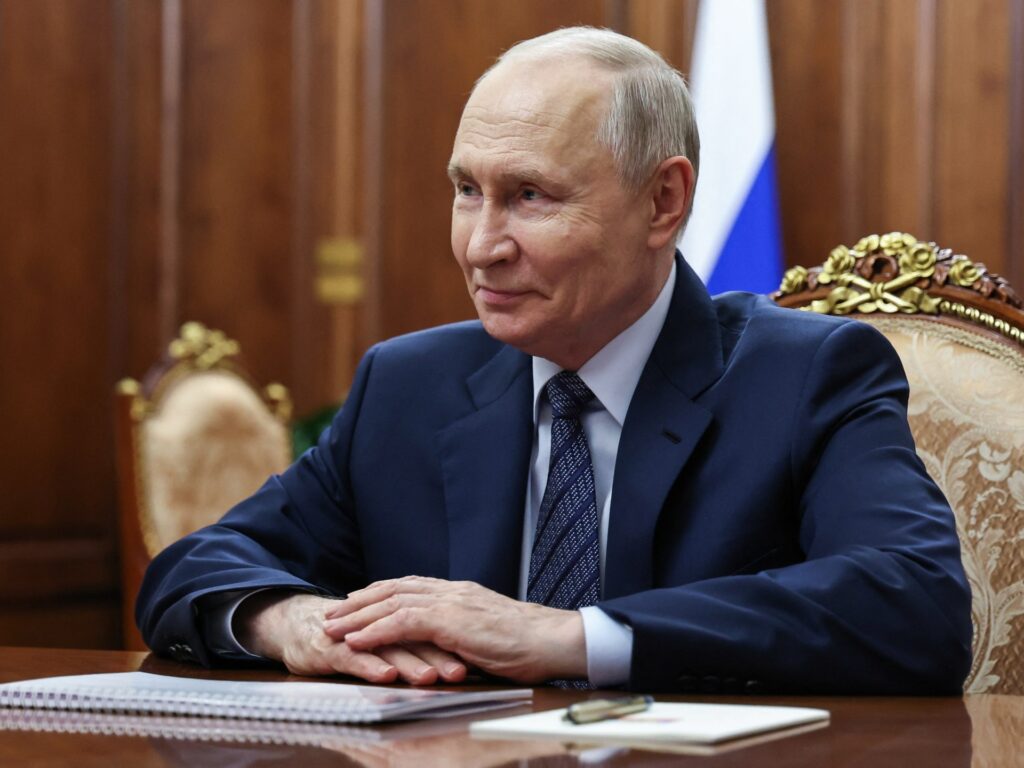
In the recent parliamentary elections held in Russia, the United Russia party, closely associated with President Vladimir Putin, has achieved a supermajority in the State Duma. This significant victory further consolidates Putin’s political power despite growing domestic and international challenges, including the ongoing war with Ukraine, which has increasingly seen public disapproval.
The United Russia party’s overwhelming win marks a crucial moment in Russian politics, reaffirming Putin’s stronghold within the nation’s legislative framework. Analysts suggest that the supermajority will provide Putin with even greater legislative leverage to push forward his political agenda and maintain control over the country’s governance amid turbulent times.
Despite the success at the polls, the backdrop of the election was marred by the war with Ukraine. As the conflict continues, reports indicate that the once robust support for the military campaign is eroding among the Russian populace. Economic sanctions and international isolation have also taken a toll on the nation, sparking some pockets of dissent across various regions.
The election results, however, demonstrate that Putin’s political apparatus remains resilient. The ruling party’s dominance in the Duma is expected to translate into more stable governance, at least from the Kremlin’s perspective, allowing the government to navigate ongoing challenges with a unified legislative front.
Critics of the election process pointed to allegations of irregularities and limited political competition, suggesting that the playing field was tilted in favor of United Russia. Opposition parties struggled to gain traction, with many activists facing restrictions or being sidelined. These concerns raise questions about the overall fairness and competitiveness of the electoral process.
International observers have expressed concern over the implications of Putin’s reinforced mandate, especially in the context of the war in Ukraine. The supermajority equips the Kremlin with broad authority to shape policy domestically and continue its strategic objectives abroad.
Looking ahead, the consolidation of power by United Russia may enable the government to withstand internal pressures and external criticisms. However, the ongoing conflict and the associated socio-economic strains could pose significant risks to long-term stability.
In summary, while the electoral victory solidifies Putin’s control over Russia’s political landscape, it also underscores the complexities facing the nation as it grapples with the consequences of the Ukraine war and mounting public unease. How this balance will evolve remains a pivotal question for Russia’s future and its relations with the wider world.