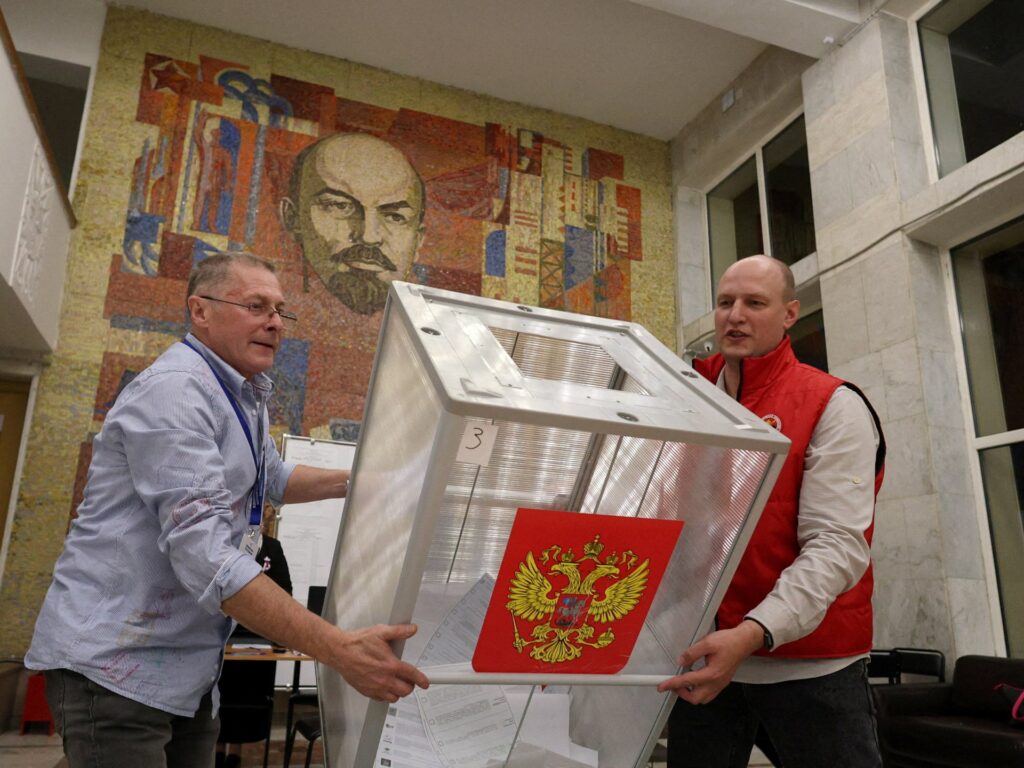
The early results of Russia’s parliamentary elections indicate a strong dominance by the ruling party, United Russia, amid the ongoing conflict in Ukraine. The Kremlin aims to use these elections to demonstrate widespread popular support for its military actions and to bolster the legitimacy of its war efforts.
As the nation votes, the focus remains on how the elections will reflect domestic backing for the government’s policies in Ukraine. United Russia, which is closely associated with President Vladimir Putin, has been campaigning on a platform that includes justifying the military campaign as necessary for national security and regional stability.
Election officials have reported that United Russia is leading decisively in many constituencies, signaling continued consolidation of power despite international sanctions and war-related economic challenges.
Critics argue that the elections are unlikely to be free or fair, given the tight control exercised by the Kremlin over media, the suppression of opposition candidates, and reported irregularities at polling stations. They suggest that the vote serves more as a political endorsement of the current regime rather than a genuine democratic process.
The Kremlin’s narrative emphasizes patriotism and solidarity, depicting the elections as a referendum on the country’s strength and resolve during wartime. Supporters say a strong performance by the ruling party will help maintain stability at home and provide a mandate for continuing the military campaign.
Opposition parties face significant obstacles, including restricted ability to campaign and negative media portrayals. Many key opposition figures have been disqualified or detained, limiting voter choice.
Observers note that turnout will be an important indicator of public sentiment. A high turnout with a majority supporting United Russia would be portrayed by the Kremlin as a clear endorsement of its policies and a rebuke to Western criticism.
International reactions to the elections have been skeptical, with many countries questioning the legitimacy of the process and condemning the Kremlin’s use of state power to influence outcomes.
The election results will have implications not just domestically but also for Russia’s geopolitical standing amid its ongoing conflict with Ukraine and strained relations with the West.
In conclusion, while the early election results show strong performance by the ruling party, the broader context of wartime politics, media control, and opposition suppression casts doubt on the democratic nature of the vote. The Kremlin’s goal to legitimize its war effort through these elections is evident, but international scrutiny and internal dissent persist.
This election cycle highlights the complex interplay between governance, public opinion, and geopolitical conflict for Russia as it navigates its wartime challenges.