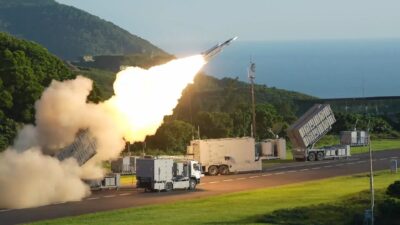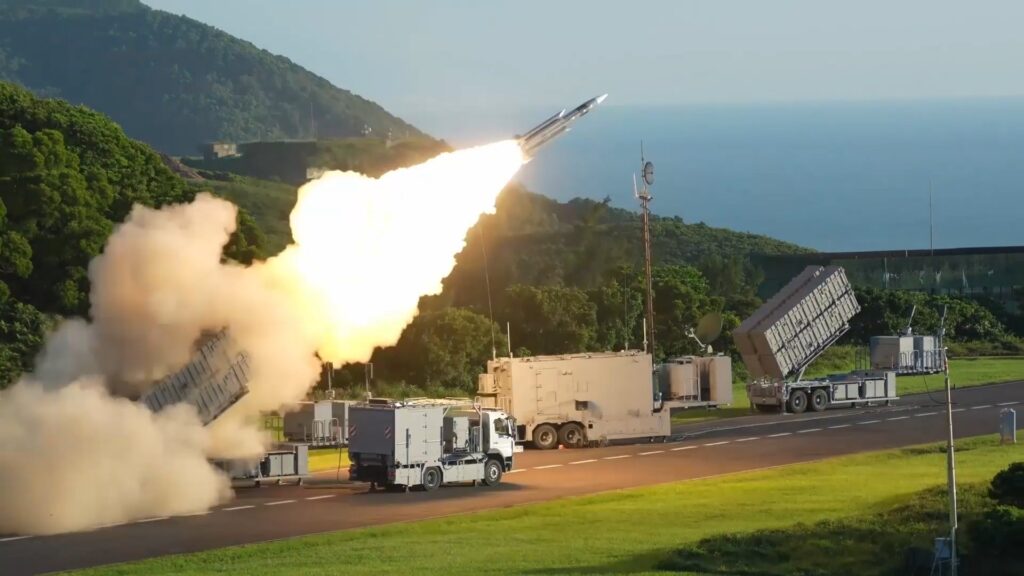
In a bold demonstration of its military prowess, Taiwan has recently conducted a series of live-fire drills involving missiles and attack drones. This move comes in the wake of rising geopolitical tensions and as a strategic signal ahead of the highly anticipated summit between U.S. President Donald Trump and Chinese President Xi Jinping. The drills underscore Taiwan’s resolve to defend its sovereignty amid the complex international relations involving China and the United States.
The exercises showcased an array of sophisticated weaponry, focusing on precision and rapid response capabilities. Taiwan’s defense forces launched multiple missile volleys and deployed advanced attack drones, simulating responses to potential threats from across the Taiwan Strait. These drills are part of Taiwan’s broader strategy to bolster its self-defense systems and enhance operational readiness in the face of increasing pressure from Beijing.
This military display is significant given its timing. The upcoming talks between Trump and Xi are expected to address critical issues including trade, security, and regional stability in the Asia-Pacific region. Taiwan’s live-fire exercises send a clear message about its strategic importance and its commitment to maintaining its territorial integrity.
Taiwan’s military actions also highlight the island’s growing confidence and capability to assert itself despite China’s persistent claims of sovereignty over Taiwan. The drills serve as both a deterrent and a demonstration of strength, designed to ensure that Taiwan remains a central topic in the dialogue between the world’s two largest economies.
Observers note that Taiwan’s show of force may influence the dynamics of the Trump-Xi summit by emphasizing the delicate balance of power in the region. It illustrates the intricate relationship between military preparedness and diplomatic negotiations in managing cross-strait tensions.
Furthermore, Taiwan’s government has reiterated its commitment to peace while simultaneously emphasizing its right to self-defense. The live-fire drills are portrayed as a necessary precaution in an unpredictable geopolitical landscape where military readiness is a critical component of national security.
In conclusion, Taiwan’s recent military exercises are a strategic move aimed at safeguarding its interests amid evolving international relations. As Trump and Xi prepare to engage in conversations that will shape the future of global and regional politics, Taiwan’s display of military capability serves as a potent reminder of the unresolved tensions and the need for a nuanced approach to stability in East Asia.