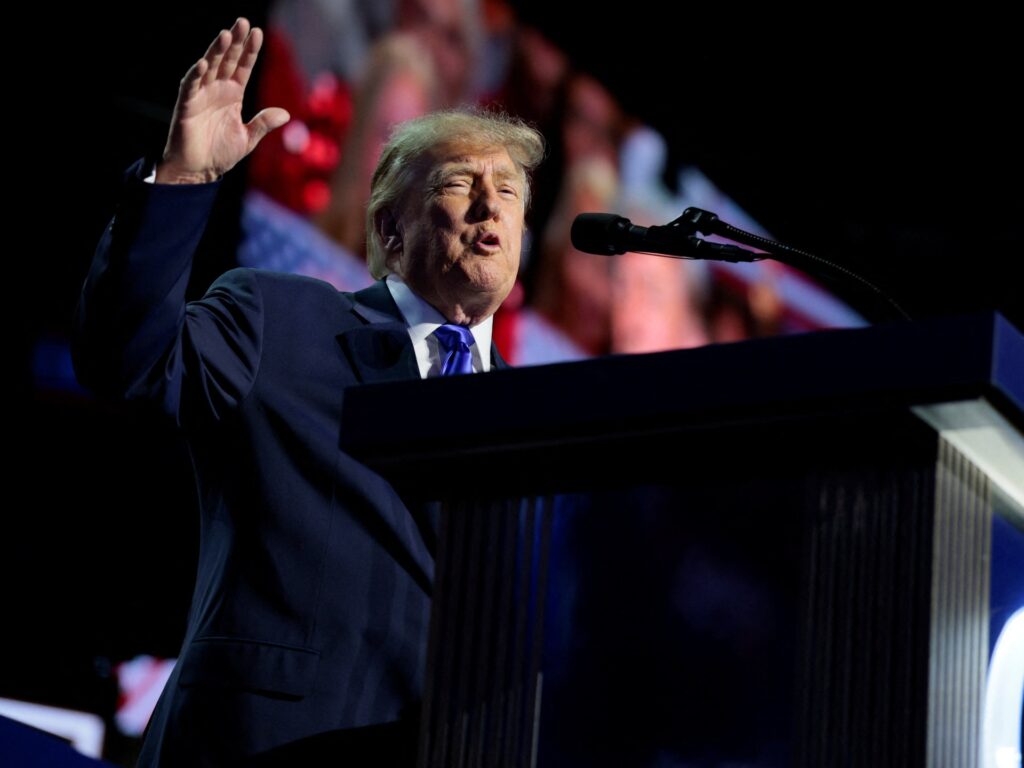
Former President Donald Trump’s recent pledge to provide a $5,000 ‘dividend’ payment to every American adult has stirred debate and skepticism among supporters and critics alike. The proposal, tied to anticipated Republican victories in upcoming midterm elections, has been met with mixed reactions, reflecting the polarized political landscape in the United States.
Trump’s announcement emerged as part of a broader strategy to energize his base and secure electoral gains. He proclaimed that a Republican win in the midterms would enable the distribution of direct cash payments as a form of economic relief and reward to the American populace. However, many observers question the feasibility and sincerity of this commitment.
Supporters of Trump have expressed doubt about whether the $5,000 payments will materialize, citing past instances where political promises have fallen short. Some believe the pledge is primarily a political maneuver designed to boost voter turnout and capitalize on economic frustrations rather than a concrete policy initiative.
Critics from both sides of the political spectrum have raised concerns about the financial implications of such a payout. Economists warn that direct cash payments of this magnitude could have significant impacts on the federal budget, inflation rates, and long-term economic stability. Questions also arise about the funding sources and legislative feasibility of distributing such payments nationwide.
Additionally, political analysts suggest that the pledge may deepen divisions within the Republican Party and among voters, as not all factions fully support or trust the plan. Some Republican lawmakers have been cautious, prioritizing other policy objectives over direct cash payments.
The concept of distributing dividends to citizens is not unprecedented; similar proposals have been discussed in various forms, such as universal basic income or Alaska’s Permanent Fund Dividend, which pays residents a portion of oil revenues. However, the scale and context of Trump’s pledge differ significantly.
Public reaction has been varied, with some viewing the promise as a hopeful economic boost, while others remain wary of its practicality and potential consequences. The media coverage has further fueled the debate, highlighting the political and economic challenges intertwined with the proposal.
As the midterm elections approach, the $5,000 dividend promise remains a focal point in political discourse. Whether it will translate into actual policy or remain symbolic rhetoric is yet to be seen. Meanwhile, voters and stakeholders continue to weigh the implications of such a pledge on the nation’s economy and political future.
In conclusion, while Trump’s $5,000 payment pledge has captured public attention, skepticism persists across the spectrum. The pledge’s ultimate impact will depend on electoral outcomes, legislative processes, and broader economic conditions that shape American governance moving forward.