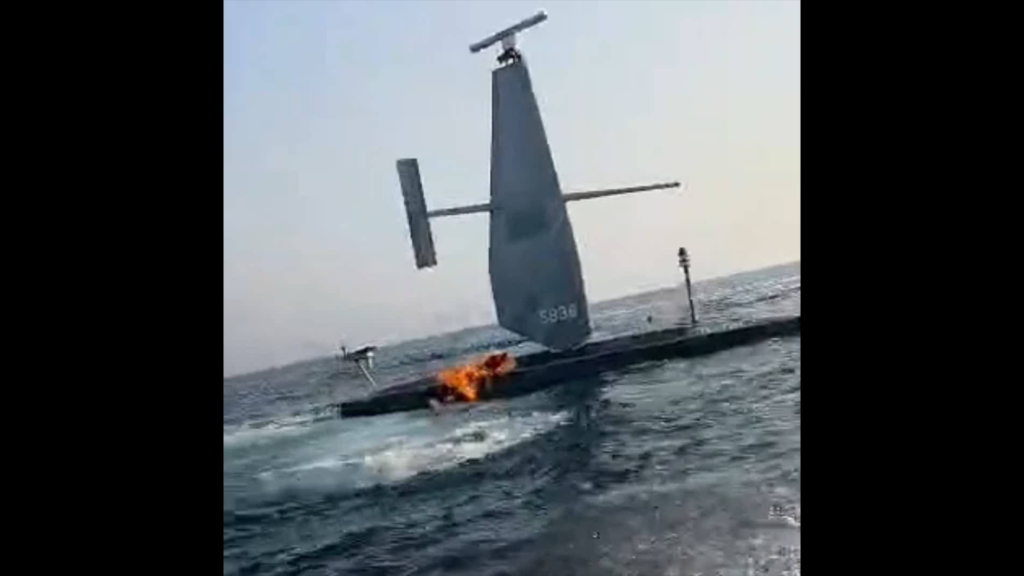
In a significant development in the ongoing tensions between Iran and the United States, Iran’s Revolutionary Guard has claimed the capture of a US-operated surface drone, described as a ‘sail drone,’ near the entrance of the Strait of Hormuz. The incident reportedly occurred in the waters adjacent to this vital maritime chokepoint, which is a critical passage for global oil shipments.
According to statements from Iran’s Revolutionary Guard, their naval forces successfully struck and seized the drone, which they characterize as a US surveillance or operational device. The capture underscores Tehran’s intent to assert control and monitor foreign military activity near its territorial waters, especially in a region that has frequently seen confrontations involving US and Iranian forces.
The Strait of Hormuz, located between the Persian Gulf and the Gulf of Oman, is one of the world’s most strategically important waterways. Approximately one-fifth of the world’s petroleum, including a significant portion of oil transported from the Middle East, passes through this narrow strait daily. Any incident in this area has profound implications for regional and global energy security.
US officials have not yet provided a detailed response to Iran’s claim, and it remains unclear what exactly happened to the drone or what its mission was. The United States operates a variety of unmanned aerial and surface vessels for reconnaissance and defense purposes, and the loss of such a device near Iranian waters could escalate tensions further.
The Revolutionary Guard’s announcement comes amid heightened diplomatic and military friction between the two countries, fueled by earlier sanctions, nuclear program disputes, and regional proxy conflicts. This latest event may be viewed as an attempt by Iran to demonstrate its surveillance capabilities and to push back against what it perceives as foreign encroachment.
Experts note that the use of unmanned systems, such as sail drones, represents a new dimension in naval and maritime operations, where traditional confrontations can be supplemented or even replaced by remote-controlled or autonomous devices. This incident highlights the increasing militarization and technological competition in the Persian Gulf region.
Regional stakeholders and international observers are closely monitoring the situation. The capture could lead to further unilateral actions or diplomatic efforts aimed at de-escalation to avoid disruption of maritime traffic and economic stability.
Iran’s move to capture the drone signifies its growing confidence in contesting US presence in its vicinity. It also serves as a message to Washington about the limits of freedom of navigation claims and surveillance operations near sensitive Iranian sea lanes.
The international community has expressed concern over escalations in the area and calls for restraint and dialogue to prevent conflict. The Strait of Hormuz remains a flashpoint where geopolitical rivalries and global economic interests intersect.
As details continue to emerge, the incident will undoubtedly shape the discourse on security in the Persian Gulf and influence future naval deployments and diplomatic engagements.