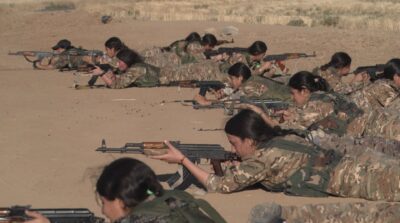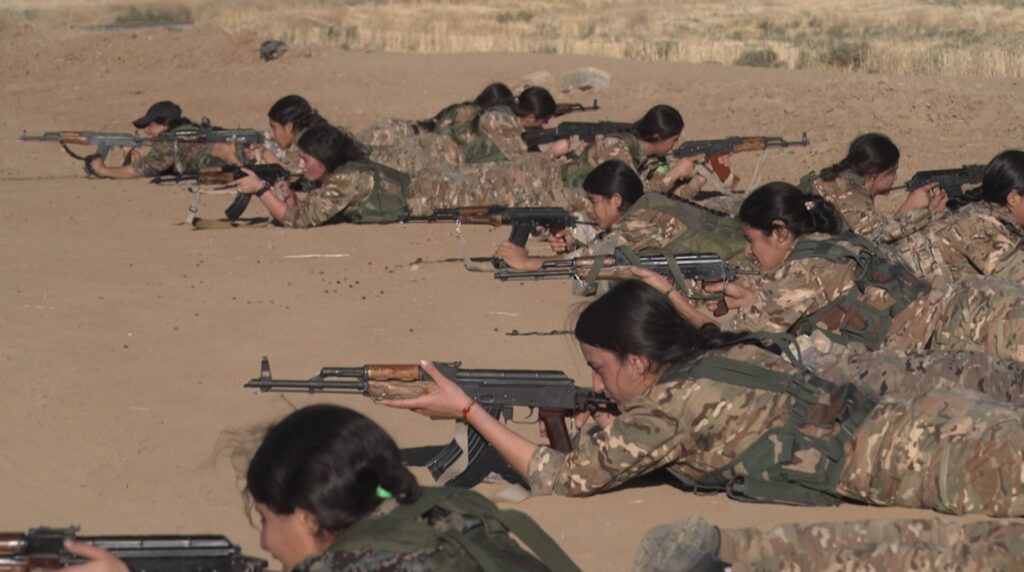
In the evolving military landscape of northeast Syria, Kurdish women fighters from the YPJ (Women’s Protection Units) are encountering significant challenges as they attempt to integrate into Syria’s newly formed national army. Despite their crucial role in the fight against ISIS and in maintaining security in the autonomous Kurdish regions, these women face exclusion and marginalization in the broader Syrian military restructuring efforts.
The YPJ, established as an all-female militia, has been instrumental in combat operations alongside their male counterparts, the YPG (People’s Protection Units). Their fierce determination and strategic importance gained international recognition during battles to reclaim territory from extremist groups. However, the political agreements shaping Syria’s future army seem to overlook the formal inclusion of women combatants, in particular the YPJ fighters.
Reports from northeast Syria highlight the frustrations among YPJ members who have been active participants in Syria’s turbulent conflict for many years. Many of these women had hoped their combat experience and sacrifices would secure their place in the new Syrian Arab Army, representing a step toward equality and recognition.
On the ground, this exclusion manifests as an official policy or an unwritten rule that discourages or outright bars YPJ women from receiving equivalent ranks or positions in the new military structure. This marginalization contrasts sharply with their substantial contributions and the social progress witnessed within Kurdish areas, where women’s empowerment has gained momentum.
The Kurdish-led administration in northeast Syria, which has exercised a degree of autonomy during Syria’s civil war, emphasizes gender equality as one of its core principles. Their governance includes efforts to boost women’s participation across political and military spheres. Still, when it comes to national arrangements, these women face systemic barriers.
Analyzing the broader geopolitical context, the new Syrian army formation is heavily influenced by external powers such as Russia, Iran, and Turkey, each with their own strategic interests and cultural perceptions of gender roles in military institutions. This external influence complicates the seamless integration of female Kurdish fighters.
Various human rights organizations and international observers have called for the inclusion of YPJ women fighters to reflect the diversity and realities of Syrian society. They argue that excluding these experienced soldiers undermines not only gender equality but also the effectiveness and credibility of the new army.
In interviews, many YPJ women express determination to continue their struggle for recognition and an equal role in Syria’s future, despite the setbacks. Their fight extends beyond the battlefield to societal norms and political negotiations, pushing for acknowledgment of their distinct identity and the unique sacrifices they have made.
This situation underscores the ongoing complexities in post-conflict Syria, where ethnic, gender, and political issues intersect strongly. The YPJ’s plight is not just a military or political matter but also a significant human rights concern that highlights the need for inclusive solutions in Syria’s reconstruction phase.
While the official Syrian government has yet to provide a clear stance on the full incorporation of YPJ women, grassroots movements and Kurdish political representatives continue to advocate for policies allowing these fighters equitable integration.
As Syria moves toward a fragile peace and reconstruction, the role of Kurdish women fighters remains a poignant symbol of resistance and empowerment. The international community’s support and attention could be pivotal in securing a place for these women in the country’s collective future, ensuring that their contributions are fully recognized and valued in the new Syrian army framework.