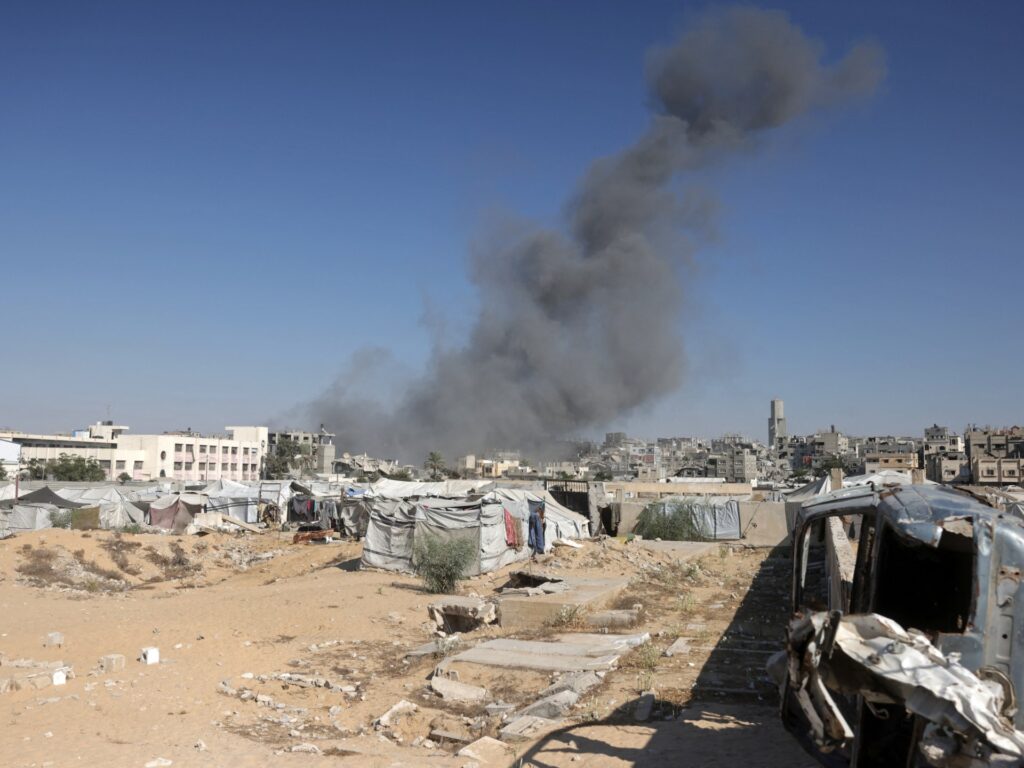
Israeli military operations in the occupied Palestinian territory have resulted in the deaths of at least four Palestinians in northern Gaza. These attacks have persisted despite a “ceasefire” agreement brokered in October aimed at reducing hostilities in the region.
The ongoing violence underscores the fragility of the ceasefire and the complex nature of the Israeli-Palestinian conflict. Ceasefire agreements have historically been difficult to maintain, often breaking down due to continuing tensions and sporadic violence from both sides.
The northern Gaza Strip has been a particularly volatile area, witnessing frequent confrontations between Israeli forces and Palestinian groups. The recent attacks highlight the region’s vulnerability to escalations and the challenges faced by civilians caught in the crossfire.
International observers have expressed concern over the renewed violence, emphasizing the urgent need for a durable and enforceable peace settlement. The deaths of civilians not only escalate the humanitarian crisis in Gaza but also contribute to a cycle of retaliation and further conflict.
Palestinian officials have condemned the Israeli attacks, calling for international intervention to protect civilians and uphold the ceasefire terms. Human rights organizations have reported on the high toll of civilian casualties and infrastructure damage resulting from the strikes.
On the Israeli side, the government maintains that its actions are targeted and necessary for national security, aiming to neutralize threats from militant groups operating within Gaza. Israel asserts its right to defend its citizens against rocket attacks and incursions originating from Palestinian territories.
The situation remains tense as both sides accuse each other of violating the ceasefire conditions. Efforts by regional mediators and international diplomats continue, seeking ways to reinforce the agreement and prevent a full-scale escalation.
Residents of northern Gaza face daily hardships due to the conflict, including restricted access to essential services such as medical care, electricity, and clean water. Humanitarian agencies have called for unrestricted aid delivery to alleviate the suffering of the affected populations.
The conflict’s impact extends beyond immediate casualties, affecting the broader socio-economic stability in the region. Prolonged violence hinders reconstruction efforts and perpetuates poverty and unemployment among the Palestinian population.
Observers warn that without renewed dialogue and a genuine commitment to peace, the cycle of violence will persist, undermining regional security and prospects for a lasting resolution.
The international community faces increased pressure to hold parties accountable and support initiatives that promote reconciliation and coexistence. Diplomatic engagement, combined with humanitarian assistance, is crucial to addressing the underlying causes of the conflict.
As the situation develops, continuous monitoring and reporting by independent media and organizations remain vital in providing transparent information and advocating for the rights and safety of civilians on all sides.
The deaths in northern Gaza serve as a grim reminder of the ongoing human cost of the conflict and the urgent necessity to achieve sustainable peace through dialogue and mutual understanding.