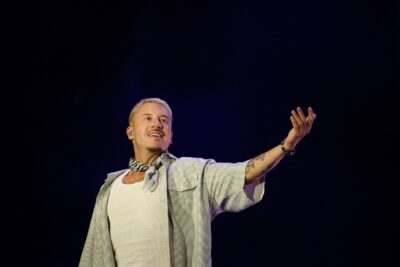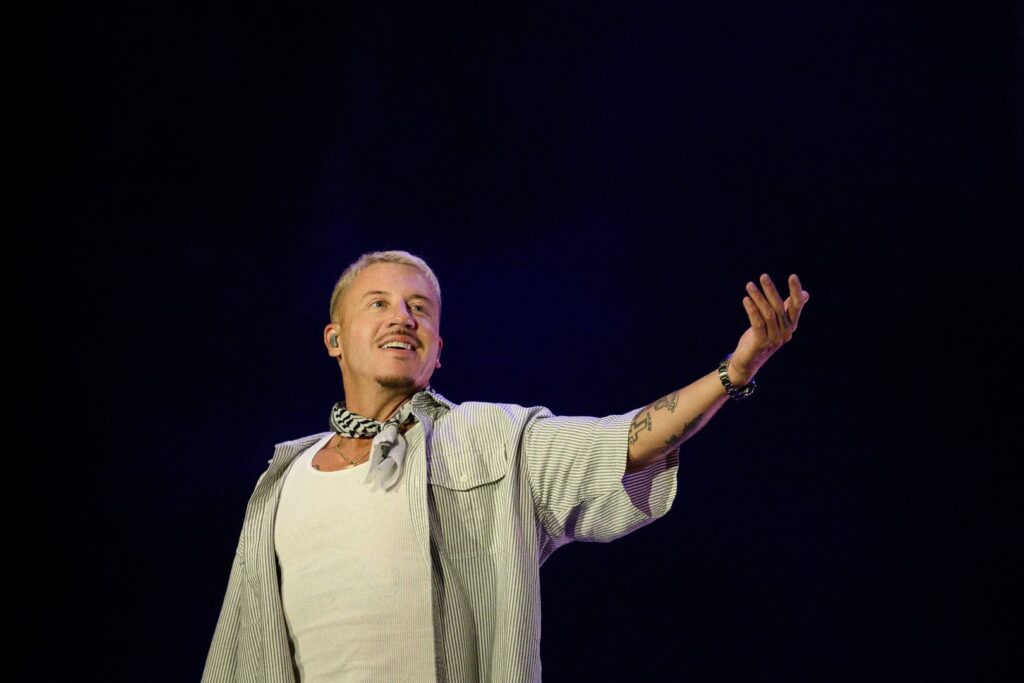
During a recent concert where Macklemore opened for the globally renowned artist Ed Sheeran, the rapper sparked controversy by loudly stating “Free Palestine” on stage. This declaration quickly drew sharp criticism from pro-Israel groups and ignited a heated debate among fans and observers alike.
Macklemore’s call to “Free Palestine” was delivered as part of a broader dialogue he often engages in through his music and public appearances, where he advocates for social justice and human rights. However, this particular moment at the concert amplified the attention on his political stance, leading to both support and opposition.
Pro-Israel groups condemned Macklemore’s statement, arguing that such expressions contribute to political polarization and may ignore the complexity of the Israeli-Palestinian conflict. Supporters of Macklemore, on the other hand, praised his courage to speak out on an issue many consider sensitive and contentious.
The backlash did not deter Macklemore, who stood by his message in subsequent statements. He emphasized that his intent was to raise awareness about Palestinian struggles and the broader issue of human rights, rather than to engage in divisive politics.
This incident highlights the broader trend of artists leveraging their platforms to address global issues, often encountering mixed reactions. The intersection of entertainment and political activism remains a space for significant public discourse.
Macklemore’s defense also draws attention to the ongoing conflict in the Middle East, which continues to evoke strong emotions worldwide. As a public figure, Macklemore’s engagement in this debate underscores the influence and responsibility artists bear when they voice their opinions on geopolitical matters.
Fans and critics alike continue to watch how this controversy unfolds, with many believing the discussion around free speech and political expression in music is far from over. Meanwhile, Ed Sheeran’s team has largely remained silent, focusing attention back on his music rather than political disputes.
In sum, the backlash against Macklemore for his “Free Palestine” call is emblematic of the larger tensions that arise when entertainment intersects with activism. It illustrates the challenges and opportunities that artists face when addressing contentious issues on a public stage.