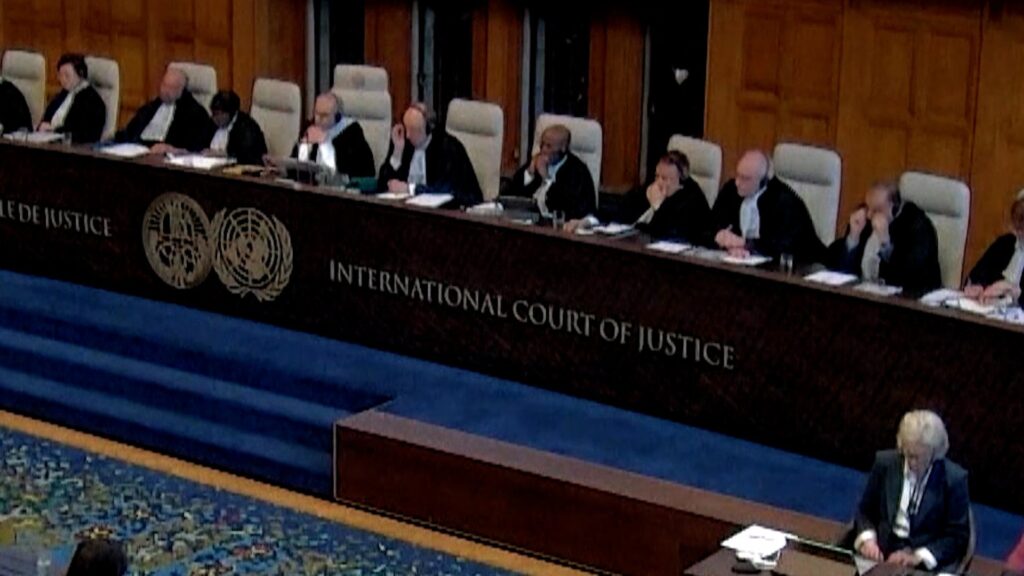
Germany has announced it is seeking to dismiss the genocide case filed by Nicaragua at the International Court of Justice (ICJ), arguing that the ICJ lacks jurisdiction over the matter. The case centers around allegations of genocide committed in the Gaza region, with Nicaragua bringing the complaint against Germany’s actions or involvement.
The ICJ, based in The Hague, is the principal judicial organ of the United Nations and is tasked with settling legal disputes between states according to international law. However, jurisdictional challenges are a common preliminary step in high-profile cases, as states often seek to avoid trial or dismissal by arguing the court has no authority over the issue.
Germany’s move to seek dismissal of Nicaragua’s genocide allegations highlights the complex international legal and diplomatic tensions involved in the case. The German government claims that the ICJ does not have the mandate to hear this specific case, perhaps arguing either that the court’s jurisdictional rules do not apply or that the issue falls outside the scope of international legal agreements under which the ICJ operates.
The Nicaragua genocide case has drawn significant international attention as it involves serious accusations of violations of human rights and international law. The core of the argument brought forth by Nicaragua alleges that Germany had some form of direct or indirect responsibility related to acts constituting genocide in the Gaza conflict. However, Germany’s legal counsel is pushing back strongly, underlining jurisdictional grounds for dismissal rather than addressing the substantive allegations at this stage.
This jurisdictional dispute will need to be resolved by the ICJ before the court can proceed to examine the merits of the genocide claims. Historically, jurisdictional objections have played a crucial role in ICJ cases, sometimes leading to dismissal of cases before any substantive rulings are made.
The outcome of this jurisdiction challenge could have broader implications for international law and accountability mechanisms in cases of alleged genocide and human rights abuses. If the ICJ accepts Germany’s jurisdictional objection, Nicaragua’s case may be dismissed outright, limiting the international legal avenues available to pursue accountability.
Conversely, if the court rejects Germany’s challenge, the genocide allegations could proceed to full judicial examination, potentially marking a significant moment in international court proceedings related to conflict and mass atrocity claims.
The case also underscores the ongoing tensions in international relations around conflict zones and the challenges faced by international courts in balancing state sovereignty with the enforcement of international law. Both Germany and Nicaragua are watching closely, as are international legal experts and human rights advocates.
At this stage, the ICJ has not yet made a ruling on the jurisdictional challenge, leaving the case in a state of procedural uncertainty. Future hearings will further clarify the court’s position and the potential pathway forward for this significant international legal dispute.