Four activists from Palestine Action, a group known for its direct actions against Israeli weapons manufacturing facilities, have lodged appeals against their recent convictions on terrorism charges. The activists were initially sentenced following a high-profile raid on an Israeli arms factory, an act they contend was a form of protest rather than terrorism.
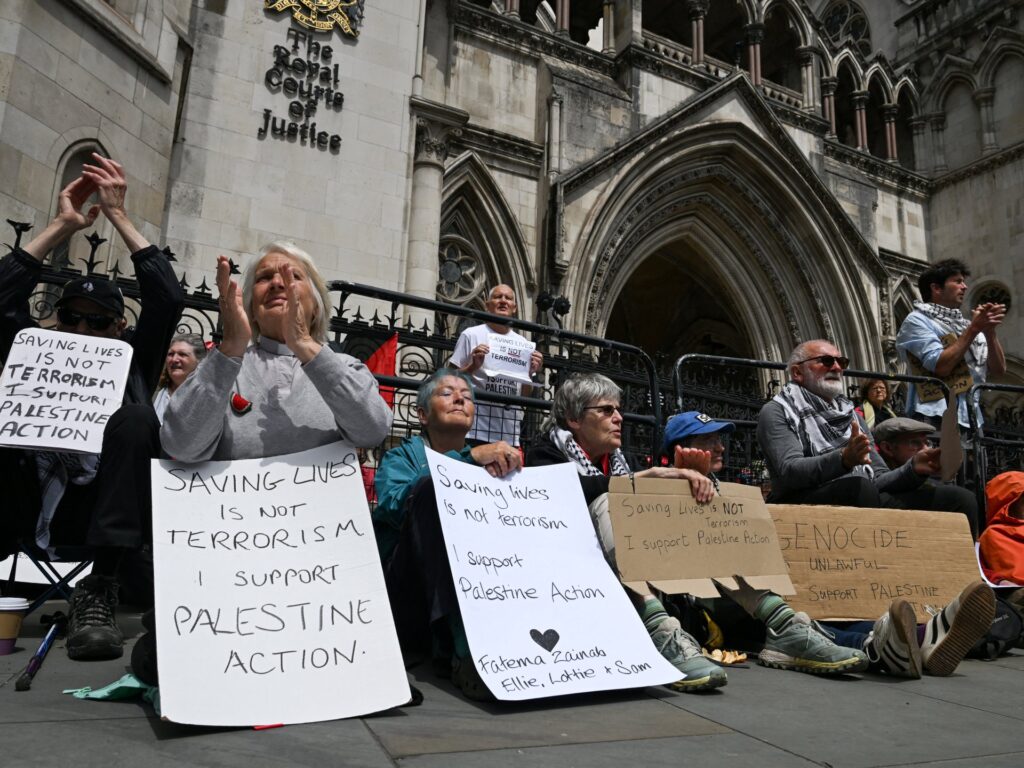
Supporters and advocacy groups have voiced strong opposition to the sentences, arguing that labeling protest actions as terrorism sets a troubling legal and political precedent. The activists’ trial and conviction have sparked a debate about the boundaries of lawful protest and the criminalization of political dissent.
Palestine Action has been active in campaigning against the production of weapons used in the Israeli-Palestinian conflict. Their methods have included entering facilities unauthorized and disrupting operations to raise awareness and push for policy change. However, authorities have increasingly framed these activities as severe criminal offenses.
The appeals highlight the activists’ argument that their actions were intended to highlight human rights abuses rather than to intimidate or coerce civilians or governments, which are key elements of terrorism definitions under the law. Legal experts following the case suggest the appeals may focus on the interpretation of terrorism statutes and the proportionality of the sentences given.
Campaigners assert that the convictions could deter other activists from engaging in peaceful protests, potentially chilling free speech and activism related to international conflicts. They warn that broad application of terrorism laws risks undermining civil liberties and mischaracterizing political activism as violent extremism.
The activists’ imprisonment has galvanized support across human rights organizations and some political groups who call for a reassessment of the charges and advocate for their release. The case has further underscored the complex interplay between national security concerns and the protection of civil rights in democratic societies.
As the appeals process unfolds, attention will be on the judicial system’s approach to protest actions within the context of counterterrorism legislation. The outcome could influence future cases involving politically motivated activism and the legal thresholds for categorizing acts as terrorism.
With global scrutiny on both the Israeli-Palestinian conflict and the treatment of dissenting voices, the Palestine Action activists’ appeal resonates beyond the courtroom. It raises vital questions about justice, human rights, and the role of protest in shaping political discourse and policy change internationally.
This ongoing legal battle serves as a critical touchstone in discussions about balancing security, justice, and activism, and will be closely watched by both supporters and critics alike as the appeals seek to overturn or mitigate the severe charges initially upheld against the four Palestine Action members.