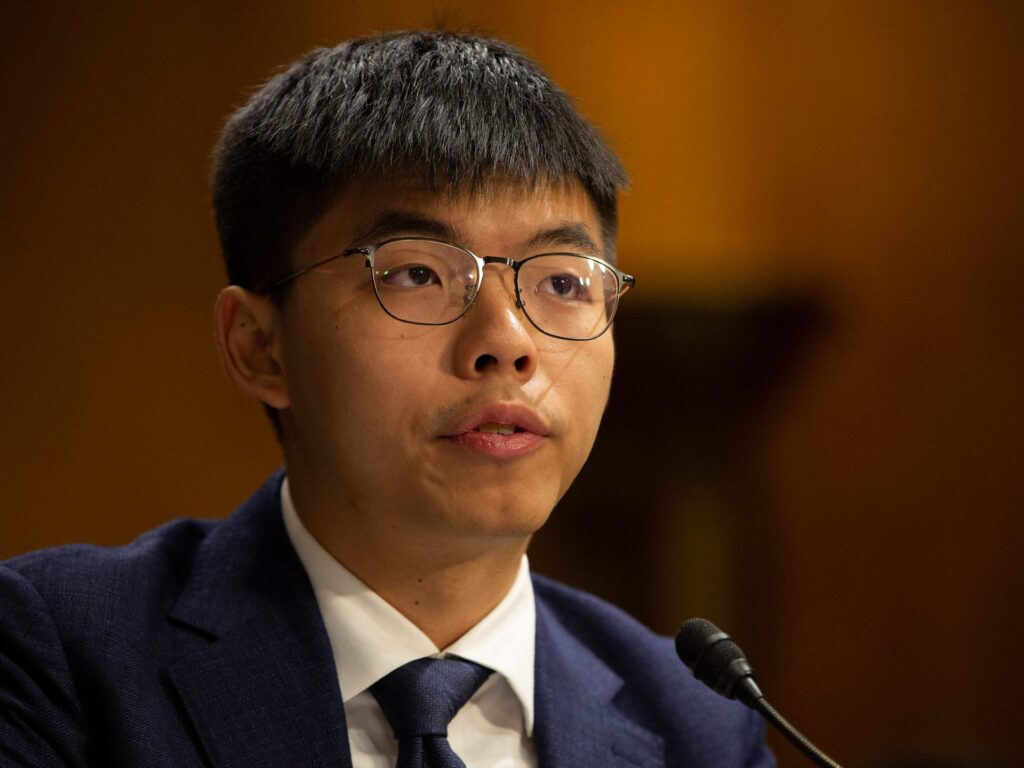
Joshua Wong, a prominent pro-democracy activist in Hong Kong, has pleaded guilty in a national security case, escalating his legal troubles under Beijing’s stringent national security law. This case marks the second time Wong has faced charges under the controversial law that has been widely criticized for curbing political dissent in Hong Kong.
The charges against Wong are serious, carrying the possibility of a life sentence. The national security law, imposed by Beijing in 2020, targets acts of secession, subversion, terrorism, and collusion with foreign forces. Critics argue the law has been used as a tool to silence opposition and suppress democratic movements in the region.
Wong has been a leading figure in Hong Kong’s pro-democracy movement since his teenage years and gained international attention for his role in the Umbrella Movement protests of 2014 and later demonstrations advocating for greater democratic freedoms.
This latest legal development highlights the increasing pressure faced by activists in Hong Kong, as the authorities intensify their crackdown on dissent. Wong’s guilty plea signifies the challenges pro-democracy advocates encounter in continuing their political activities without facing severe repercussions.
The ramifications of this case extend beyond Wong as it sends a warning to other activists and signals the government’s firm stance on national security matters. The international community has expressed concern about the erosion of autonomous freedoms promised to Hong Kong under the “one country, two systems” framework.
Wong’s situation is emblematic of the broader struggle between Hong Kong’s democratic aspirations and Beijing’s efforts to tighten control over the city. The looming possibility of a life sentence underscores the severe consequences activists face amidst a shrinking space for dissent.
As the trial proceeds, human rights organizations and foreign governments are likely to continue monitoring the case closely, advocating for fair treatment and highlighting the importance of upholding democratic principles in Hong Kong.
This development is a poignant reminder of the ongoing tension in the region, where the fight for democracy clashes with the enforcement of national security measures, reshaping the political landscape of Hong Kong.