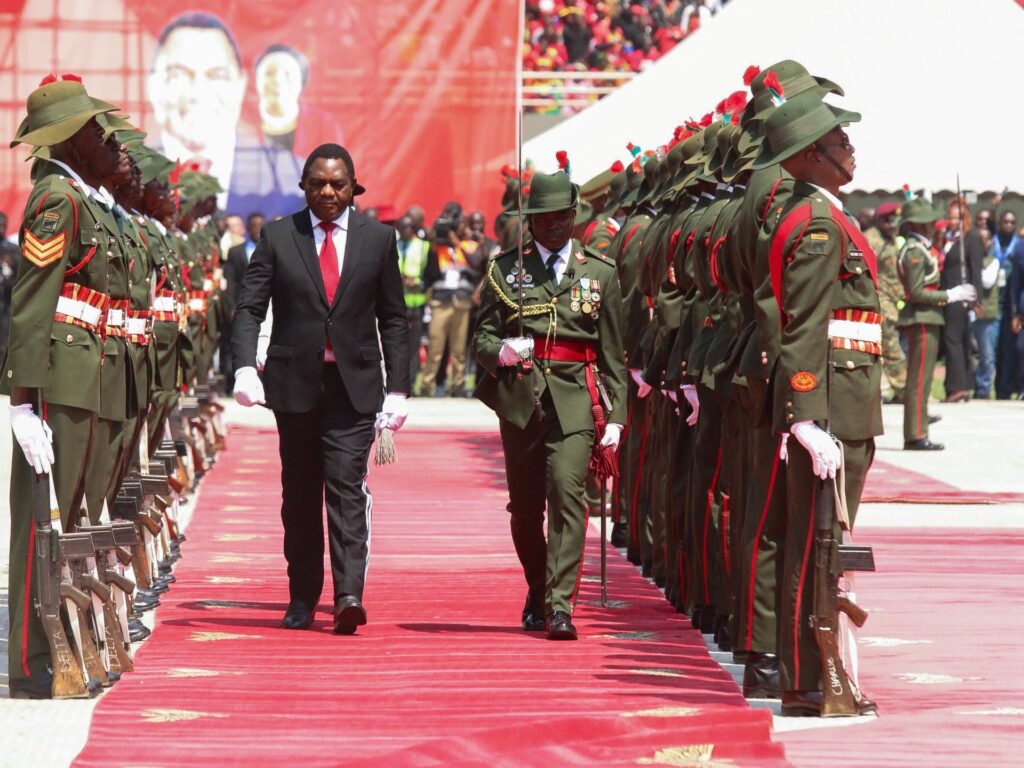
In a dramatic return to power, Hakainde Hichilema has been sworn in again as Zambia’s president following last month’s election, which was marred by controversy and dispute. The incumbent’s inauguration took place under tense circumstances, with his main political rival incarcerated and the judiciary effectively closed, raising questions about the state of democracy and the rule of law in the country.
The election results, which favored Hichilema, have been contested by opposition parties and international observers who expressed concerns over the fairness of the process. Despite these objections, Hichilema assumed office, signaling a continuation of political challenges that have gripped Zambia’s democratic framework.
The major opposition figure, who was one of Hichilema’s strongest challengers, remains jailed. This development has been criticized both domestically and internationally, as it undermines the political competition and the legitimacy of the electoral process. The closure of courts during this period further exacerbates fears about legal impartiality and access to justice.
Zambia, a country with a history of peaceful transitions, now faces increased political tension and uncertainty. The government insists that the election was free and fair, and that the judicial institutions are functioning fully, but critics argue that these claims are at odds with the realities on the ground.
Political analysts warn that the current situation could lead to increased instability if not addressed promptly through dialogue and reconciliation efforts among political stakeholders. International partners have called for calm and respect for democratic principles to ensure the country’s stability and development.
Hichilema’s return to power comes amid a challenging economic landscape, with Zambia grappling with debt, inflation, and the impacts of global economic fluctuations. The president’s agenda will likely focus on stabilizing the economy and addressing the social needs of the population, while navigating the divisive political environment.
The international community continues to monitor the situation closely, urging all parties to uphold the rule of law and the rights of political opponents. Zambia’s democracy, once praised for its robust engagement and peaceful elections, now stands at a crossroads, with its future direction dependent on the actions taken in the coming months.
The coming weeks are critical for Zambia as it seeks to regain political stability and restore confidence in its institutions. The challenges are significant, but there remains hope among many Zambians for a peaceful and prosperous future under President Hichilema’s leadership.