Libya has been mired in civil conflict and political division for over fifteen years, resulting in a fragmented nation with rival factions vying for control. The prolonged strife has destabilized the country economically and socially, harming its citizens who have endured years of violence and uncertainty. However, a glimmer of hope emerges as a new United Nations-backed initiative, termed the ‘4+4’ agreement, aims to bring these competing camps together to foster peace and unity.
The term ‘4+4’ refers to an innovative framework designed to balance representation and power-sharing between Libya’s rival groups. Essentially, it envisions an inclusive political structure by involving four representatives from each major faction, working collaboratively to rebuild governance and restore national stability. This approach underscores the emphasis on dialogue and compromise that the UN hopes will be the foundation of a lasting resolution.
For years, Libya has grappled with divisions primarily between the Government of National Unity (GNU), headquartered in Tripoli, and the Libyan National Army (LNA) led by Khalifa Haftar based in the east. These two principal camps have been entrenched in conflict since the fall of Muammar Gaddafi in 2011, each backed by various international players with diverging interests. The fighting has left the country split politically and geographically, complicating efforts to govern or conduct elections.
The ‘4+4’ agreement represents a breakthrough by explicitly committing these rival actors to cooperative governance. It provides a platform where both sides have equal say, reducing fear of domination or marginalization. Such parity can help bridge trust deficits that have long hindered peace processes. International mediators have actively facilitated negotiations, stressing the urgency of ending violence and rebuilding state institutions.
Beyond political coordination, the agreement is expected to address critical security arrangements. This includes demobilization of militias, integration of armed groups into unified national forces, and border management reforms. By working collectively, Libya’s fragmented security landscape can gradually be consolidated, which is essential for enabling more stable governance and enabling humanitarian aid to reach vulnerable populations.
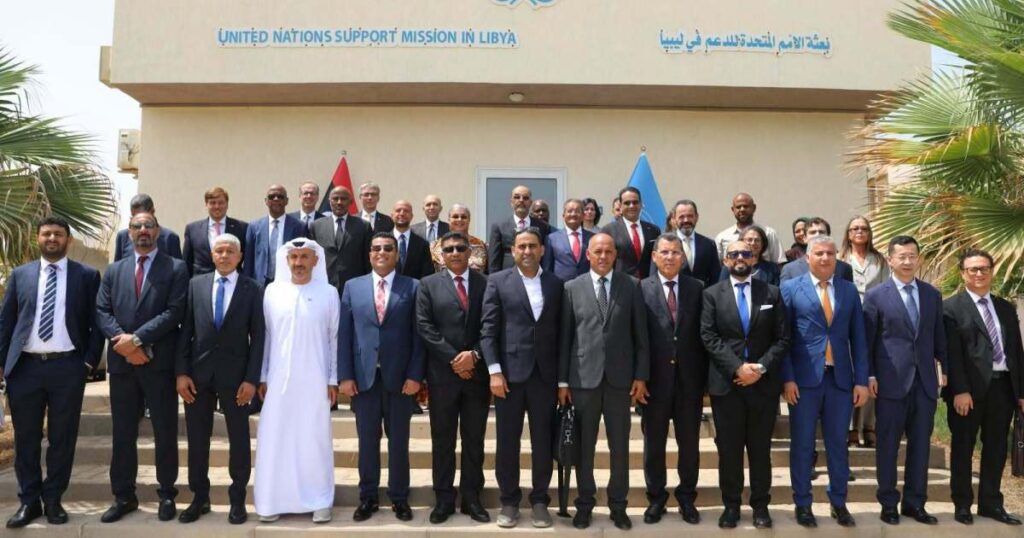
The UN Support Mission in Libya (UNSMIL) has played a central role in advancing this dialogue. Through sustained mediation, technical assistance, and confidence-building measures, UNSMIL has encouraged compromise and fostered conditions conducive to progress. The mission continues to engage with all stakeholders, ensuring implementation steps are monitored and obstacles are swiftly addressed.
While this agreement is a hopeful step forward, substantial challenges remain. Deep-rooted mistrust, competing geopolitical interests, and the presence of extremist groups complicate efforts to maintain peace. Furthermore, the economic crisis sparked by years of conflict has left the population struggling with unemployment, lack of services, and infrastructure damage.
Nevertheless, the ‘4+4’ accords symbolize a turning point by providing a feasible pathway towards reconciliation and national unity. Its emphasis on inclusiveness, mutual respect, and shared responsibility could pave the way for holding credible elections and restoring Libya’s sovereignty.
For the Libyan people, this initiative signals a renewed possibility of ending a painful chapter and moving toward a future where diverse communities can coexist peacefully under a single, unified government. The international community continues to support this transition, recognizing that lasting peace in Libya is essential for regional stability and prosperity.
In conclusion, the UN-backed ‘4+4’ agreement embodies a strategic effort to unite Libya’s divided camps by fostering equal representation and collaborative governance after a decade and a half of conflict. Although challenges persist, it is a critical stride toward peace, offering hope that 4+4 can indeed make 1—the one nation reunited and restored to security and stability.