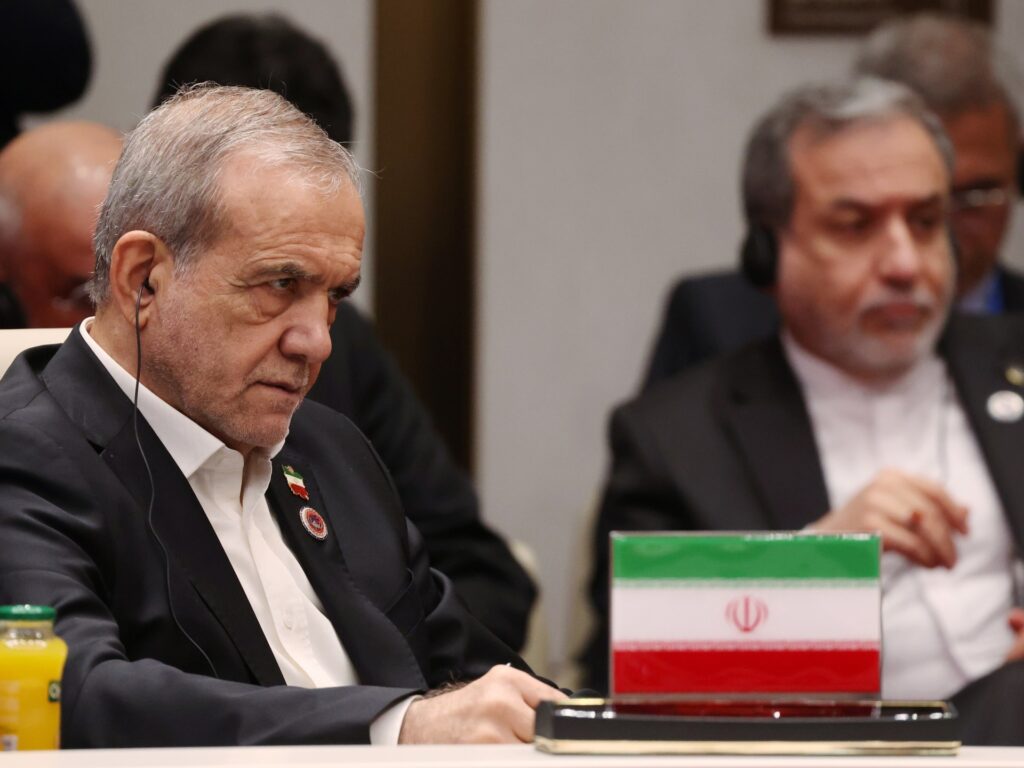
Tehran has issued a statement expressing its readiness to ‘reciprocate’ actions if the United States honors the terms of a peace agreement signed in June. President Pezeshkian of Iran recently declared that Tehran is prepared to take responsive measures in the event that Washington complies with the agreement, signaling a potential thaw in tensions if both parties adhere to their commitments.
The June peace deal, which aimed to reduce hostilities and pave the way for diplomatic engagement, outlines commitments by both nations to avoid aggressive acts and to work towards peaceful coexistence. However, the situation remains volatile, with skepticism on both sides about the other’s intentions.
President Pezeshkian emphasized that Iran’s stance is contingent on the United States’ compliance, suggesting that any positive movement by Washington could lead to reciprocal peaceful actions from Tehran. This conditional approach underscores the fragile state of relations and the importance of trust and verification in the implementation of international agreements.
The announcement comes amid ongoing geopolitical tensions in the Middle East, where conflicts have often involved proxy wars and direct confrontations between allied forces of the US and Iran. Analysts note that while the peace deal holds promise, its success depends heavily on the political will of both nations and the broader international community’s support.
Tehran’s readiness to act should Washington honor the deal highlights Iran’s strategic calculus in balancing confrontation with diplomacy. The country has long sought relief from economic sanctions and international isolation, which could be ameliorated by progress in diplomatic engagements.
International observers have welcomed the statement as a hopeful sign, but caution that history has shown the challenges in sustaining peace agreements in the region. Continuous dialogue, verification mechanisms, and confidence-building measures will be instrumental in moving forward.
The implications of a successful peace deal are significant, with potential to stabilize not only US-Iran relations but also influence regional security dynamics positively. Both parties face internal political pressures that may affect the peace process, making it a delicate endeavor requiring careful navigation.
In summary, Tehran’s pledge to reciprocate peace gestures is a notable development in the ongoing Iran-US relations. The coming months will be critical in determining whether this promise translates into concrete actions and lasting peace, or if the cycle of hostility will continue.
Stakeholders worldwide are watching closely as this situation evolves, hopeful for a breakthrough that could reshape the geopolitical landscape in a more peaceful direction.