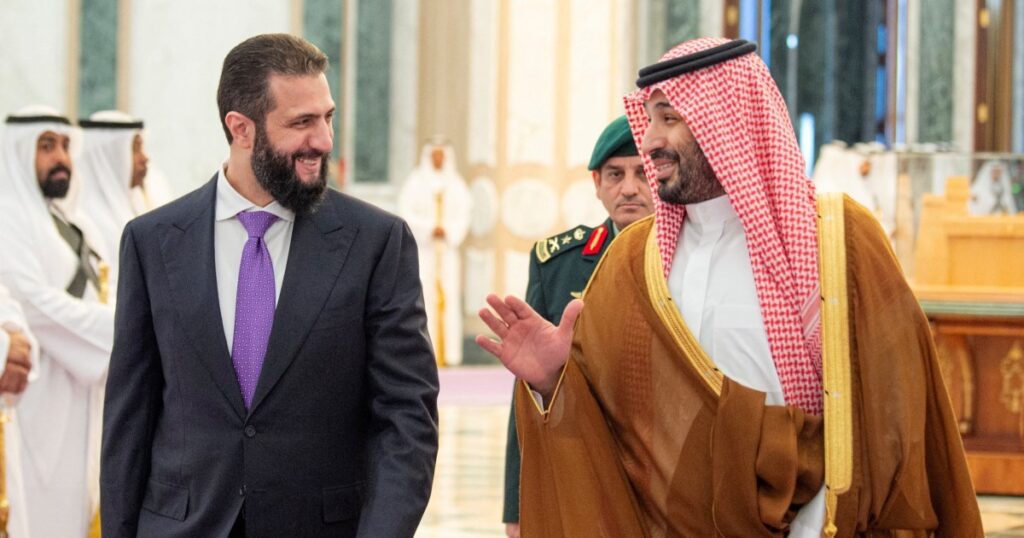
Syria and Saudi Arabia have taken a significant step in bolstering their bilateral relations by signing a defence cooperation agreement during Syrian President al-Sharaa’s recent visit to Riyadh. This visit marks the President’s second trip to the Saudi capital in less than a month, underscoring the growing importance of diplomatic and military collaboration between the two nations.
The defence cooperation deal is poised to enhance joint efforts in security and military training, aiming to foster stability in the region amidst ongoing geopolitical challenges. Both countries have expressed a mutual commitment to advancing their strategic partnership in defence matters, which could have far-reaching impacts on the Middle Eastern security landscape.
In addition to the defence agreement, Saudi Arabia has agreed to extend loans amounting to $403 million to Syria. This financial aid package is expected to support Syria’s economic recovery and development efforts, reflecting a broader intent to deepen economic ties alongside military cooperation.
The cooperation between Syria and Saudi Arabia comes at a time when regional alliances are being reshaped, and diplomatic relationships are evolving rapidly. The substantial loan agreement signals Saudi Arabia’s confidence in Syria’s potential for stabilization and resurgence.
Observers note that these developments may lead to increased economic activity and improved security dynamics in the region. The defence deal could facilitate better coordination in counter-terrorism efforts, border security, and military intelligence sharing.
President al-Sharaa’s repeated visits to Riyadh highlight a strategic dialogue addressing key issues such as regional security threats, economic assistance, and political cooperation. The visits also indicate a warming of ties that had been strained in previous years.
This renewed partnership suggests that both Syria and Saudi Arabia are seeking to navigate the complexities of Middle Eastern politics through pragmatic collaboration. The defence cooperation and financial support are clear indicators of this shift.
The agreement is expected to pave the way for future cooperative initiatives spanning military, economic, and possibly infrastructural projects, fostering a more resilient alliance between the two countries.
As the deal takes effect, stakeholders in the region will be closely watching how these commitments translate into concrete actions and how they influence the broader geopolitical environment.
This historic cooperation agreement marks a pivotal moment in Syria-Saudi relations, possibly reshaping regional dynamics and contributing to a new era of engagement and partnership in the Middle East.