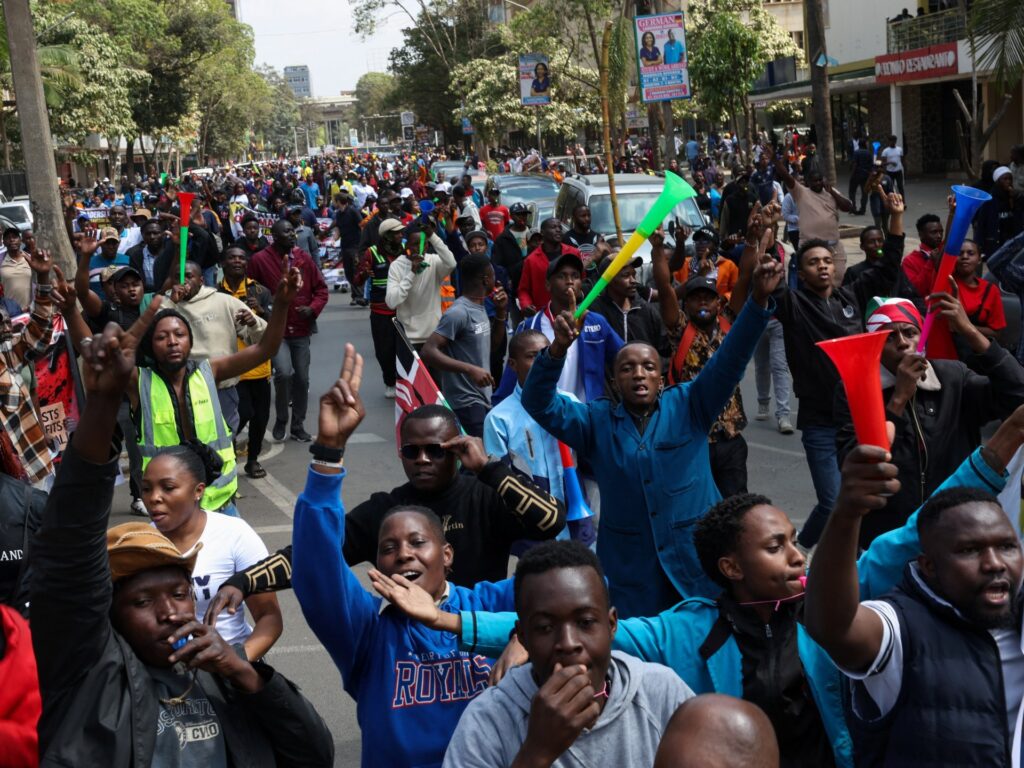
In Nairobi, Kenya, tensions escalated as police deployed tear gas against protesters demonstrating the government’s recent decision to increase import duties. The protest, primarily led by local traders, was sparked by a significant hike in import duties—amounting to over $5,000—which traders argue will severely impact small businesses.
The duty increase has been viewed as a heavy financial burden, particularly for small and medium-sized enterprises that rely on affordable imports to sustain their operations in a competitive market. Traders expressed their frustration and concern that the additional costs could force many small businesses to close, leading to job losses and economic instability within local communities.
During the protest, which took place in a busy commercial district of Nairobi, demonstrators marched and voiced their dissent against the policy, highlighting the challenges faced by traders in an already difficult economic environment. Many traders emphasized that the duty hike would increase the cost of goods, reduce consumer purchasing power, and ultimately hurt the broader economy.
Kenyan police, responding to the mass protests that threatened to disrupt public order, resorted to using tear gas to disperse crowds. The use of force has been met with mixed reactions; some authorities argue it was necessary to restore order, while human rights observers and protestors have raised concerns about excessive use of force and the suppression of legitimate dissent.
Small business owners and advocacy groups have called for dialogue with government officials to discuss alternative measures that can balance the need for revenue collection with the protection of small enterprises. They urge the government to reconsider the import duty hike or at least provide support mechanisms to buffer the impact on vulnerable traders.
This incident in Nairobi reflects broader economic challenges facing Kenya, including balancing fiscal policies with business growth and public welfare. The government’s rationale for raising import duties is reportedly tied to increasing national revenue and protecting local industries from foreign competition. Yet, critics argue that the policy disproportionately affects small traders and consumers who are most sensitive to price increases.
In response to the protests, government officials have promised to review the duty hike and engage with stakeholders to find sustainable solutions. Meanwhile, traders continue to advocate for more inclusive economic policies that foster rather than hinder entrepreneurship and economic resilience.
This episode underscores the delicate relationship between economic policy, public reaction, and law enforcement in Kenya. It highlights the challenges governments face in implementing fiscal reforms while maintaining social stability and ensuring the livelihoods of their citizens are not unduly compromised.