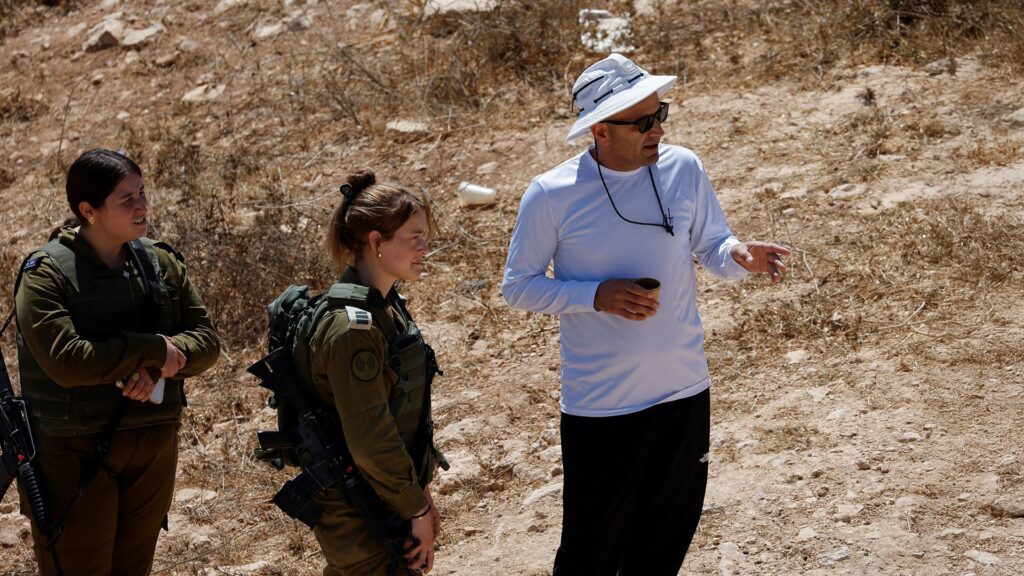
In a concerning development highlighting ongoing tensions in the region, Israeli forces have reportedly barred Palestinian American Lou Ridi from walking on his own land located in Qusra, a village in the West Bank. Despite his ownership and ties to the land, Ridi was informed by Israeli authorities that he is prohibited from accessing his property. This action starkly contrasts with the freedom of movement seemingly afforded to Israeli settlers in the same area, who continue to roam freely.
The incident has drawn attention to the complex and often contentious dynamics between land ownership rights and military regulations in the West Bank. Palestinian residents frequently face restrictions imposed by Israeli authorities, which affect their ability to cultivate and access their lands. Such measures have significant social and economic impacts on Palestinian communities.
Lou Ridi, holding American citizenship, represents a unique case that has internationalized the issue further. His experience underscores the challenges Palestinians face in retaining their lands amidst settlement expansions and military controls. The prohibition on Ridi’s movement on his property is indicative of broader policies that Palestinians and human rights groups argue undermine Palestinian land rights and contribute to escalating tensions in the region.
Settlers’ unfettered access to land contrasts with restrictions imposed on Palestinians, fueling perceptions of inequality and injustice. The situation in Qusra is emblematic of the broader conflict surrounding land ownership in the occupied territories, where disputes over access and control are frequent.
This incident has prompted calls from various advocacy groups urging a re-examination of land access policies and greater protection for Palestinian property rights. International observers and human rights organizations have highlighted these restrictions as obstacles to peace and as violations of international law.
The Israeli military’s justification for such prohibitions often cites security reasons, but critics argue that these measures disproportionately affect Palestinian civilians and contribute to ongoing grievances.
As tensions persist, the case of Lou Ridi brings to light the human dimension of the land disputes and the urgent need for dialogue and resolution. Ensuring equitable access to land and respecting property rights remain central challenges that must be addressed to foster any lasting peace in the region.
The international community continues to monitor the situation closely, advocating for policies that uphold human rights and support a fair and just resolution to the Israeli-Palestinian conflict. Lou Ridi’s case may serve as a catalyst for renewed discussions on land rights and movement restrictions in occupied territories.
In conclusion, the barring of Lou Ridi from his own land in Qusra encapsulates the complex realities faced by many Palestinians under occupation. It highlights the stark disparities in freedoms and rights between Palestinians and settlers and underscores the need for meaningful intervention aimed at resolving land access issues in the West Bank.