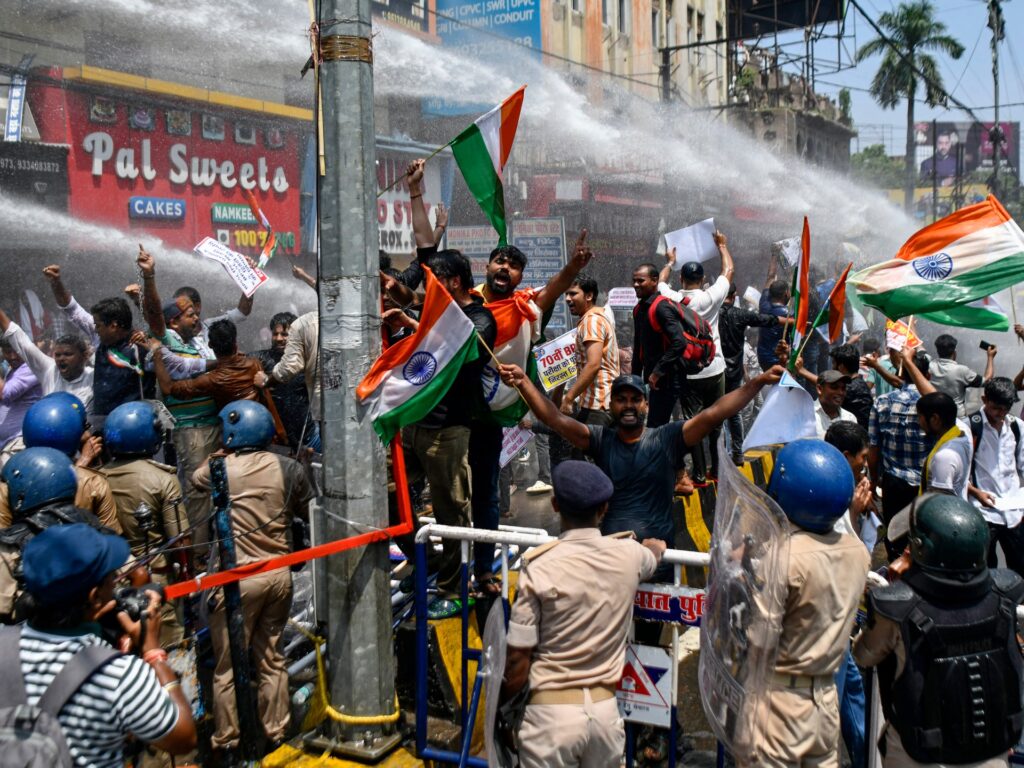
In a significant development a month after the widespread Gen Z demonstrations, the police in India clashed with protesters in the capital of Bihar. The confrontation escalated as a few thousand demonstrators broke through security barricades, prompting a forceful response from law enforcement. Police resorted to using water cannons and batons to disperse the crowd and restore order.
The protests, which initially emerged as part of a broader Gen Z movement, have continued to evoke strong public sentiment and government attention. The demonstrators, primarily young people from Generation Z, have been rallying over various social, economic, and political issues that resonate deeply with the youth of India.
Bihar’s capital witnessed intense scenes as protesters overwhelmed security measures, indicating a high level of frustration and determination among the demonstrators. The police reaction was swift, involving the deployment of water cannons — a non-lethal crowd control method — and physical force with batons to contain the situation.
This clash underscores the ongoing challenges faced by authorities in managing large-scale protests, especially those driven by younger demographics who are increasingly politically aware and assertive. The use of water cannons and batons, while intended to prevent violence and chaos, often draws criticism from human rights activists and raises concerns about the handling of peaceful dissent.
The recent unrest in Bihar reflects a larger trend of youth activism across India, where issues such as job insecurity, education reforms, environmental concerns, and governance have triggered widespread mobilization. Gen Z, known for its activism and digital connectivity, has been instrumental in organizing and amplifying these demonstrations.
Authorities have highlighted the need to maintain public order and protect citizens, but the repeated clashes suggest a disconnect between government responses and the aspirations of younger generations. The situation calls for dialogue and engagement to address the root causes of protest and to channel the energy of youth activism into constructive outcomes.
Analysts note that the use of force by police might temporarily quell disturbances but could exacerbate tensions in the long run if underlying grievances remain unaddressed. The Bihar incident serves as a reminder of the delicate balance between maintaining law and order and respecting democratic rights to protest.
Moving forward, there is a critical need for policymakers to engage with Gen Z leaders and activists to understand their concerns genuinely. Constructive conversations could pave the way for reforms and initiatives that meet the aspirations of young Indians and contribute to social stability.
In summary, the recent police protester clash in Bihar marks a continuation of the Gen Z-led movement in India, highlighting the powerful role youth play in shaping the country’s socio-political landscape and the challenges that come with managing such dynamic civil movements.