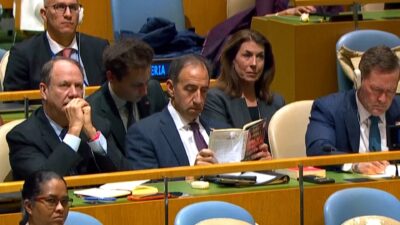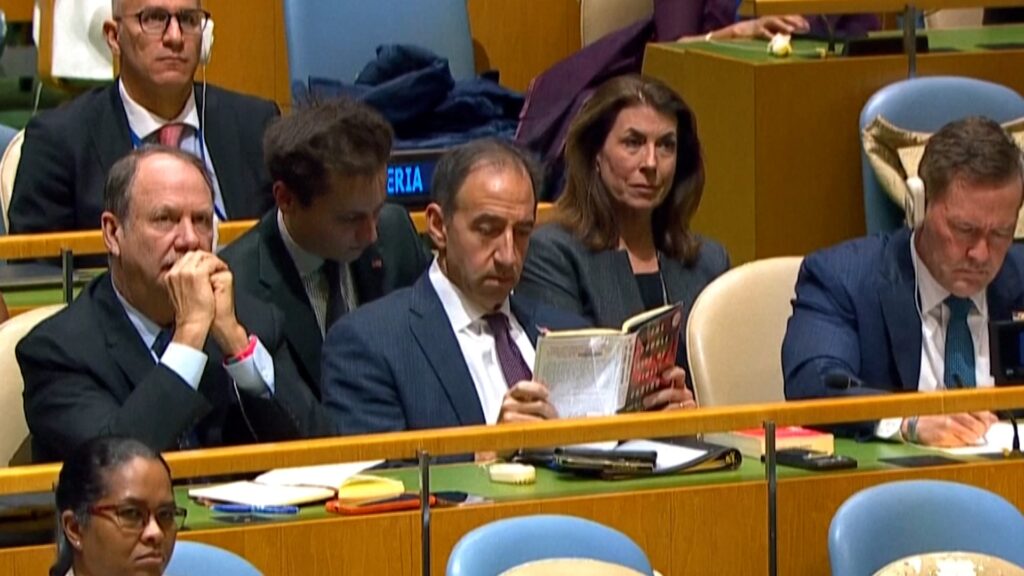
In a striking diplomatic gesture, the United States envoy to the United Nations was seen reading an anti-Castro book during the Cuban Foreign Minister’s speech at the UN General Assembly. This act has drawn significant international attention, highlighting the ongoing tensions between the two nations despite recent efforts to normalize relations.
The Cuban Foreign Minister was addressing the assembly with a focus on issues concerning sovereignty and economic development, emphasizing the Cuban government’s stance on resisting foreign interference. Amidst this formal setting, the American diplomat chose to make a subtle yet pointed statement by openly reading a book critical of the Castro regime.
The anti-Castro book, which details extensive criticisms of the Castro family’s leadership in Cuba, served as a symbolic demonstration by the US in opposition to Cuba’s political system. This move is seen not only as a message to Cuba but also to the broader international community about the unrelinquished US stance on human rights and governance in Cuba.
Diplomatic observers have commented that while the act might seem theatrical, it underscores the enduring ideological divide between the United States and Cuba. The Cuban government swiftly condemned the gesture, calling it disrespectful and provocative.
This incident comes at a time when relations between the US and Cuba remain complex, with ongoing debates over sanctions, migration policies, and human rights concerns. The reading of the anti-Castro book during such a high-profile event at the UN is likely to harden diplomatic rhetoric and could complicate efforts to engage in dialogue.
Despite this, some analysts suggest that the US envoy’s act was intended to draw attention to issues that Washington feels are being ignored in international forums, including Cuba’s restrictions on freedom of expression and political dissent.
The episode illustrates how soft power and symbolic acts continue to play a role in international diplomacy, particularly in highly charged contexts like US-Cuba relations. As the UN General Assembly progresses, the world watches closely to see how both nations navigate this moment of heightened tension.
In summary, the US envoy’s decision to read an anti-Castro book at the UN during the Cuban Foreign Minister’s address exemplifies the persistent disagreements and complex diplomatic interactions between the two countries. It serves as a reminder of the challenges facing US-Cuba relations and the broader geopolitical discussions taking place within the international community.