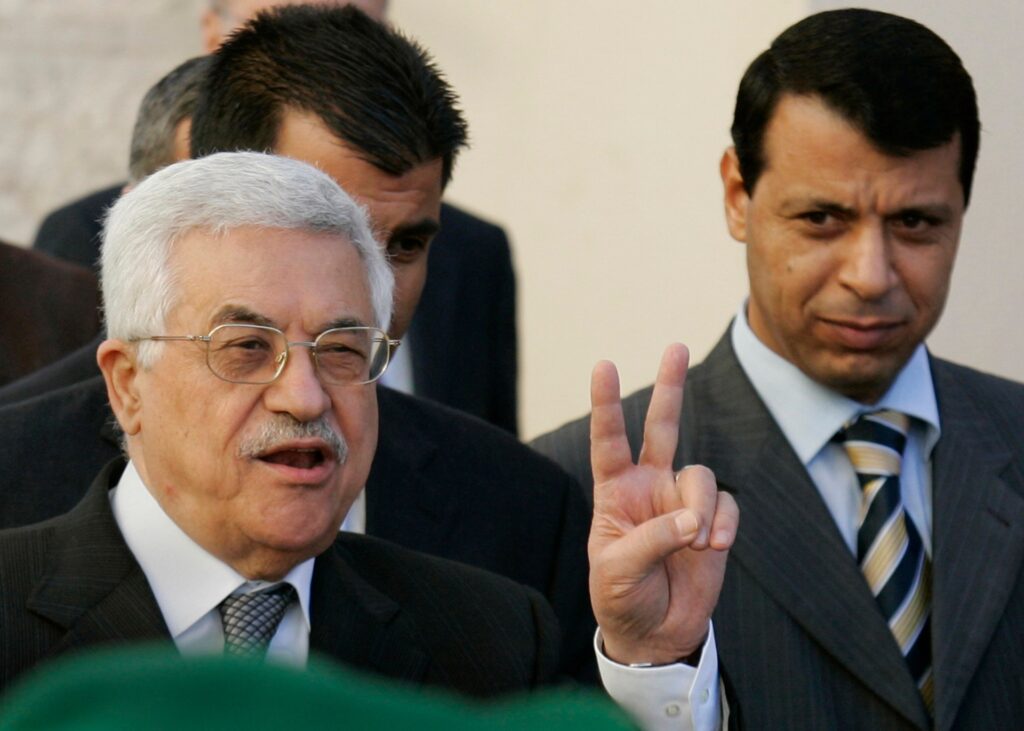
As the Palestinian elections approach, two significant political factions, Fatah and the Democratic Reform bloc led by Mohammed Dahlan, have initiated reconciliation talks in the Egyptian city of Alamein. This development marks a crucial step towards potentially mending rifts within Palestinian politics and addressing the growing concerns over the formation of a strong opposition coalition that could challenge the current political order.
The talks come amid increasing fears that the emergence of a united opposition front could significantly alter the political landscape of Palestine. Fatah, the dominant party since the establishment of the Palestinian Authority, has faced growing pressure both from within and outside to reform and unify various factions to secure a stable governance structure.
Mohammed Dahlan, a prominent Palestinian political figure once affiliated with Fatah but later establishing his own Democratic Reform bloc, has been a polarizing personality. His bloc’s decision to engage in dialogue with Fatah signifies a potential thawing of previous hostilities and may pave the way for a more collaborative political environment.
The reconciliation talks held in Alamein are being closely monitored by regional and international observers, as stability within Palestinian factions is seen as integral to broader peace efforts in the Middle East. Both sides are reportedly discussing critical issues including election strategies, power-sharing arrangements, and mechanisms to ensure a transparent electoral process.
Political analysts suggest that if the talks prove successful, they could lead to a unified candidate list or at least a strategic alliance that would diminish the likelihood of an opposition coalition overpowering the traditional leadership. This would not only impact the internal dynamics of Palestinian politics but also influence negotiations and interactions with Israel and other neighboring countries.
However, challenges remain significant. Deep-seated mistrust, historical grievances, and divergent political visions between Fatah and Dahlan’s supporters could complicate the path to a comprehensive agreement. Additionally, the international community’s stance towards Dahlan, who has been a controversial figure due to his strained relations with certain Palestinian factions and external actors, adds another layer of complexity.
Despite these hurdles, the willingness to engage in dialogue is viewed as a positive sign. Palestinian citizens and political stakeholders alike are hopeful that these talks might reduce factionalism, promote political inclusivity, and foster a more conducive environment for democratic processes.
In conclusion, the reconciliation talks between Fatah and Dahlan’s Democratic Reform bloc represent a significant political development ahead of the Palestinian elections. While uncertainties remain, the efforts to bridge divides highlight the critical importance of unity and cooperation in addressing the challenges facing Palestine today. The coming weeks will be pivotal in determining whether these discussions translate into tangible political progress or further entrenchment of divisions.