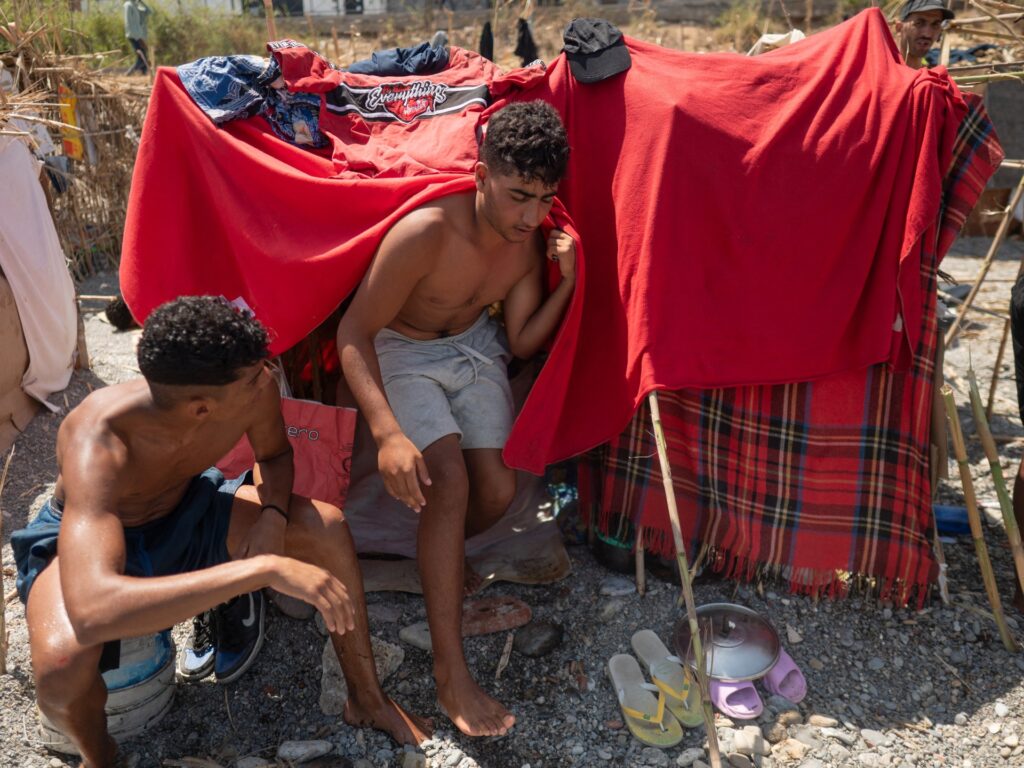
Spain has officially requested emergency financial assistance from the European Union in response to an unprecedented surge of migrants entering the North African Spanish enclave of Ceuta. Approximately 70,000 migrants have crossed into Ceuta over a short period, triggering concerns over the enclave’s capacity to manage this influx and the broader implications for migration policies in the region.
The European Commission has acknowledged Spain’s request and is currently in the process of assessing the situation to determine the appropriate response and support mechanisms. This sudden increase in migrant arrivals has placed significant strain on Ceuta’s local resources, authorities, and infrastructure, highlighting the urgent need for coordinated action among EU member states.
Ceuta, a Spanish territory located on the northern coast of Africa, has long been a gateway for migrants attempting to reach Europe. The recent surge represents one of the largest waves in recent history, underscoring the complexities faced by Spain and the EU in managing migration flows amid geopolitical tensions and humanitarian concerns.
Spanish officials have described the situation as an emergency, emphasizing the challenges in providing adequate shelter, food, medical aid, and security for the migrants as well as maintaining order in the enclave. The call for emergency funding aims to enhance these capabilities and ensure the region can cope with the immediate humanitarian needs while preparing for ongoing migration pressure.
The European Commission’s assessment will likely consider not only financial assistance but also the deployment of technical and logistical support to bolster Spain’s response. This may include increased border management resources, assistance from Frontex (the EU border and coast guard agency), and cooperation with neighboring countries to address the root causes and transit routes of migration.
The situation in Ceuta has sparked renewed debates within the EU about migration policy, border security, and shared responsibility among member states. It highlights the ongoing challenges of balancing humanitarian obligations with national security concerns and the political sensitivities associated with migration.
As the European Union reviews Spain’s request, member states are urged to collaborate closely to find sustainable solutions that address immediate humanitarian needs and contribute to long-term stability in migration management. The crisis in Ceuta serves as a stark reminder of the pressures at Europe’s external borders and the necessity for a unified approach to an issue that impacts multiple countries across the continent.
In conclusion, Spain’s request for emergency EU funding marks a critical moment in addressing the migrant surge in Ceuta. The European Commission’s forthcoming decisions will be pivotal in shaping the region’s response and the broader EU migration strategy moving forward.