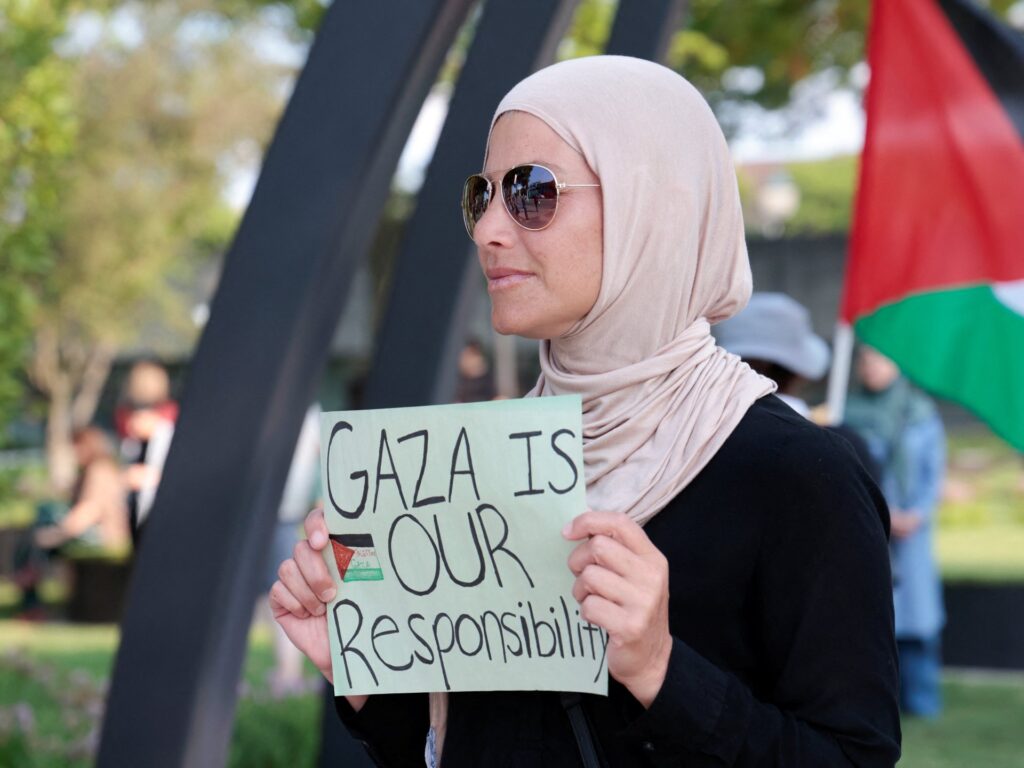
A recent poll conducted among Democrats in the first six states scheduled to vote in the 2028 presidential primaries reveals a significant shift in attitudes toward US support for Israel. The survey indicates that a majority of Democrats in these key early states oppose continued aid to Israel, citing concerns over the country’s actions in ongoing conflicts.
The poll, which surveyed thousands of Democratic voters, found that a substantial portion believes that Israel is committing acts that they define as genocide. This perception marks a notable departure from traditional US Democratic Party support for Israel and signals changing political dynamics as candidates prepare for the 2028 presidential race.
Historically, the Democratic Party has been a staunch ally of Israel, supporting military aid and diplomatic backing. However, the poll results suggest that grassroots voters in critical early voting states such as Iowa, New Hampshire, Nevada, South Carolina, Georgia, and Virginia are increasingly critical of Israeli policies, especially regarding the Palestinian territories.
Key findings from the survey include:
– A majority of Democrats in these early primary states oppose continued US aid to Israel.
– Many view Israeli government actions as constituting genocide, raising ethical and humanitarian concerns.
– Younger Democrats, in particular, are driving this shift, with a higher percentage expressing skepticism about the traditional US-Israel alliance.
These results could have profound implications for Democratic presidential candidates who will tailor their foreign policy platforms to appeal to these primary voters. Candidates may face pressure to adopt more critical stances toward Israel or propose alternative approaches to Middle East peace and US foreign aid.
The debate over US aid to Israel has been intensifying amidst ongoing violence and humanitarian crises in the region. Advocates for continued support emphasize Israel’s right to defend itself and the strategic importance of the US-Israel alliance in a volatile Middle East. Conversely, critics argue that US aid enables policies that harm Palestinian civilians and perpetuate conflict.
Party leaders and prominent figures within the Democratic Party are likely to watch these polling trends closely. The evolving viewpoint among rank-and-file voters challenges established party norms and could influence the party’s official platform by 2028.
This shift also reflects broader changes in American public opinion where younger generations often express different perspectives on foreign policy compared to their elders. It underscores the importance of understanding intra-party divisions as the Democratic Party positions itself for future elections.
As the 2028 presidential primary season approaches, candidates and political strategists will need to balance the diverse views within their base. How they address the US role in the Israeli-Palestinian conflict may become a defining issue that shapes the outcome of the nomination process.
In summary, the recent poll illustrates a significant and potentially transformative trend within the Democratic electorate in early primary states, revealing growing opposition to US aid to Israel and concerns over allegations of genocide. This development signals a new chapter in the ongoing discourse around US foreign policy and domestic political alignments ahead of the 2028 elections.