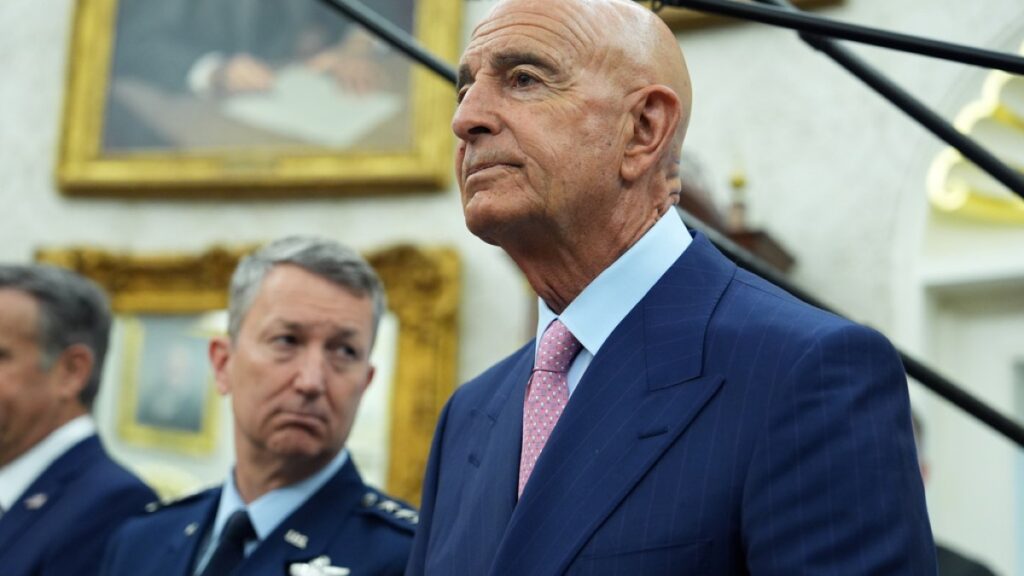
In a recent development, US envoy Tom Barrack has retracted his earlier statement suggesting that Syria’s Golan Heights is occupied territory. This reversal comes as Ambassador Barrack emphasized that the United States’ longstanding policy remains steadfast, continuing to recognize Israel’s sovereignty claims over the contentious region of the Golan Heights, which was seized from Syria in 1967 during the Six-Day War.
Barrack, who currently serves as the US Ambassador to Turkiye, clarified that despite past ambiguities or misstatements, American diplomatic policy has not wavered on this issue. His remarks sought to reaffirm Washington’s official stance, reinforcing its support for Israel’s administration over the Golan Heights despite international disputes.
The Golan Heights, a strategically vital plateau, has been under Israeli control for over five decades, and in 1981 Israel effectively annexed the territory—a move unrecognized by most of the international community. The United States, however, notably reversed its previous neutral position under the Trump administration in 2019 by officially recognizing Israeli sovereignty in the area, a decision that stirred widespread global debate and condemnation from Syria and other countries.
The Ambassador’s comments come at a critical time amid ongoing tensions in the region, including conflicts involving Syria, Israel, and other geopolitical actors. By retracting his earlier statement about occupation, Barrack likely aims to quell misunderstandings and reassure allies of the US’s consistent foreign policy approach.
This clarification may also play a role in diplomatic relations with Turkiye—a key regional player with its own complex relationship concerning Syria and Israel. Maintaining a clear US position assists in managing regional alliances and strategies, especially as Turkiye balances its interests in Syria and the broader Middle East.
The Golan Heights remains a flashpoint of territorial dispute, symbolizing broader conflicts over sovereignty, security, and international law in the Middle East. The US stance, as articulated by Ambassador Barrack, signifies the enduring complexity of the region, where historical claims and present-day realities collide.
In summary, Tom Barrack’s retraction underscores the importance of precise diplomatic communication and reaffirms the United States’ support for Israel’s control over the Golan Heights. This stance continues to shape the region’s geopolitical dynamics and international relations.
As tensions persist, how the US and its allies navigate this sensitive issue will remain critical to efforts aimed at fostering stability and peace in this volatile region.