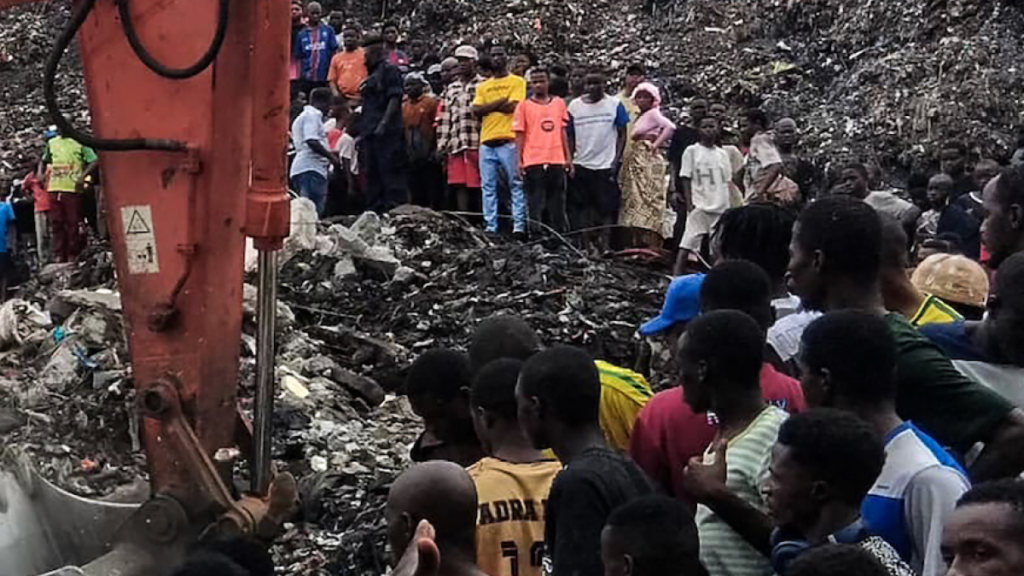
In a tragic incident in Conakry, the capital of Guinea, a landfill mound collapsed following heavy overnight rains, resulting in the deaths of 30 people. The collapse engulfed several nearby homes, causing widespread devastation and loss of life. Authorities confirm that the accumulation of waste on the mound became unstable due to intense rainfall, leading to the catastrophic failure.
Rescue teams have been dispatched to the scene to search for survivors and provide assistance to the affected families. Emergency responders are working under challenging conditions as the area remains hazardous due to the unstable debris and ongoing rainfall.
Local officials have expressed their condolences to the families of the victims and have promised a thorough investigation into the incident. The disaster has highlighted the urgent need for improved waste management and safer landfill practices in Conakry to prevent future tragedies.
Residents living near the landfill had reported concerns about the growing size and instability of the waste piles in recent months. The heavy rains exacerbated the risk factors, ultimately leading to the collapse.
Humanitarian organizations are mobilizing to provide aid, including food, shelter, and medical care, to those displaced by the disaster. The government has also pledged support to rebuild the affected communities and implement measures to ensure the safety of landfills across the country.
Experts emphasize that rapid urbanization combined with inadequate infrastructure and environmental management poses significant risks in cities like Conakry. The incident serves as a grim reminder of the potential consequences of neglecting critical urban planning and environmental safeguards.
As rescue operations continue, the focus remains on preventing further casualties and aiding survivors. Authorities have urged residents in vulnerable areas to remain vigilant, especially during the rainy season, and to report any signs of instability in waste disposal sites or other high-risk zones.
This tragedy in Guinea’s capital underscores the impact of climate and environmental issues on urban safety, calling for concerted efforts from governments, communities, and international partners to enhance disaster preparedness and sustainable urban development.