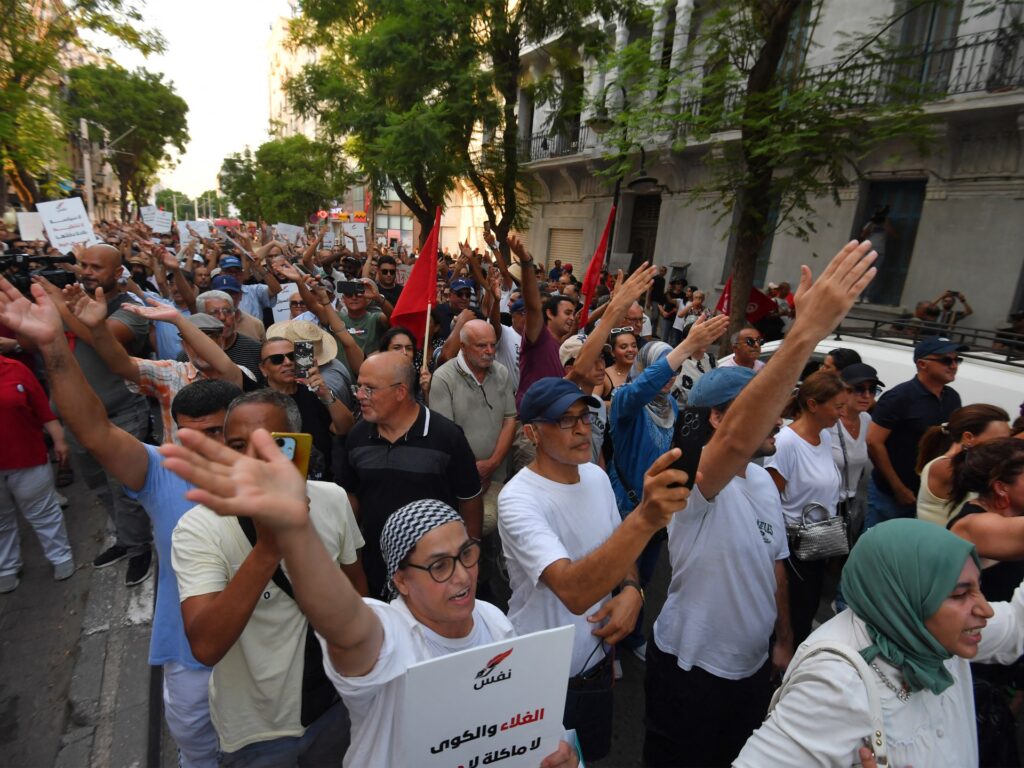
Tunisia is witnessing a continued wave of antigovernment protests for the second consecutive month as economic challenges deepen across the country. Citizens from various regions have taken to the streets in growing numbers to express their frustrations with the ongoing economic difficulties and governmental policies perceived as ineffective.
Economic strains such as rising unemployment, inflation, and stagnant wages have fueled public discontent. Many protesters accuse the government of failing to implement reforms to alleviate the hardships faced by ordinary Tunisians. The increasingly volatile political environment has been marked by calls for systemic change and greater accountability from state officials.
The demonstrations have been largely peaceful but at times have escalated into clashes with security forces. Protesters demand measures to tackle corruption, improve public services, and revive the economy. Social media has played a significant role in organizing and amplifying the voices of dissenters across the country.
Tunisia’s government has responded with promises to address some of the protesters’ concerns, including economic stimulus plans and dialogues with civil society representatives. However, critics argue that concrete actions and comprehensive reforms are still lacking.
The surge in protests underscores the urgency of Tunisia’s socio-economic challenges and the pressures faced by its political leadership. Observers warn that without meaningful reforms and inclusive governance, prolonged instability and further unrest remain likely.
As Tunisia navigates this critical period, the international community continues to monitor the situation closely, emphasizing the importance of stability and democratic progress in the region.