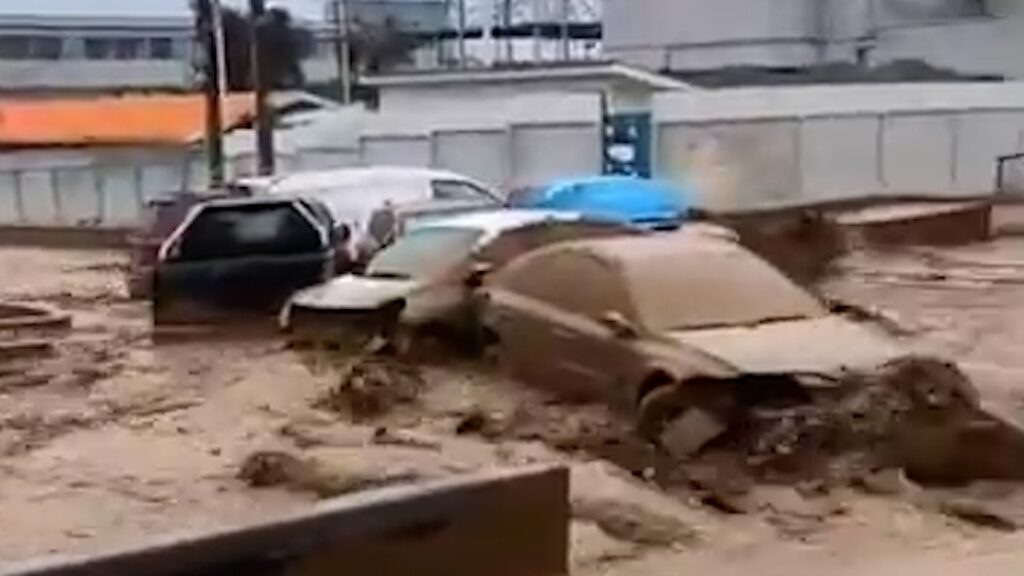
Northern Chile has been struck by severe flash floods that resulted in widespread devastation, including cars being swept downhill by torrential floodwaters and mudslides. The intense rains led to rapid water accumulation and landslides, which overwhelmed the region’s infrastructure and posed significant risks to residents and travelers.
The flash floods struck early this week, catching many communities off guard. Floodwaters surged through streets and highways, inundating low-lying areas and washing away vehicles in their path. Emergency responders worked around the clock to assist stranded individuals and clear blocked roads.
Local authorities have issued warnings about the potential for further flooding, urging residents to stay away from affected areas and to heed evacuation notices promptly. The unexpected strength of the rains and resulting landslides has disrupted transportation, communication, and access to essential services.
Scientists attribute the extreme weather events to changing climate patterns, which have made certain regions more vulnerable to heavy rains and floods. Northern Chile, typically known for its arid landscape, experienced unusual precipitation levels that overwhelmed natural and man-made drainage systems.
The mudslides triggered by the floods caused significant damage to homes, farmlands, and infrastructure, leaving many families displaced. Relief efforts are underway, with the government and non-governmental organizations mobilizing resources to provide food, shelter, and medical aid to those affected.
Authorities emphasize the importance of community preparedness and improved infrastructure to mitigate the impact of such natural disasters in the future. Investments in early warning systems, flood defenses, and sustainable land management are seen as critical steps to enhance resilience in this vulnerable region.
Residents have shared harrowing accounts of the flood, describing the overwhelming force of the waters as they swept away cars and threatened lives. These events serve as a stark reminder of the destructive potential of natural disasters intensified by climate change.
As recovery efforts continue, focus turns to rebuilding affected communities and implementing strategies to reduce the risk of future floods. The experience has highlighted the need for coordinated action among government agencies, scientists, and citizens to adapt to evolving climatic challenges.
The recent flash floods in northern Chile underscore the urgent necessity for environmental stewardship and proactive disaster management to protect vulnerable populations and preserve infrastructure in the face of increasingly volatile weather patterns.