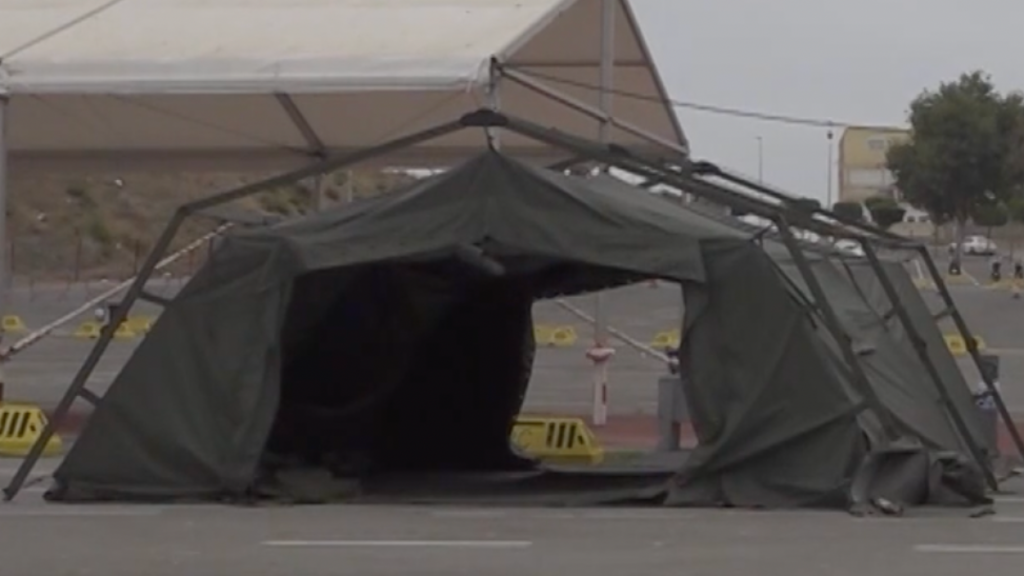
Spain is responding to the urgent housing needs of thousands of migrants stranded in the Spanish enclave of Ceuta by constructing four temporary reception sites. These new facilities, each designed to hold a total of 1,500 people, aim to provide immediate relief and shelter. An estimated 5,000 migrants currently remain in Ceuta, a small Spanish city located on the north coast of Africa, near Morocco.
The influx of migrants has overwhelmed local infrastructure and authorities have prioritized setting up tent cities to manage the humanitarian situation. These temporary sites are intended to offer basic necessities such as shelter, food, water, and medical care while longer-term solutions are being considered.
Ceuta has long been a key crossing point for migrants attempting to enter Europe due to its unique geographic position. The recent surge in migrant numbers reflects broader migration trends impacting Spain and Europe, driven by factors including political instability, economic hardship, and conflict in migrants’ home countries.
Spanish authorities are coordinating efforts with international organizations and local agencies to ensure the rapid deployment and effective management of the temporary sites. This move highlights the ongoing challenges faced by border regions and EU member states in managing migration flows and humanitarian assistance.
The construction of these tent cities is a stopgap measure expected to ease congestion in existing facilities and mitigate health and safety risks amid the current overpopulation. Officials have emphasized the temporary nature of these sites, expressing hope for the development of more permanent and humane migrant reception solutions in the future.
In addition to housing, the Spanish government is working to facilitate legal processing and support services for the migrants, aiming to streamline asylum procedures and integration efforts. International attention remains focused on Ceuta as a critical point in the broader global migration crisis, underscoring the need for cooperative and sustainable responses from the international community.
Overall, Spain’s establishment of these tent cities represents a significant and immediate step to address the pressing humanitarian needs of thousands stuck in Ceuta, while highlighting the complex challenges of migration management in a geopolitically sensitive region.