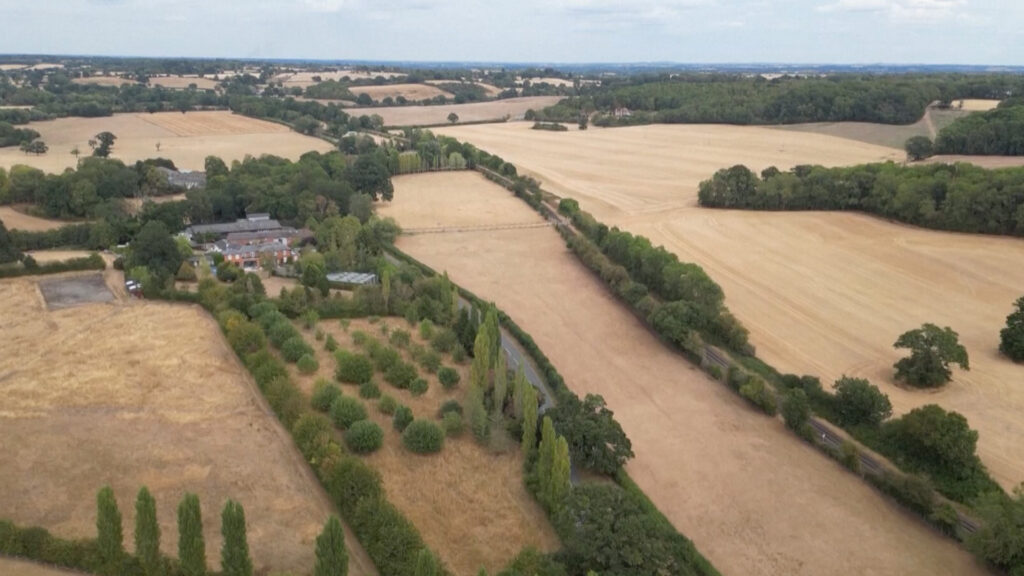
Recent drone footage has captured the stark reality of England’s drought-stricken agricultural landscape following the driest July ever recorded in the country. The videos highlight vast expanses of parched fields, cracked soil, and struggling crops, providing a dramatic visual account of the environmental and economic pressures faced by farmers and communities.
Meteorological data confirm that July this year was the driest since records began, intensifying already challenging conditions for water resources and agriculture. The prolonged lack of rainfall has severely impacted soil moisture levels, critical for healthy crop growth and farming sustainability.
Farmers have reported significant crop losses, with many areas experiencing reduced yields due to insufficient water availability. The drought has also influenced the broader ecosystem, affecting local flora and fauna dependent on regular water supplies.
Experts warn that these conditions, exacerbated by climate change, may become more frequent, urging the need for adaptive agricultural practices and improved water management strategies. Authorities are considering emergency measures to support affected communities, including financial aid and infrastructure improvements aimed at mitigating water scarcity.
Public awareness campaigns are also underway, encouraging water conservation efforts to alleviate some pressures on regional water supplies. The drone footage serves as both a record and a call to action, emphasizing the urgent need to address the challenges posed by extreme weather patterns.
This visual documentation raises important questions about future food security and environmental resilience in England amid changing climatic conditions. Stakeholders across sectors are mobilizing to find sustainable solutions to safeguard agricultural productivity and ecosystem health in the face of ongoing drought risks.
The images from the drone camera underscore the reality of climate impact on everyday life, prompting policy makers, scientists, and citizens alike to reflect on the steps necessary for a more resilient and sustainable future for England’s countryside.