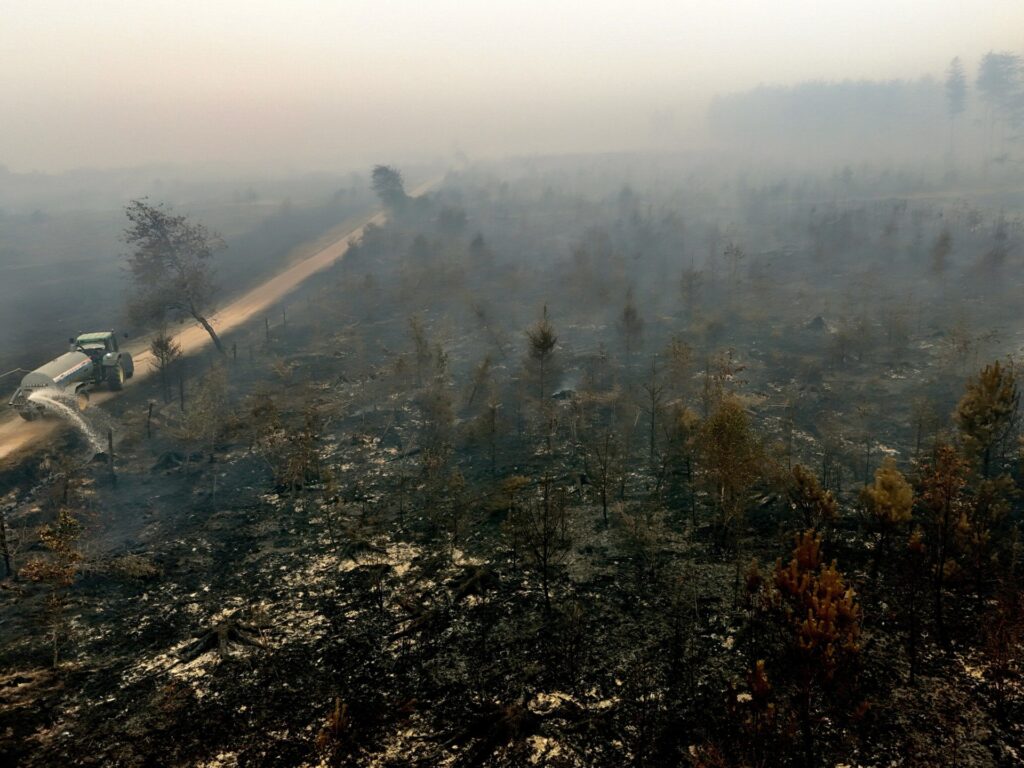
Belgium is currently grappling with the largest recorded wildfire in its history, a relentless blaze that has scorched vast areas of forest and countryside. The wildfire, which began several days ago, has rapidly spread, forcing the evacuation of approximately 600 residents as it moves closer to towns near the German border. Authorities have issued emergency warnings and are working tirelessly to contain the fire, but dry weather conditions and strong winds have exacerbated the situation.
The wildfire’s origin is believed to be linked to an extended period of drought and unusually high temperatures, conditions that have increased the susceptibility of Belgium’s forests to such destructive events. Firefighting teams from across the region have been deployed, including aerial support helicopters, in an aggressive effort to halt the fire’s advance.
Evacuations have been prioritised for residents in smaller communities most at risk, with emergency shelters set up to provide temporary refuge. Local governments are coordinating closely with environmental agencies to monitor air quality and mitigate health risks posed by smoke inhalation.
The outbreak of this massive wildfire has raised concerns about the impact of climate change on Belgium’s natural landscapes, traditionally not prone to such large-scale fires. Experts warn that similar incidents may become more frequent if preventive measures and climate policies are not intensified.
Cross-border cooperation has also become a critical aspect of the response, as the fire edges toward Germany. Belgian and German firefighting units are collaborating to share resources and strategies to protect communities on both sides of the border.
This wildfire stands as a stark reminder of the pressing need for increased investment in fire prevention infrastructure and public awareness programs. Specialists advocate for more robust forest management practices to reduce fuel loads and implement early detection systems.
The Belgian government has declared a state of emergency in the affected regions, mobilizing additional resources and calling on citizens to stay alert and adhere to safety instructions. Meanwhile, scientists and policymakers are analyzing data from the event to understand its causes and develop more resilient strategies for the future.
As the wildfire continues to burn, the priority remains the safety of residents and the preservation of biodiversity in the affected areas. The event marks a pivotal moment for Belgium in addressing the challenges posed by climate change and underscores the importance of regional cooperation in managing natural disasters.